
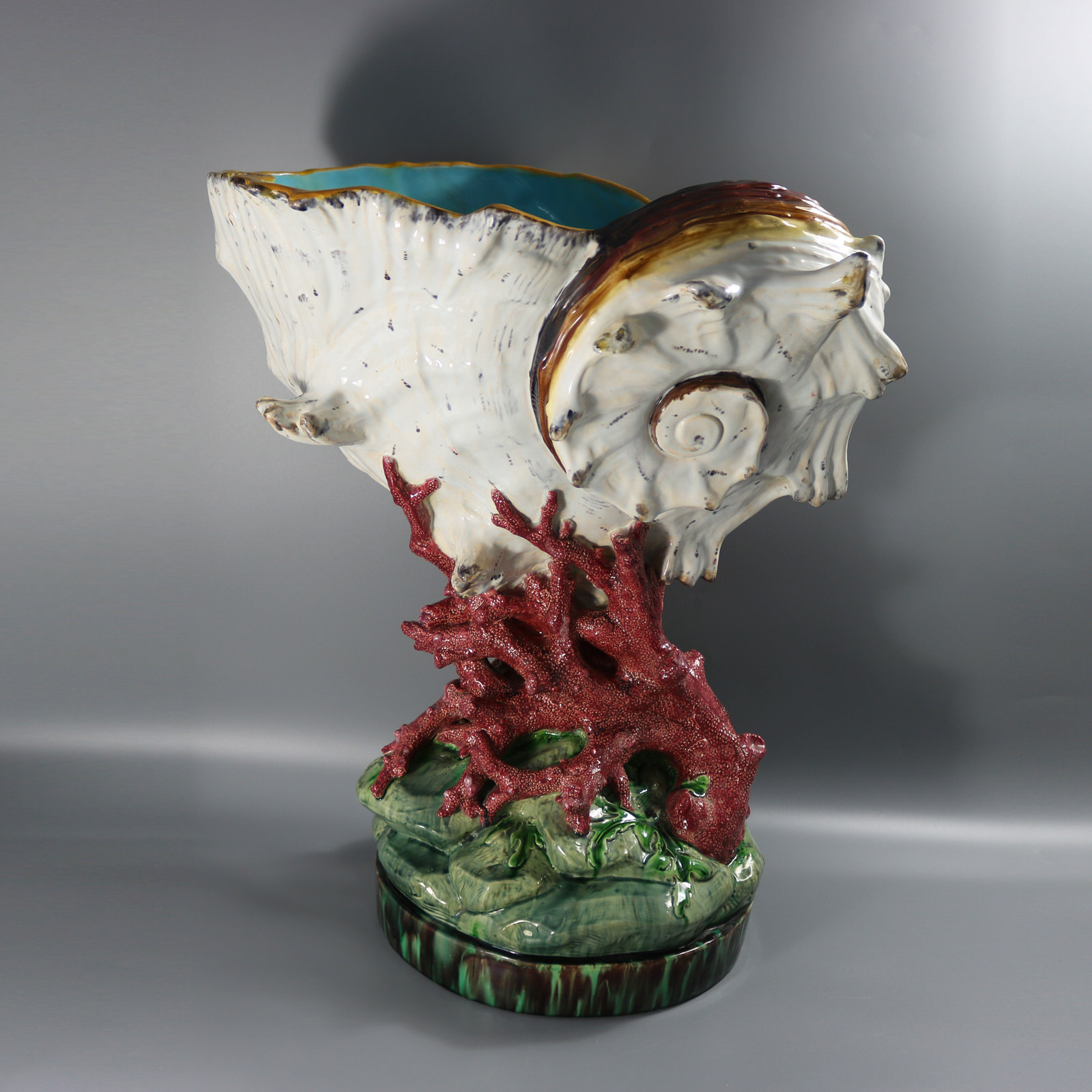
Monumental Minton Majolica Shell – A fine example of Victorian majolica pottery, c.1870s.
Majolica pottery is among the most visually arresting ceramics ever produced. Bold, sculptural, and glazed in colours so vivid they still stop people in their tracks more than 150 years after they were made, these pieces represent the Victorian decorative arts at their most exuberant. Yet for all its visual impact, majolica remains surprisingly misunderstood — frequently confused with other wares, inconsistently defined, and often undervalued by those who don’t know what they’re looking at.
This guide sets out to change that. Whether you’re a first-time buyer curious about a piece you’ve seen at auction, a collector looking to deepen your knowledge, or simply someone who loves beautiful objects, here is everything you need to know about majolica pottery.
What Is Majolica Pottery?
Majolica is a type of earthenware pottery distinguished by its opaque, lead-based coloured glazes and its heavily moulded, sculptural decoration. It was developed in England in the 1850s by the Minton factory under the direction of Leon Arnoux, and it took its name — somewhat confusingly — from maiolica, the much older Italian tin-glazed earthenware tradition. The two wares are historically related but visually and technically distinct, a point of confusion we’ll address shortly.
What sets majolica apart is the combination of three things: the quality of the modelling, the brilliance of the glazes, and the ambition of the forms. Majolica potters did not content themselves with simple shapes and safe decoration. They made sardine dishes in the form of fish, jugs shaped like ears of corn, jardinieres modelled as entwined branches, and plates whose surfaces crawled with naturalistic leaves, shells, and insects. The results were sometimes extraordinary — and occasionally quite bizarre.
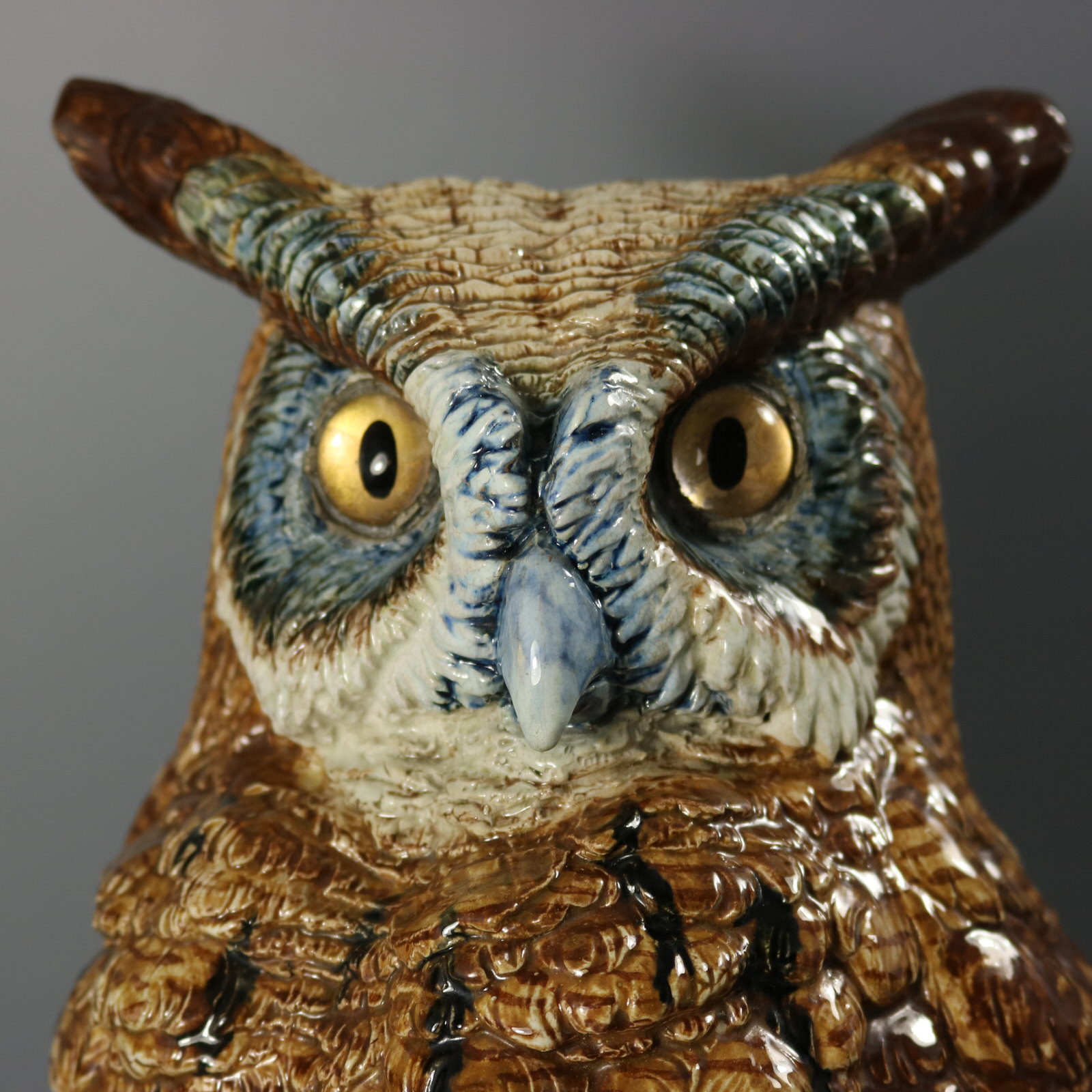
The characteristic depth and brilliance of Victorian majolica glaze — one of the defining qualities that separates the finest pieces from lesser imitations.
A Brief History of Majolica
Majolica was born at the Great Exhibition of 1851, where Minton displayed pieces that astonished visitors with their colour and craftsmanship. The timing was perfect. Victorian Britain had an insatiable appetite for decorative objects, a booming middle class with money to spend, and a romantic fascination with the natural world. Majolica answered all of these at once.
Within a decade, virtually every significant pottery manufacturer in Britain had begun producing majolica. Wedgwood, George Jones, Holdcroft, and Brownfield all developed their own ranges, each with a distinctive character. The style spread quickly to continental Europe and to America, where manufacturers including Griffen, Smith & Hill produced their own versions for a growing domestic market.
The peak years of majolica production were roughly 1860 to 1900. By the turn of the century, tastes had shifted. The emergence of Art Nouveau, with its preference for flowing lines over the florid naturalism of high Victorian design, made majolica look dated. Production continued in diminished form into the early twentieth century, but the golden age was over.
Today, Victorian majolica enjoys strong and sustained collector interest on both sides of the Atlantic. Exceptional pieces by the leading makers regularly achieve significant prices at auction, and even more modest examples are keenly sought.
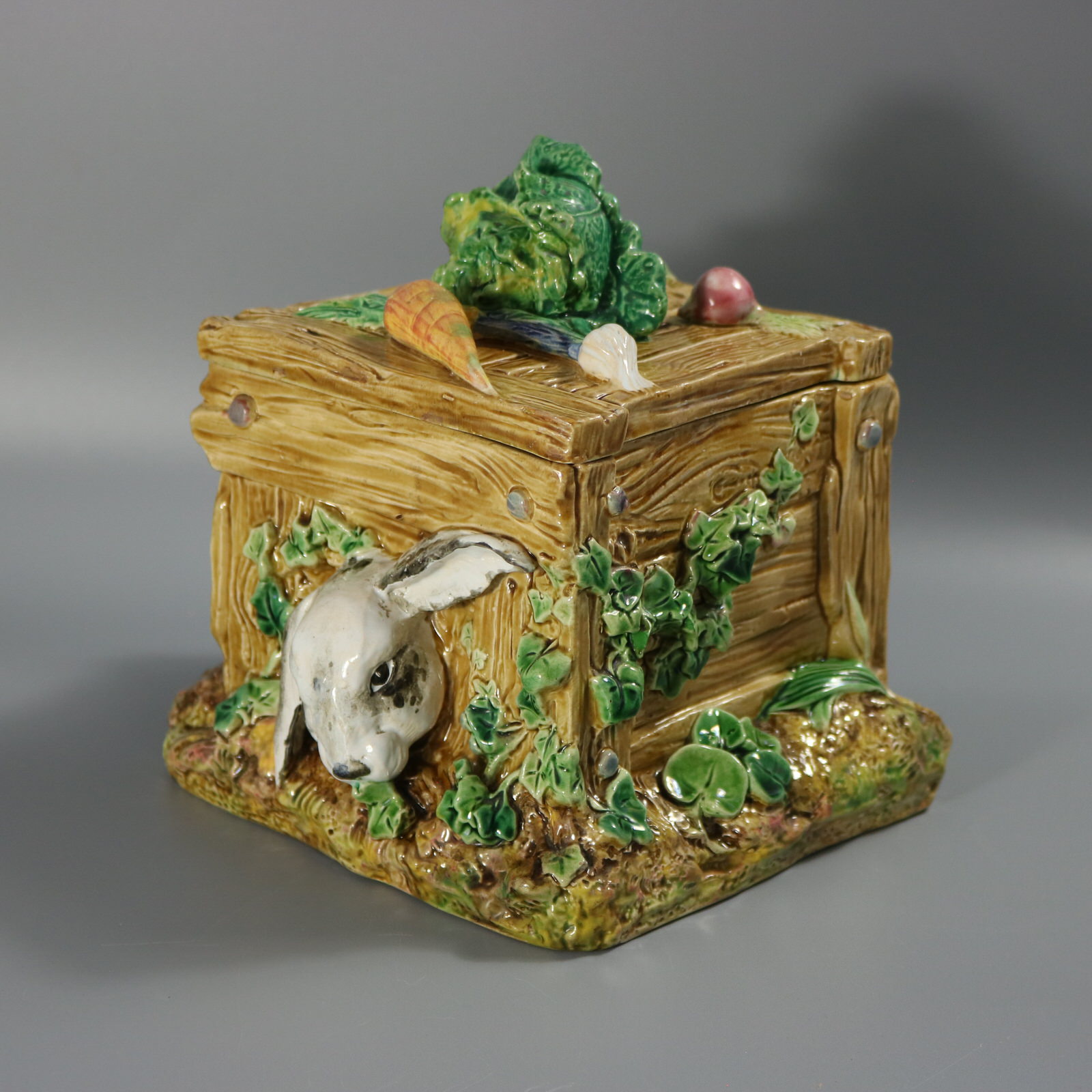
Brown Westhead Moore & Co Rabbit Box accentuates the remarkable variety of forms produced during the golden age of production, c.1860–1900.
The Major Makers
Not all majolica is created equal. The name covers an enormous range of quality, from the finest productions of Minton and George Jones down to the humblest pieces turned out by minor Staffordshire potteries. Knowing the principal makers is essential for any serious collector.
Minton sits at the apex of majolica production. Their pieces are technically superb, beautifully modelled, and glazed with a depth and translucency that lesser makers rarely matched. Minton majolica commands a premium, and rightly so.
George Jones is perhaps the most celebrated of the secondary makers. His pieces, particularly the strawberry sets, sardine dishes, and cheese bells, are exquisitely designed and finished, and they are keenly competed for at auction.
Wedgwood produced majolica of consistently high quality, with a somewhat different aesthetic — somewhat cooler and more classical than the exuberance of Minton. Their pieces are highly collectable and reliably well made.
Holdcroft and Brownfield occupy the next tier — not quite in the class of the above, but capable of producing excellent work, particularly in their naturalistic wares.
Below these sit a large number of lesser manufacturers whose pieces are often unmarked or bear only a pattern number. These can still be charming and decorative, but they rarely achieve the prices of the named makers.
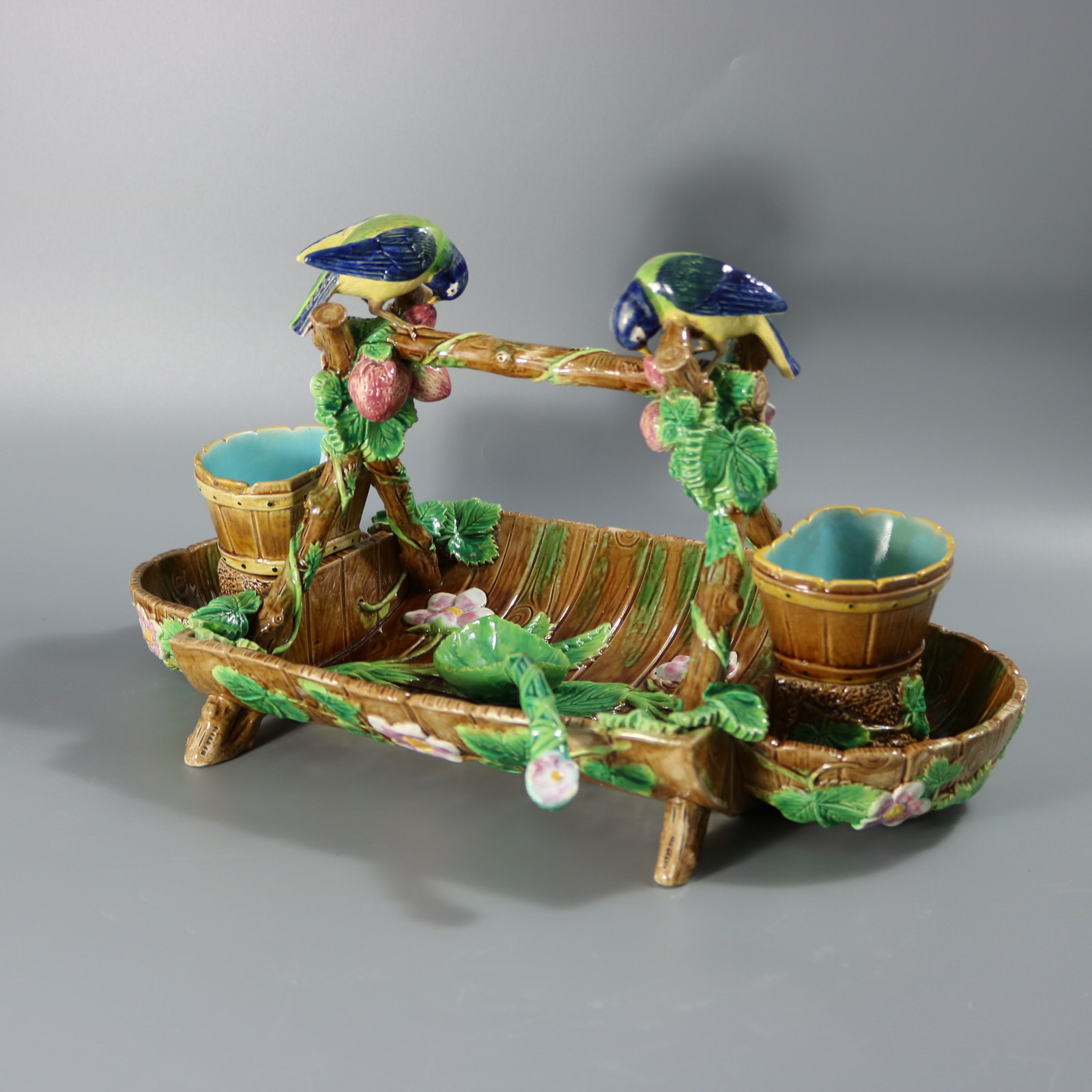
A George Jones majolica Strawberry Server, c.1875. Jones is among the most celebrated of the Victorian majolica makers, and his pieces are keenly sought by collectors worldwide.
Majolica vs Maiolica: A Common Confusion
The similarity in names causes considerable confusion, and it is worth addressing directly. Maiolica (the Italian spelling) refers to the tradition of tin-glazed earthenware that flourished in Renaissance Italy and subsequently spread across Europe in the form of delftware, faience, and similar wares. It is characterised by a white tin-oxide glaze on which painted decoration is applied.
Majolica (the Victorian English spelling) is an entirely different ware. It uses lead-based coloured glazes applied over a moulded earthenware body, with no painted decoration in the maiolica sense. The connection is historical: Herbert Minton named his new ware in conscious homage to the Italian tradition, but the technical and visual relationship is remote.
If you see the word “majolica” on a piece or in a sale catalogue, it almost certainly refers to the Victorian lead-glazed ware described in this guide. Genuine Italian maiolica is a separate field of collecting entirely.
How Majolica Is Made
Understanding the manufacturing process helps explain both the appeal of majolica and the differences in quality between makers.
The body is formed from a relatively coarse earthenware clay, pressed or cast into moulds to create the complex sculptural shapes that characterise the ware. The quality of the mould-making is crucial — the finest majolica exhibits crisp, well-defined modelling that retains its sharpness even after glazing.
The piece is then fired at a relatively low temperature, producing a porous biscuit ware. The coloured glazes — lead-based, and mixed with metal oxides to produce their characteristic colours — are then applied, either by painting or dipping, and the piece is fired again. It is this second firing that fuses the glaze and produces the lustrous, often jewel-like colours for which majolica is celebrated.
The palette is distinctive: rich turquoise, deep cobalt blue, warm ochre, bright green, muted pink, and the characteristic brown used for branches, tree bark, and similar naturalistic elements. The best makers achieved extraordinary depth and subtlety within these colours; lesser potters produced results that appear flat and lifeless by comparison.
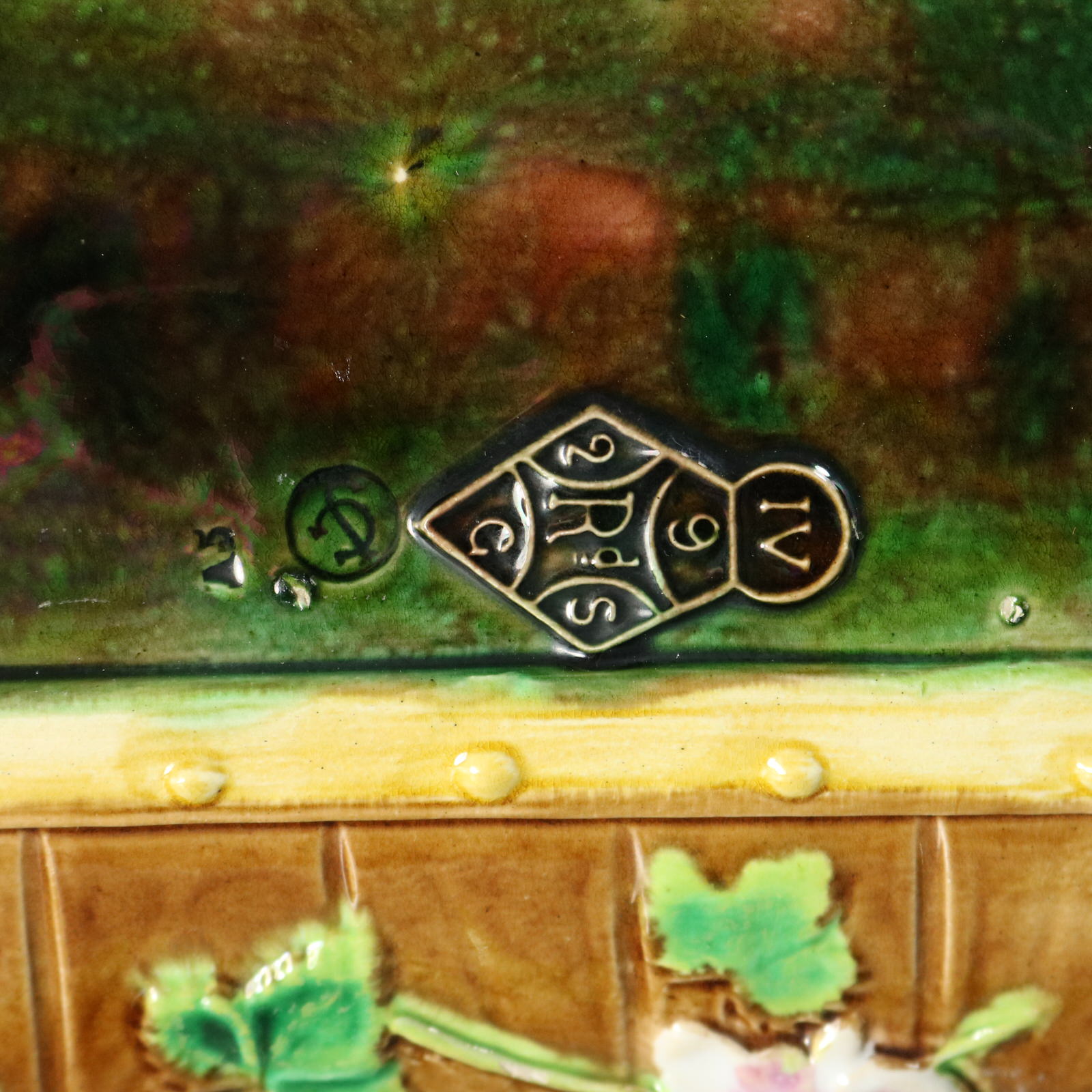
The impressed mark on the base of a George Jones majolica piece. Factory marks are an important guide to attribution and value — most of the major makers marked their pieces consistently, though not invariably.
Identifying Quality in Majolica
When assessing a piece of majolica, there are several things to look for.
Crispness of modelling. The moulded details — leaves, flowers, animals, figural elements — should be sharp and well-defined. Soft or blurred modelling suggests either a worn mould or a lesser manufacturer.
Depth and brilliance of the glaze. The glaze should appear to have depth, almost as if you could look into it. Flat, dull glazes are a sign of inferior production.
Consistency of colour. Where colours meet, there should be clean boundaries. In lesser pieces, colours bleed into one another untidily.
Quality of the base. Turn the piece over. The base of a well-made piece will be neatly finished, with a consistent clay body and often a factory mark. A rough, uneven base, or one that shows significant glaze pooling, suggests a lesser maker.
Factory marks. The major makers — Minton, Wedgwood, George Jones, Holdcroft — all marked their pieces, though not invariably. Minton used a series of date cyphers that allow precise dating. Wedgwood impressed their name clearly. George Jones used a monogram mark. Unmarked pieces are not necessarily inferior, but marks add confidence and value.
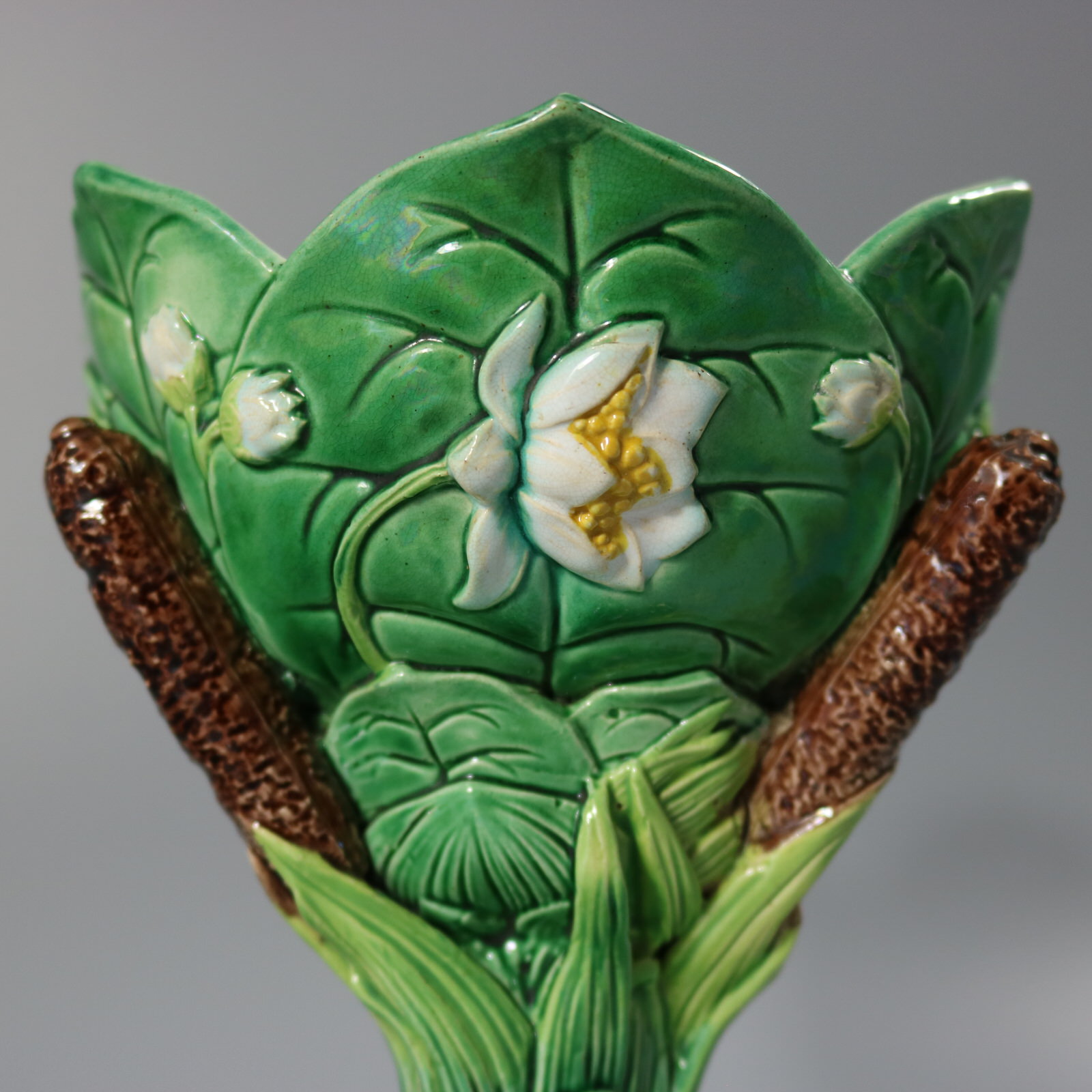
Crisp molding on a George Jones piece, well-defined moulding is one of the hallmarks of quality Victorian majolica. Details should retain their sharpness after glazing — softness or blurring suggests a worn mould or lesser maker.
Reproductions and Fakes
Majolica has been reproduced and faked since the late nineteenth century, and the collector needs to be alert. Modern reproductions are widely available, ranging from decorative pieces clearly made for the gift market to more deliberate attempts to deceive.
The things that most often betray a reproduction are: an unnaturally bright and even glaze lacking the depth of the originals; a body that feels lighter than expected; moulding that lacks the crispness of Victorian workmanship; and a base that looks artificially aged.
Genuine antique majolica will often show signs of age consistent with its claimed date — minor crazing of the glaze, slight wear to high points of the modelling, and a patina on unglazed areas that is difficult to fake convincingly. When in doubt, buy from a reputable specialist dealer or auction house, and don’t be afraid to ask questions.
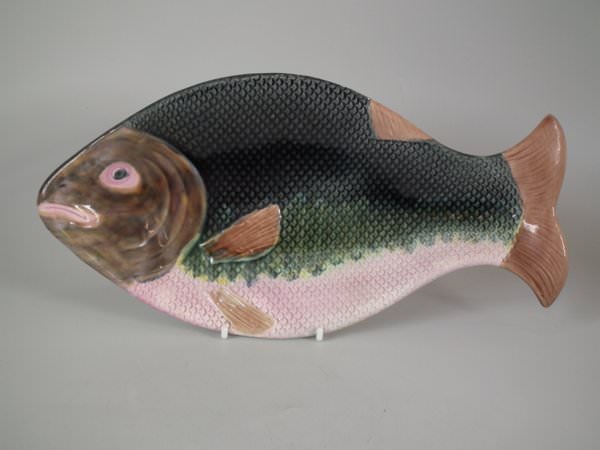
An attractive Victorian majolica Fish Dish – a good example of the quality available to collectors entering the market.
Collecting Majolica: Where to Start
For new collectors, majolica offers an accessible entry point at almost any budget. Smaller pieces by minor makers — a simple leaf plate, a modest jug — can be found for modest sums and provide an excellent introduction to the ware. As knowledge and confidence grow, the field opens up: the great makers, the most sought-after forms, the rare and exceptional pieces that appear infrequently at auction and command serious prices.
Whatever your level, the key is to handle as much majolica as possible, visit auction previews, study reference books, and, above all, trust your eye. The best pieces announce themselves.
At Madelena we have been dealing in antique majolica pottery for many years, and we are always happy to share our knowledge with collectors at every level. Browse our current selection of antique majolica, or get in touch if you have a specific piece in mind.
Leave a Reply