Majolica definition citations found in dictionaries are frequently ambiguous. In different countries, past and present, ‘majolica’ has been and is being used to describe two different types of ceramic.
To eliminate ambiguity citations for the two distinct ‘majolica’s’ (distinct in appearance, origin, and manufacturing process/technique) should contain the word ‘majolica’ along with a qualifier to show which ceramic is being cited.
1. MAJOLICA meaning tin-glazed earthenware: Suitable qualifiers would include: dateable to before 1848, ‘maiolica’, ‘tin-glazed’, ‘tin-enameled’, ‘opaque’, ‘white’, ‘brushwork’, ‘delft’, ‘stanniferous’, ‘faience’, ‘Minton tin-glazed majolica’.
2. MAJOLICA meaning colored glazes earthenware: Qualifiers: dateable to after 1848, used in the same sentence as tin-glazed majolica/maiolica, ‘coloured glazes’, ‘Mintons Palissy ware’, ‘lead-glazed majolica’.
Dictionary definitions of majolica n.
Only Websters and Wiktionary currently provide definitions for both types of majolica:
1857, Joseph Marryat, History of Pottery and Porcelain, Medieval and Modern, p.373 “Enamel – A vitrifiable substance; opaque, generally Stanniferous majolica […]” ‘Enamel’ is another word for ‘glaze’. The word ‘majolica’ is qualified in this early citation by ‘opaque’ and ‘Stanniferous’ which means ‘tin-glazed’.
1907, Edwin Atlee Barber, Tin enamelled Pottery Maiolica, Delft and other Stanniferous Faience, Doubleday, Page & Company New York, p.6 “The word Majolica, or Maiolica […] was applied to all Stanniferous faience of Italy and Spain.”
1999, Paul Atterbury and Maureen Batkin, Dictionary of Minton, ACC Art Books (2nd Revised edition edition 1 Jan. 1999), p.124 “Minton did not use the word maiolica themselves, relying instead on the Victorian version, majolica, which they used to mean wares of Renaissance inspiration, featuring hand painting on an opaque white glaze. […]”
2019, Metropolitan Museum, New York, Dish, Early 15th century “Medium: Earthenware, tin-glazed (Majolica) […] in the early eighteenth century earthenwares with tin-glazes were the most widely produced ceramics in Europe.”
Coloured glazes majolica definition citations
The pottery of vibrant coloured glazes applied direct to an unglazed earthenware body, developed to perfection around 1848 by Leon Arnoux at Minton & Co. Prior to 1848 coloured lead glazes pottery was known in different times and places as: Sancai, China; Marzacotto and Bologna wares, Italy; Preuning ware, Germany; Rustic ware, France; and Cauliflower, Cabbage and Whieldon ware, England; never as majolica. An unambiguous citation will meet one or more of these criteria: refer to both products; refer to the process (apply, fire); refer to the date of development.
1862, Art Journal Catalogue, Exhibited Class XXXV, no.6873, D78, p.8 “The Italian Vase, top, left, p.8, is Majolica, […] the painting being executed by a process not hitherto employed. […] The Ewer, bottom, middle, p.8, is a Palissy ware vase.”
1877, Leon Arnoux, Director, Minton & Co., British Manufacturing Industries POTTERY, p.42 “Majolica was produced for the first time by Messrs. Minton, in 1850, and they have been for many years the only producers of this article. The name of majolica is now applied indiscriminately to all fancy articles of coloured pottery. When, however, it is decorated by means of coloured glazes, if these are transparent, it ought to be called Palissy ware […]”.
1904, Arthur Hayden, Chats on English China, New York, p.184 “[Minton] employed no less than 1500. The branches he developed were earthenware and ordinary soft porcelain, hard porcelain, parian, coloured and enamelled tiles, mosaics, Della Robbia ware, majolica, and Palissy ware.”
1999, Paul Atterbury and Maureen Batkin, Dictionary of Minton, ACC Art Books (2nd Revised edition edition 1 Jan. 1999), p.124 “[…] the coloured glaze decorated wares which we now call majolica, but which Minton referred to as Palissy wares.”
2018, Claire Blakey, Minton Majolica: A Visual Feast of Victorian Opulence, Minton Archive “Majolica is the term used to describe pottery made of an earthenware body coated with semi-translucent coloured lead glazes. It was developed at the Minton factory in the late 1840s by Léon Arnoux, who had come to the Potteries in 1848.”
Other dictionaries and their sadly ambiguous citations
Conclusion
Our desire for a definition of majolica n. is done. We discover there are two meanings of the word, both of which are used interchangeably. Dictionary editors may wish to ditch ambiguous citations and correct majolica n. entries. Authors may choose to mention that majolica
Madelena is always proud to receive emails thanking us for good service. We add excerpts from these emails to our testimonials page. The most recent testimonial is exceptional. It ends “Warmly thanking you again for consideration and service in every way exemplary.” But there is more…
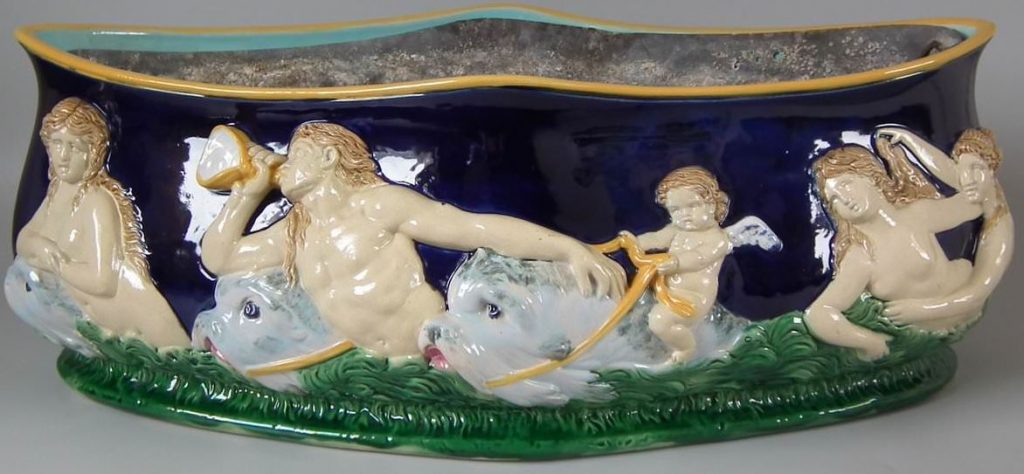
Triton or Neptune?
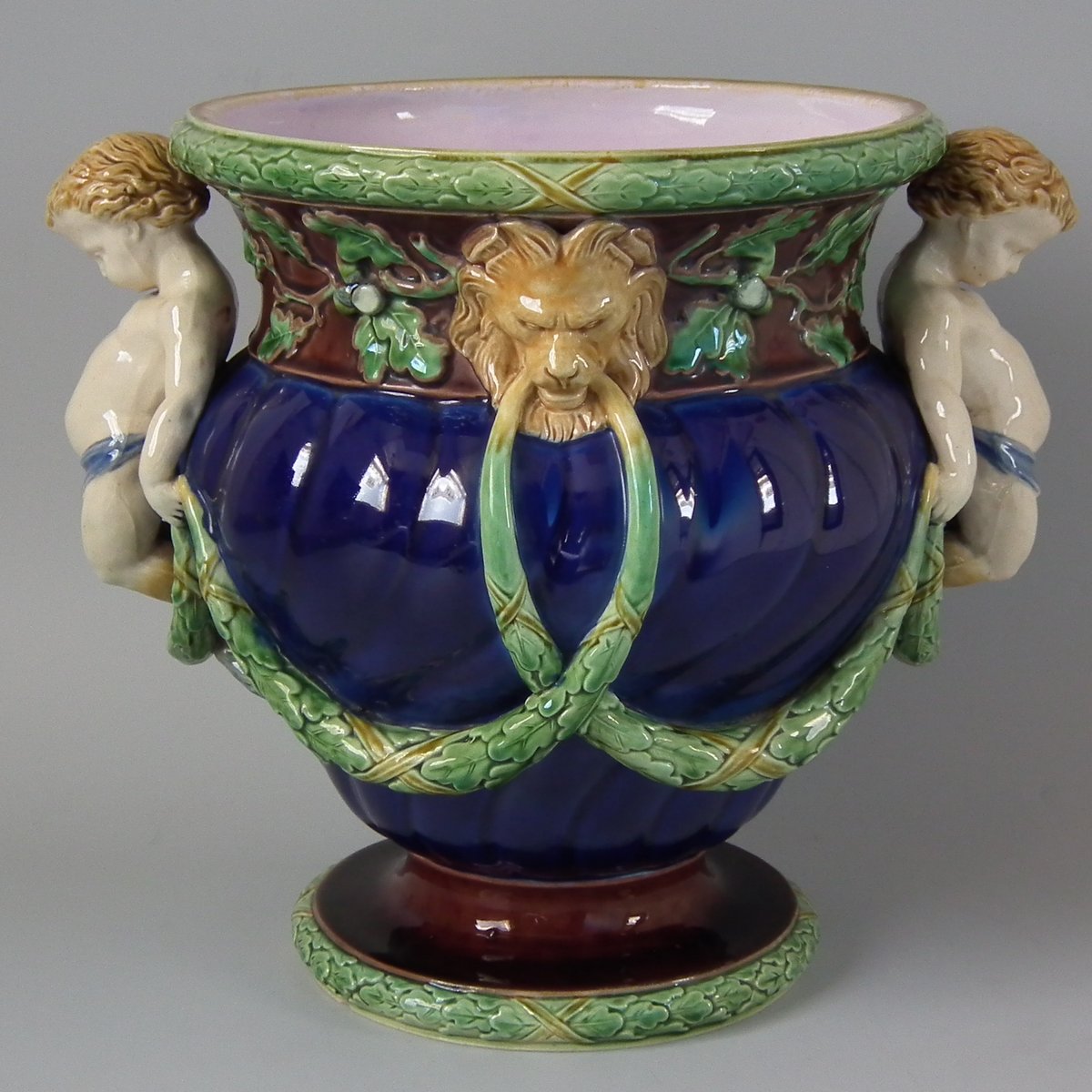
George Jones majolica Triton and Tritones oval jardinière with liner
The central character is often described as Neptune, in error. Madelena repeated the error when describing the piece. It is, of course, Triton.
George Jones majolica Triton and Τριτωνες jardinière
The vibrant coloured glazes of majolica make compelling décor in any style or form. When the style is classical Greek, mere décor becomes a wonderful reminder of the complex hierarchy of gods and dependents the Greeks enjoyed. When, in addition, the form is an oversize oval jardinière by the famous maker George Jones, any person might be excused for falling to their knees in homage.
The god is the merman sea god, Triton, half man half fish. He lived with his father and mother in a golden palace on the bottom of the sea.
In the words of the New York collector who purchased the piece
“The central figure clearly isn’t Neptune/Poseidon but the merman sea god Triton, one of Neptune’s three children by the goddess Amphitrite.
“Triton’s chief business is to execute his father’s commands with regard to the stirring and calming of the seas, his responsibilities in the aquatic realm answering to those of Aeolus (another of Neptune’s many bastard sons by mothers both divine and human) in the atmospheric.
“In his cameo role in Ovid’s Metamorphoses, Book I, probably his best-known appearance in classical literature, Triton causes the waters of the Great Flood to recede not at the command of Neptune, but of Jupiter.
“The means by which he brings these changes about is to blow on his cava bucina tortilis, his concha sonans, the (helix) ‘conch’ shell that is Triton’s characteristic literary and iconographic accompaniment, as in this George Jones piece.’
Τριτωνες
Tritones in support of Triton
This word in English means Tritones. These are fish-tailed sea-gods or daimones, a plurification of the god Triton himself and usually portrayed as satyrs of the sea. Another breed of Tritones, Sea-Centaurs, had the upper bodies of men and the lower bodies of fish-tailed horses (hippocampi).
Also in the words of the collector
“Iconographically characteristic is the train of putti and attractive sea nymph groupies, Τριτωνες, the George Jones designer has thoughtfully included.
“To British majolica makers and fanciers, Triton would have been best known from the last line of Wordsworth’s 1807 sonnet that begins
“It’s a pretty safe guess it’s that poem—no doubt imprinted into every Victorian schoolchild and, in fading needlepoint, gracing the walls of many a Victorian parlor—which lies most directly behind the strenuous figura serpentinata [a style in sculpture intended to make the figure seem more dynamic, Ed.] and wonderful representation of
“…old Triton blow[ing] his wreathed horn’ on this striking and wonderful ceramic.’
Madelena says “Aye” to that, and thank you, sir, for the correction.
Vague answers mean the seller does not know or will not tell.
To recognise real 19th century Staffordshire pottery figures from later repro’s, first concentrate on just three characteristics: base glaze, foot-rim, and the gilt. These three will eliminate 98% of the repro’s. You are looking for signs of 19th century manufacture in old bottle kilns (real), compared with the clean continuous kilns of the 20th century or later (repro).
Base Glaze
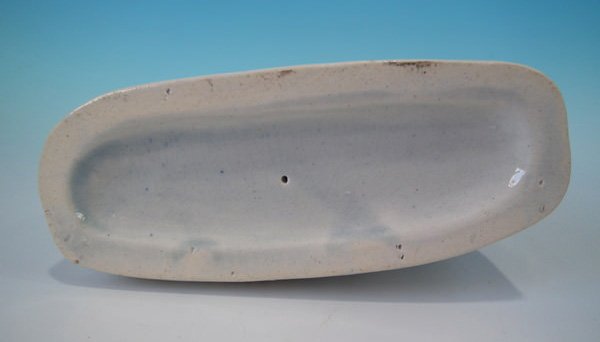
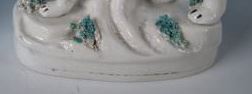
Look for a ‘thick’, ‘viscous’ base glaze distinctly tinged with colour. Victorian Staffordshire figures are usually tinged with blue. Pre-Victorian figures tinged with greeny-gray. Repro base glazes are usually colourless and thin, or entirely absent.
19th century Staffordshire figure base showing viscous blue glaze coming up and onto the footrim.
Foot-rim
Look for base glaze coming up and onto the foot-rim in one or more places. On typical 20th century repro foot rims the glaze usually does NOT come up and onto the foot rim, and often has a brushed look or chalky feel.
Gilt
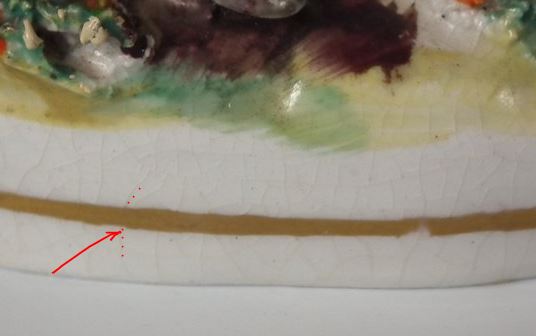
Gilt with crazing showing through is usually repro.
The gilt, on a genuine Victorian Staffordshire figure, usually does not craze like the lead glaze beneath.
Old dull mellow gilt was used circa 1830 to 1875 and is hard to replicate. Mirror-bright gilt replaced dull gilt from circa 1875.
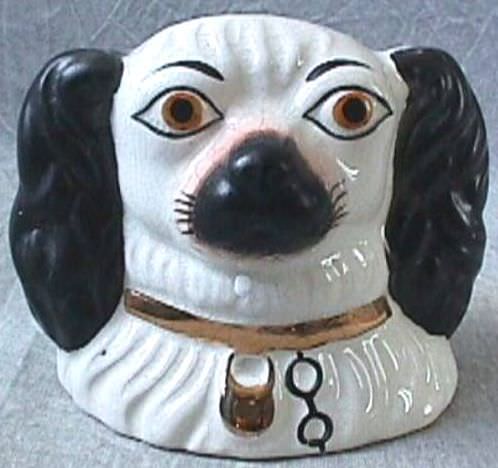
Beware ‘brassy’ or ‘coppery’ gilt.
Brassy coppery gilt on repro Staffordshire spaniel ornament.
Beware absence of gilt where gilt would be expected.
More…
Some additional pointers follow – indicators, warning signs to look out for when the base-glaze-foot-rim-gilt examination is inconclusive, or when you are not 100% confident in the seller.
Never judge a piece by one or two indicators alone, as exceptions abound.
Marks – ‘Pre-Victorian’ figures with fake Walton and Salt marks exist. Most Victorian figures were not marked.
High value selling cheap – A danger sign in any market.
No flaking – One would expect some flaking of the weaker enamels, some rubbing of the gilt, some wear and tear in a 19th century figure. No wear at all may be suspicious.
Rubbing to the weaker gilt decoration is to be expected. Perfection should be treated with caution.
Be wary of these, too –
‘Fuzzy’ modelling, lack of fineness in detail.
Rough texture to the glaze or enamels.
Hurried, less elaborate or minimal decoration on an allegedly older piece.
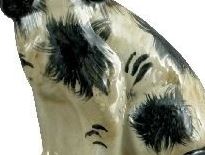
Less than fine painting. A poor attempt at imitating the fine ‘feathering’ of most Victorian Staffordshire spaniels ‘spots’.
Dark stained crazing.
Indicative of repro – dark stained crazing, colorless glaze.
Wrong faces. A figure with an oriental look was probably not made in Britain.
‘Wrong’ colors. Some 19th century enamel colors could not be mimicked with later enamels.
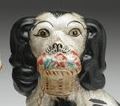
Un-English faces and wrong colours in the basket are strongly indicative of repro.
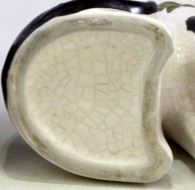
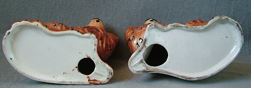
Slip casting, indicative of 20th century manufacture, is evidenced by large pour holes on closed base pieces, smooth interiors on open base pieces.
20th century Repro spaniels. Slip molding is cheaper than press molding. Large holes in bases are where the ‘slip’ is poured out of the mold. Indicative of repro.
Antique Staffordshire Figures, Real or Repro – Conclusion
Compare real with repro side by side whenever possible, handle every piece you can. Guard against jumping to conclusions. Always consider at least three indicators. You will quickly learn to distinguish one from the other.
We hope you found this article useful. Enjoy the hunt! And enjoy the wonderful world of Staffordshire figures.
Have you ever wondered how areas of intricate brushwork were incorporated in a colored glazes majolica piece?
We have long suspected these items were intended for sale mostly decorated with colored glazes only. The designs are perfect without the painted pictures.
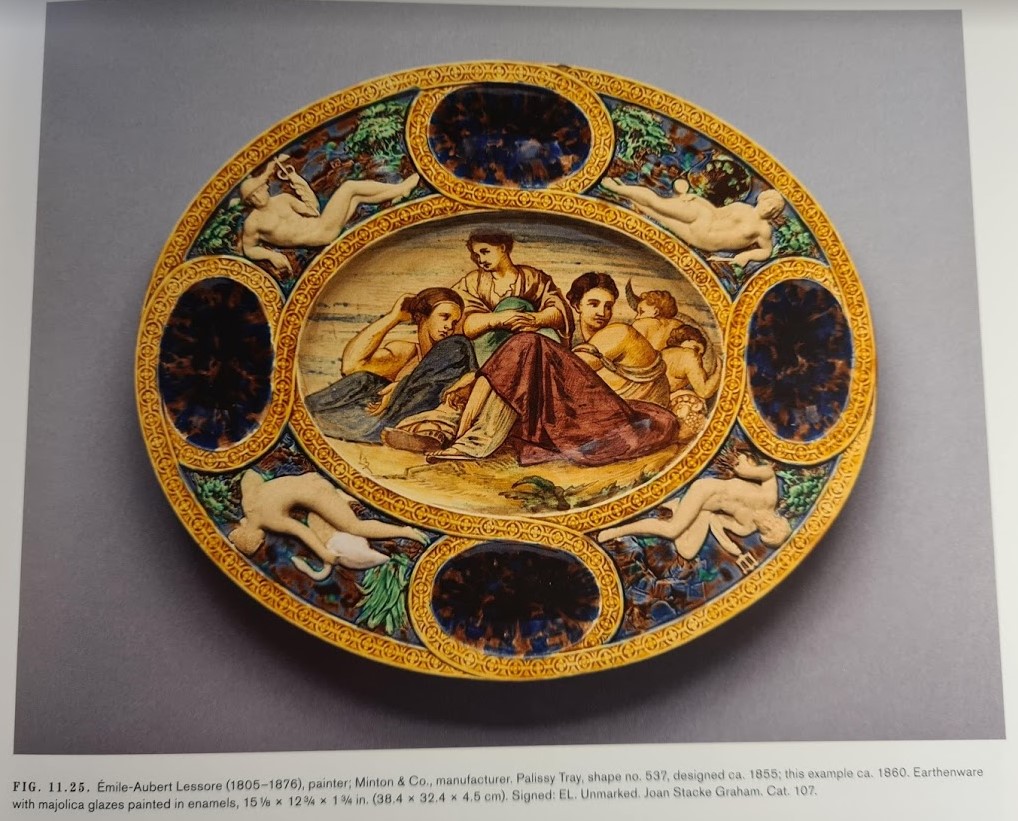
Some designs, however, allowed for an area to be coated, perhaps for an exhibition, not with colored glaze but with tin glaze upon which artwork would be painted. This area, an oval panel in this instnance, would be allowed to dry before painting with enamels onto the raw glaze. The brush strokes ‘sink’ into the raw tin-glaze. Highly skilled artists were employed for these commissions, in this case, Emile Lessore.
Lessore’s employment with Minton & Co. was, we suspect, uneasy. Lessore appears to have insisted on signing his pieces, sometimes choosing a blank with minimal Minton marks. He painted his signature or initials often with the E reversed, in this case following the L.
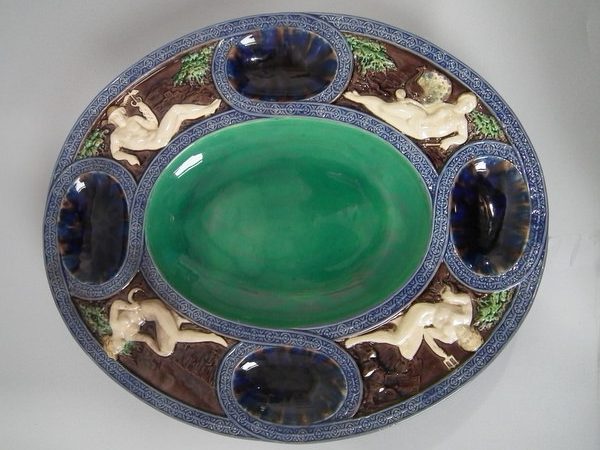
Minton Neptune platter. Center panel tin-glazed, dried, then painted in enamels. Surround painted with colored glazes. Image from Majolica Mania essay by Miranda Goodby ‘The Minton Factory and Majolica’
Look closely at about 230 degrees on the painted center panel for Lessore’s signature.
Art work complete, the rest of the piece was then painted with colored glazes, simultaneously. [It took 1400 years to go from three to a wide range of colored glazes that could be applied simultaneously and fired without without running or blistering.]
Finally the piece is fired, fusing the painted enamels with the tin-glaze area and the colored glazes with the biscuit [once-fired earthenware body].
Close inspection of the painted panel (above) reveals fine brush work, with light and shadow beautifully painted and no sign at all of the light and shade produced by the intaglio effect of thick colored glazes so perfectly demonstrated by the colored glazes surrounding the center panel.
The illustrations in Miranda Goodby’s essay in Volume 2 of the magnificent Majolica Mania masterpiece illustrate the process.
Catalogue of Art Materials
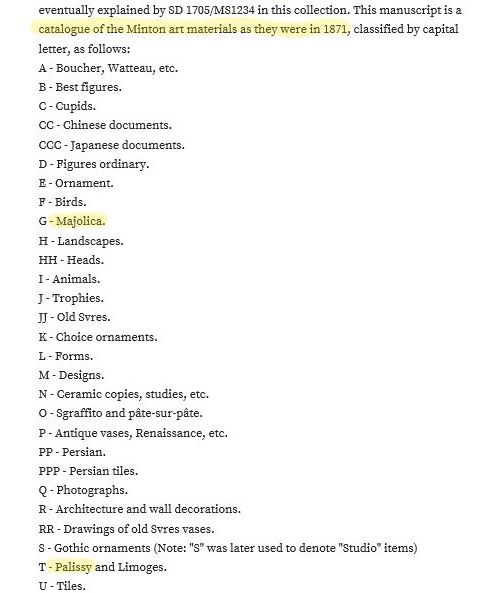
The Minton factory used a Catalogue of Art Materials for their Designs at least up until 1871. The letter used for artwork intended for Minton majolica [tin-glazed earthenware] was G.
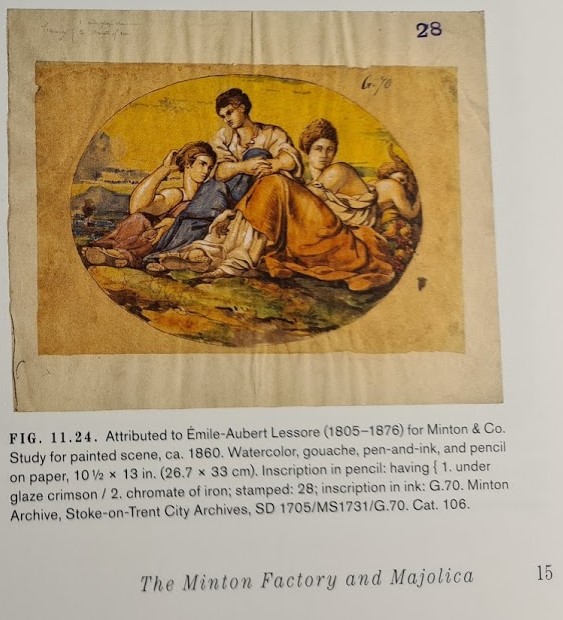
The oval artwork G 70 below appears to have been specifically produced for the oval center panel of the Neptune platter later painted by Lessore. One wonders how many he painted, with how many variations, and whether his work was always signed.
Design G 70 for tin-glazed center panel of Minton Neptune platter. Image from Majolica Mania essay by Miranda Goodby ‘The Minton Factory and Majolica’
Could a 16th century Frenchman’s success with colored glazes be repeated in 19th century England? Herbert Minton thought so. Leon Arnoux is appointed Art Director in 1848 with the right know-how and at just the right time to make it happen.
Bernard Palissy, Father of French ceramics, developed colored glazes.
Yes, Bernard Palissy developed in France the chemistry and process for painting colored glazes onto a ‘biscuit’ body, simultaneously, before firing (paint, fire). Minton & Co. of Stoke-on-Trent, England, subsequently developed the science to perfection. The narrative about majolica reaching Stoke via Spain, Majorca and Italy, is about tin-glaze maiolica, a different chemistry, process, and look altogether (dip, dry, paint, fire).
majolica n. Definition.
So, what is majolica? This word has three main meanings/senses. It can be any one of these…
Any earthenware decorated with colored lead glazes applied directly to an unglazed body. Hard-wearing, typically relief molded. Minton’s ‘Palissy ware’ soon known also as ‘majolica’, was introduced at the 1851 Exhibition and later widely copied and mass produced. Known as ‘majolica’ or ‘lead-glazed majolica’ or ‘earthenware with majolica glazes’ or ‘colored glazes majolica’.
An alternative spelling for maiolica(tin-glazed earthenware with opaque white glaze decorated with metal oxide enamel colour/s). Maiolica reached Italy mid 15th century. Renaissance Italian maiolica became a celebrated art form. Maiolica developed also as faience (France), and delft (UK and Netherlands). Known as ‘maiolica’ or, especially in the US, ‘majolica’, or ‘tin-glazed maiolica‘ or ‘tin-glazed earthenware’
English (mostly Minton) tin-glazed earthenware in imitation of Italian Renaissance maiolica having an opaque white glaze with fine painted in-glaze decoration. Also introduced at the 1851 Exhibition. Very rare. Known as ‘majolica’ or ‘English tin-glazed majolica’.
Making colored glazes
Everyone loves colour. How to add colour to a glaze is a thing. How to make colored glazes temperature compatible – meaning they can be applied, simultaneously, then fired, without blistering and without too much running – is entirely another.
It took nearly two millennia to achieve. Fusing lead glaze to an earthenware body had been mastered and was used across the Roman Empire[1] for centuries to seal porous pottery surfaces. But plain lead glaze has no colour.
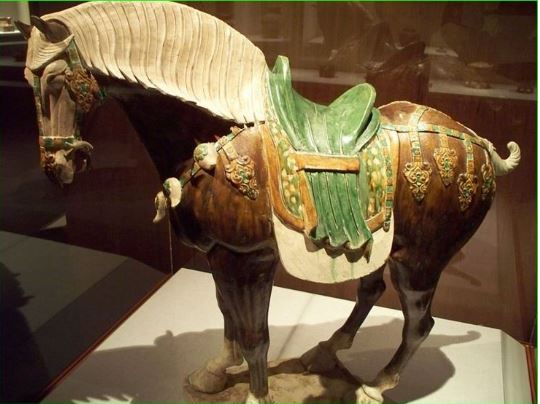
Sancai horse, China, circa 600AD. ‘Sancai’ means ‘three colors’. Green from copper oxide. Brown from manganese oxide. Ochre from iron oxide.
By 600AD the Chinese had succeeded in producing three temperature compatible colors. Adding copper oxide to normal lead glaze produced a glaze that fired green. Adding iron oxide to normal glaze produced ochre. Adding manganese oxide produced brown/black. These three could be fired successfully together.
Bernard Palissy’s five colors
Five colors, Palissy ‘follower’ [imitator], circa 1600AD. The two additional colors are blue from cobalt oxide, and grey from blended oxides.
Independently[2], in mid-16th century Paris, Bernard Palissy was finding out for himself. After much hardship and many setbacks, he finally succeeded in developing five colors that could be applied and then fired together.
Research in 2016 provides proof positive of the oxides used by Palissy to create his colored glazes :
The research was conducted in Paris on a group of rustiques ware attributed to Palissy or his followers. The glaze chemistry of the items in the group was determined non-destructively using PIXE and PIGE analyses. The summary states:
“The glazes are all lead silicates, the colorants being transition metal oxides-CuO [copper], CoO [cobalt], MnO [manganese] and Fe2O3 [iron] – with a small addition of SnO2 [tin] [for opacity] to some of the glazes being common.” Lead-Glazed Rustiques Figulines [Rustic Ceramics] of Bernard Palissy [1510-90][3]
Colored Glazes Majolica Perfection
Herbert Minton and Leon Arnoux had determined to develop a Minton version of both the16th century French colored glazes of Bernard Palissy and also of the celebrated 16th century Italian tin-glaze (plain lead glaze with a small proportion of tin oxide added) maiolica. [4][5].
Colored glazes hit the jackpot. Minton & Co. achieved near-perfection, eventually able to simultaneously fuse a wide range of colors to a ‘biscuit’ body at low cost.
Their advanced chemistry and process, developing temperature compatible colored glazes and better kilns, was widely copied.
Remember, the word majolica is used in the USA, confusingly, also to describe tin-glazed earthenware – fine-painted decoration on unfired tin glaze (dip, dry, paint, fire).
The winner was colored glazes. This was a product inexpensive to produce (paint, fire). Also, around this time the fashion for naturalistic décor was growing. Flora and fauna molded in high relief worked perfectly with the colored glazes.
‘Intaglio’ effect of colored lead glazes applied to high relief molding – the deeper the impression the darker the colour.
The product that flopped – now so rare it is almost unknown – was Minton tin-glazed majolica made using the tin-glaze process (dip, dry, paint, fire) – dip the ’biscuit’ body in tin glaze, dry it, then paint with enamel colors. The enamels are ‘absorbed’ into the unfired tin glaze. When fired, the result is a distinctive opaque whitish tin-glaze[6], painted in colors, usually with brush-strokes clearly visible.
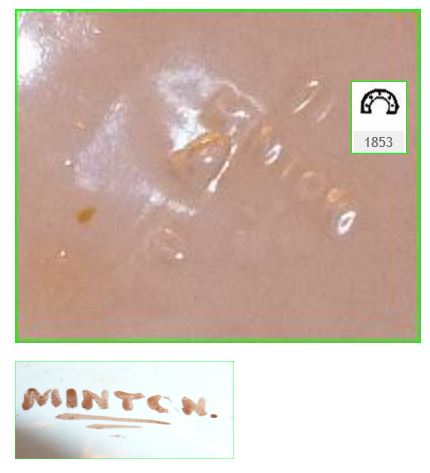
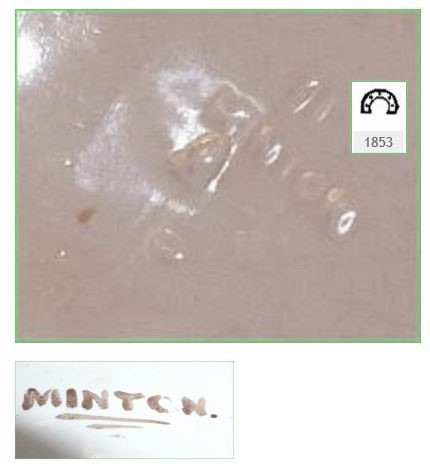
Reverse of Minton tin-glazed[6] majolica plate (dip, dry, paint, fire). Opaque white tin glaze with brush painted MINTON in manganese oxide.
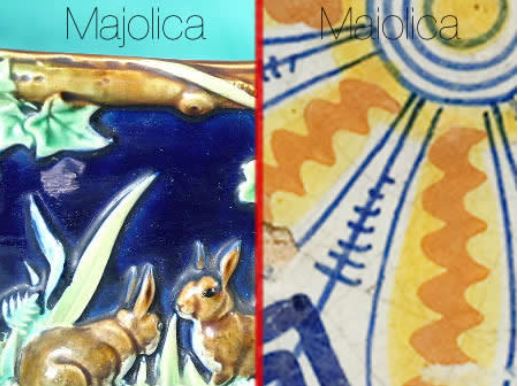
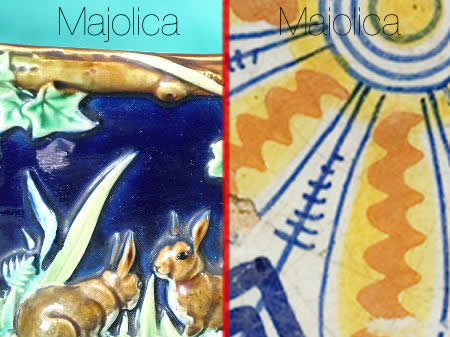
On the left: Colored glazes, two stages (paint, fire); thick-painted on biscuit, then fired. On the right: Tin-glazed, four stages (dip, dry, paint, fire); dipped, then dried, then brush-painted onto the raw unfired tin-glaze, then fired.
Texts seldom make it clear
From the first appearance of Minton’s two new products until the recent publication of Majolica Mania (2021), many authors have declined to distinguish between Minton’s two distinct products: one named ‘Palissy’ (soon known also as ‘majolica’) in honor of the great man, a resounding success; the other named ‘majolica’ after the Italian tin-glaze maiolica they were copying, a commercial flop.
“Thus, what today we call majolica is in most cases what Minton, and Arnoux, referred to as Palissy ware.” Dictionary of Minton[8]
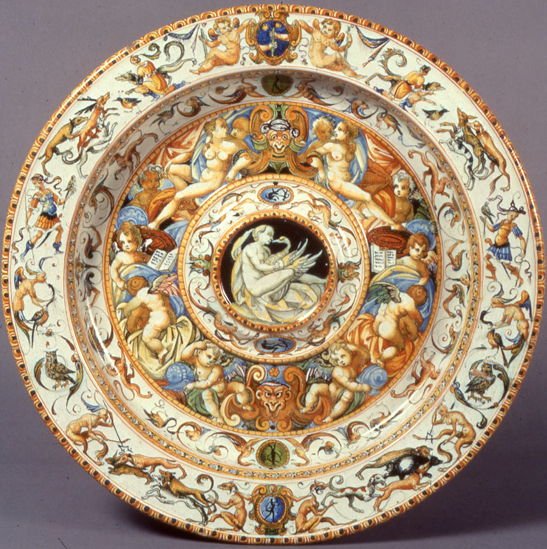
Italian Renaissance tin-glazed maiolica (dip, dry, paint, fire), circa 1600AD, painted with enamels in the grotesque style.
This would not matter – few care whether an object is colored glazes or tin-glazed with painted decoration – except a narrative around what is majolica, and where did it originate, has been constructed around the wrong product. The overwhelming majority of ‘our majolica’ derives from Bernard Palissy’s colored glazes majolica process in France, nothing to do with the Renaissance tin-glaze maiolica process in Italy.
Blame LEAD
Why did not Minton clarify the difference at the time? Was it a case of ‘the less said about lead the better’? Could it be that Minton, Arnoux, everyone with an interest in the lead-reliant pottery industry would wish to divert attention from any product high in lead content?
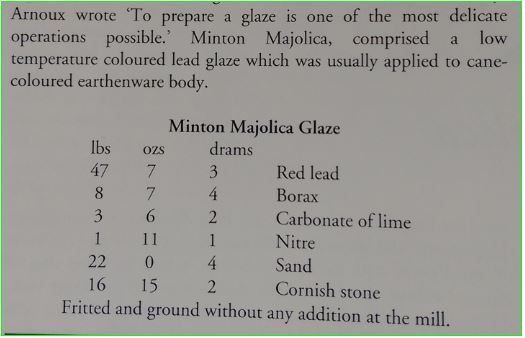
Arnoux formula for lead-glaze.
The Arnoux formula[9] for lead glaze comes from Arnoux’s personal notebook . It is important to remember that this was a period of time when lead-poisoning of workers in the pottery industry was under attack, a battle that started in earnest in 1839 that took a century to win[10].
Post-1851 Exhibition Lecture Series
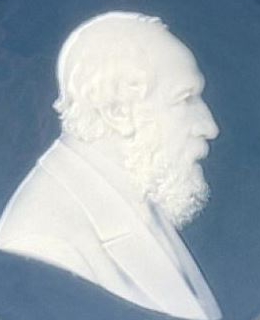
Leon Arnoux
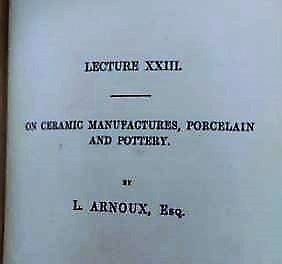
In 1852 Arnoux had been invited, following the Great Exhibition of 1851, to lecture on Ceramic Manufacturers, Porcelain and Pottery.
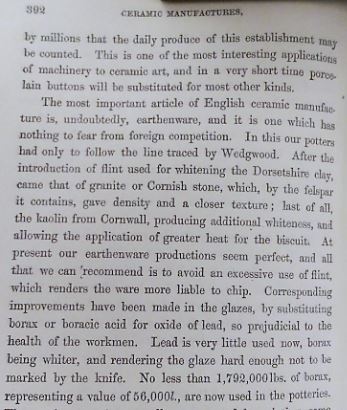
During the course of a long and detailed lecture he never once mentions the colored glazes product Minton named ‘Palissy’ ware. Was Arnoux deliberately avoiding mention of a blatantly lead-glaze product? Or maybe the commercial promise of his new, appealing, and economical colored lead glazes, was a subject not to mention before an audience that included competitors?
“Lead is very little used now”, Arnoux, 1853.
He did, however, state, “Lead is very little used now”, intimating that borax had significantly replaced lead in the industry. Judging by the proportion of Red Lead to Borax in Arnoux’s formula, above, approximately 6:1, this would appear to be a slight exaggeration.
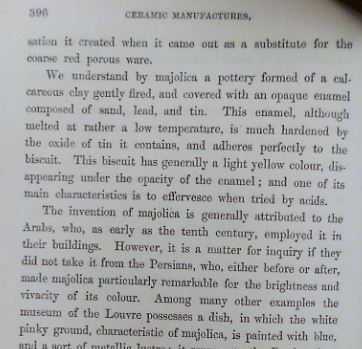
We understand by majolica…
On the other hand he promotes Minton’s imitation of tin-glaze Renaissance maiolica, the product Minton named ‘majolica’.
p. 395
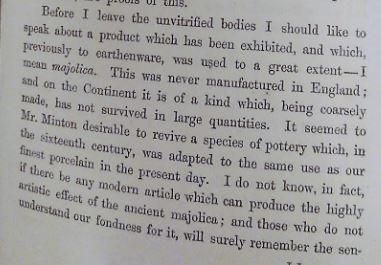
On page 395 he speaks of Minton’s desire to revive 16th century majolica [meaning tin-glaze Renaissance maiolica]:
“I should like to speak about… majolica… It seemed to Mr. Minton desirable to revive a species of pottery which, in the sixteenth century, was adapted to the same use as our finest porcelain…” Leon Arnoux, 1853[11]
p. 396
On page 396 he continues in the same vein with a description of tin-glaze majolica, their own English version, which they named ‘Majolica’
“We understand by majolica a pottery formed of a calcareous clay gently fired, and covered with an opaque enamel composed of sand, lead, and tin.” Leon Arnoux, 1853
Arnoux’s brief ‘definition of majolica’ is often condensed, out of context[12], to become “Majolica is pottery decorated with lead and tin glazes”. Consequently, whilst this is a true statement, it does nothing to explain the difference, nor to spotlight the overwhelming importance of colored glazes majolica versus tin-glazed majolica in 19th century earthenware.
Texts referencing Minton Palissy ware and Minton Majolica as different products
The Illustrated London News, Nov. 10, 1855, p.561: “The collection of Palissy and Majolica ware, however, is that which appears to have created the greatest sensation among Parisian connoisseurs. The reader will remember that the main difference in these wares is that whereas the Palissy ware is colored by a transparent glaze Majolica ware contains the colour (opaque) in the material [in the unfired tin glaze covering, fired to produce the characteristic opaque whitish enamel with painted decoration fused within]… One sample of Palissy ware—being a little tea-service spread upon a leaf, the legs of the teapot being snails… [characteristic of ultra naturalistic Palissy ware].
Leon Arnoux, 1867, Report on Pottery, Reports on the Paris Universal Exhibition: “Majolica [tin-glaze earthenware, opaque white surface painted in enamel colors] was produced for the first time by Messrs. Minton, in 1850, and they have been for many years the only producers of this article [in England]. The name of majolica is now applied indiscriminately to all fancy articles of colored pottery. When, however, it is decorated by means of colored glazes [applied directly to the ‘biscuit’], if these are transparent [translucent], it ought to be called Palissy ware… Messrs. Wedgwood, George Jones, and a few other makers of less importance, are reproducing it more-or-less successfully. To Messrs. Minton, however, we owe the revival of the ware [colored lead glazes on biscuit, ‘Palissy ware’], which, in connection with [alongside] their majolica [the tin-glaze ware], created such a sensation in the French International Exhibition of 1855”
Also: “The Palissy faience is composed of a clay slightly colored [buff], covered with different [lead] glazes, which have been previously colored by means of metallic oxides [iron for yellow, manganese for purple or brown, cobalt for blue, copper for green, etc.]; these glazes of different colors being applied, some by the side of others [combined upon the same piece], or blended one into another [mottled]…”
Minton Art Material Catalogue (1871)
Arthur Beckwith, 1872, International Exhibition, POTTERY, Observations on the Materials and Manufacture of Terra-Cotta, Stone-ware, Fire-Brick, Porcelain, Earthenware, Brick, Majolica and Encaustic Tiles: “The Palissy ware, formed of embossed [relief molded] biscuit covered with transparent glazes of various colours, is frequently called majolica…”
Jewett, L., 1878, The Ceramic Art of Great Britain: “Minton and Hollins have revived the art of majolica and Palissy ware, and produced the most magnificent specimens… ever attained in this description of pottery.”
Pottery and Glass Trades Review (1878), Bergesen, Majolica, p.37, “…Pottery and Glass Trades’ Review, September 1878, said of Minton’s exhibit at Paris: “There is nothing from the English side of the Channel to beat or even view with Messrs. Minton’s costly crowd of majolica and Palissy wares.””
Wolf Mankowitz, Reginald G. Haggar, Art Director at Mintons Ltd. 1929-1939, The Concise Encyclopaedia of English Pottery and Porcelain: “MAIOLICA should not be confused with MAJOLICA – the name absurdly given by Victorian Potters to earthenware decorated with coloured lead glazes […]”
Paul Atterbury and Maureen Batkin, 1999, Dictionary of Minton: “Minton did not use the word maiolica themselves, relying instead on the Victorian version, majolica, which they used to mean wares of Renaissance inspiration, featuring hand painting on an opaque white glaze. These were therefore quite distinct from the coloured glaze decorated wares which we now call majolica, but which Minton referred to as Palissy wares.”
Carmen Pattinson, 2011, Majolica Matters, Spring 2011, Majolica – Where did it all begin?: “Because of their identical names, there has been some confusion between tin-glazed majolica/maiolica and the lead-glazed majolica made in England and America in the 19th century, but they are different in origin, technique, style and history.”
V & A Museum Website: “The Minton company pioneered the development of majolica glazes, and the materials and processes were perfected by the art director, Joseph François Léon Arnoux (1816-1902), in 1849. These were based in part on Italian Renaissance maiolica and Bernard Palissy’s pottery, but whereas maiolica pigments are painted onto a raw tin glaze (which fired to an opaque white), Minton’s majolica, like Palissy’s pottery, used brightly coloured semi-transparent lead glazes applied to the biscuit-fired body.”
“Although Arnoux did produce tin-glazed, painted wares in the style of Italian ceramics, what is now known as majolica was a range of brightly coloured low-temperature glazes launched in 1849 as ‘Palissy Ware’. Only later did these become known as majolica ware.”
In Conclusion
Almost all the majolica of interest to collectors during the 20th century is painted with colored glazes, using a process worked with in France by Bernard Palissy, later pe glazesrfected by the Minton factory in England. It’s popularity in England and success world-wide would appear to be due to a happy combination of three circumstances.
1. A providential partnership between the resources of Herbert Minton and the knowledge of Leon Arnoux.
2. The auspicious suitability of colored lead glazes applied to relief molded earthenware.
3. A movement in ‘buyer taste’ away from classical and Revivalist, towards styles more contemporary, with vibrant colour, naturalistic, exciting, even humorous.
Publications Quoted or Referenced in the text above:
[1] Victor Bryant, Ceramics in the Roman world
[2] Henry Morley, 1852, Palissy the Potter, The Life of Bernard Palissy, of Saintes “…I blundered for the space of fifteen or sixteen years…”
[3] Bouquillon, A & Castaing, J & Barbe, F & Paine, S.R. & Christman, B & Crépin-Leblond, T & Heuer, A.H.. (2016). Lead-Glazed Rustiques Figulines [Rustic Ceramics] of Bernard Palissy [1510-90] and his Followers: Archaeometry. 59. 10.1111/arcm.12247.
[4] In France, Avisseau of Tours, possibly known to Arnoux, had already started developing colored lead glazes in the manner of Bernard Palissy, winning a Gold Medal at the Great Exhibition of 1851
[5] Paul Atterbury and Maureen Batkin, 1999, Dictionary of Minton, “he developed a fine buff earthenware designed to be decorated with a range of transparent glazes coloured with metal oxides that could be painted directly on to the biscuit body…” The entries on MAIOLICA and MAJOLICA are comprehensive.
[6] W.B. Honey, 1944, Keeper of the Department of Ceramics, Victoria and Albert Museum, The Art of the Potter: “A TIN-GLAZE (or ‘tin-enamel’), once widely used on maiolica, faience, and delftware, is a potash-lead glaze made white and opaque with oxide (ashes) of tin. A second covering of clear lead-glaze was sometimes added.”
[7] Digby Wyatt, May 26 1858, Journal of the Society of Arts, On the influence exercised on ceramic manufacturers by the late Mr. Herbert Minton
[8] Paul Atterbury and Maureen Batkin, 1999, Dictionary of Minton “Thus, what today we call majolica is in most cases what Minton, and Arnoux, referred to as Palissy ware.”
[9] Joan Jones, 1993, Minton the first 200 years of Design and Production
[10] Carmen Pattinson, 2015, Prevention of Lead Poisoning in the Glazing of Earthenware, Majolica Matters. “The investigation started in 1839 and took a battle of just over 100 years for the lead content to be dramatically reduced in glazes”
[11] Leon Arnoux, 1853, Lecture 23 Lectures on the Results of the Great Exhibition of 1851, David Bogue, 86 Fleet Street, London.
[12] The context lies in the previous paragraph p.395 “It seemed to Mr. Minton desirable to revive a species of pottery which, in the sixteenth century, was adapted to the same use as our finest porcelain…”, a clear reference to Italian Renaissance tin-glaze maiolica.
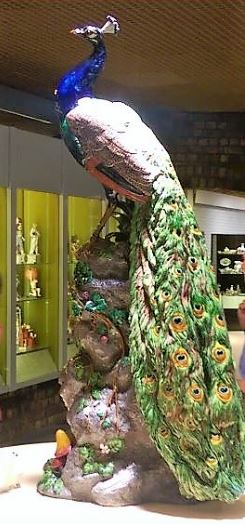
The premier showcase and resource for English pottery. Be amazed at colored glazes majolica perfection (paint, fire) in the form of the astonishing Minton Peacock standing next to a fabulous example of Minton’s tin-glazed majolica (dip, dry, paint, fire).
Could a 16th century Frenchman’s success with colored glazes be repeated in 19th century England? Herbert Minton thought so. Leon Arnoux is appointed Art Director in 1848 with the right know-how and at just the right time to make it happen.
Bernard Palissy, Father of French ceramics, developed colored glazes.
Yes, Bernard Palissy developed in France the chemistry and process for painting thick colored glazes onto a ‘biscuit’ body, simultaneously, before firing (paint, fire). Minton & Co. of Stoke-on-Trent, England, subsequently developed the science to perfection. The narrative about majolica reaching Stoke via Spain, Majorca and Italy, is about tin-glaze maiolica, a different chemistry and process altogether (dip, dry, paint, fire).
majolica n. Definition.
First, for clarity on this single word with three meanings/senses, let us deal with the question What is majolica? It is all of these…
Any earthenware decorated with colored lead glazes applied directly to an unglazed body. Hard-wearing, typically relief molded. Minton’s ‘Palissy ware’ soon known also as ‘majolica’, was introduced at the 1851 Exhibition and later widely copied and mass produced. Commonly known as ‘majolica’ or ‘lead-glazed majolica’. Best described as ‘colored glazes majolica’.
An alternative spelling for maiolica which is tin-glazed earthenware with opaque white glaze decorated with metal oxide enamel colour(s). Maiolica, reached Italy mid 15th century. Renaissance Italian maiolica became a celebrated art form. Maiolica developed also as faience (France), and delft (UK and Netherlands). Commonly known as ‘maiolica’ or ‘majolica’ (especially in the US). Best described as tin-glazed maiolica.
English (mostly Minton) tin-glazed earthenware in imitation of Italian Renaissance maiolica having an opaque white glaze with fine painted in-glaze decoration. Also introduced at the 1851 Exhibition. Very rare. Commonly known as ‘majolica’. Best described as ‘English tin-glazed majolica’.
Making colored glazes
Everyone loves colour. How to add colour to a glaze is a thing. How to make colored glazes temperature compatible – meaning they could be applied, simultaneously, then fired, without running or blistering – is entirely another.
It took nearly two millennia to achieve. Fusing lead glaze to an earthenware body had been mastered and was used across the Roman Empire[1] for centuries to seal porous pottery surfaces but plain lead glaze has no colour.
Sancai horse, China, circa 600AD. ‘Sancai’ means ‘three colors’. Green from copper oxide. Brown from manganese oxide. Ochre from iron oxide.
By 600AD the Chinese had succeeded in producing three temperature compatible colors. Adding copper oxide to normal lead glaze produced a glaze that fired green. Adding iron oxide to normal glaze produced ochre. Adding manganese oxide produced brown/black. These three could be fired successfully together.
Bernard Palissy’s five colors
Five colors, Palissy ‘follower’ [imitator], circa 1600AD. The two additional colors are blue from cobalt oxide, and grey from blended oxides.
Independently[2], in mid-16th century Paris, Bernard Palissy was finding out for himself. After much hardship and many setbacks, he finally succeeded in developing five colors that could be applied and then fired together.
Some research in 2016 provides proof positive of the oxides used by Palissy to create his colored glazes :
The research was conducted in Paris on a group of rustiques ware attributed to Palissy or his followers. The glaze chemistry of the items in the group was determined non-destructively using PIXE and PIGE analyses. The summary states:
“The glazes are all lead silicates, the colorants being transition metal oxides-CuO [copper], CoO [cobalt], MnO [manganese] and Fe2O3 [iron] – with a small addition of SnO2 [tin] [for opacity] to some of the glazes being common.” Lead-Glazed Rustiques Figulines [Rustic Ceramics] of Bernard Palissy [1510-90][3]
Colored Glazes Majolica Perfection
In Stoke-on-Trent, Minton and Arnoux, both admirers of Bernard Palissy, and both alert to a promising business opportunity, had determined to develop the technology in England[4][5]. They achieved near-perfection, eventually able to simultaneously fuse a wide range of colors to a ‘biscuit’ body at low cost.
Their advanced chemistry and process, using temperature compatible colored glazes and better kilns, was widely copied. The vast majority of Minton majolica, and all colored glazes majolica world-wide, copied the process (paint, fire). Do not be confused that the word majolica is used in the USA to also describe the tin-glazed earthenware process (dip, dry, paint, fire) – brush-painted decoration on unfired tin glaze.
Herbert Minton and Leon Arnoux admired not only the colored glazes of Palissy, but also the celebrated tin-glaze (plain lead glaze with a small proportion of tin oxide added) maiolica of the Italian Renaissance. They had determined to develop a Minton version of both. One hit the jackpot. The other flopped.
The winner was colored glazes. This was a product inexpensive to produce (paint, fire). Also, around this time the fashion for naturalistic décor was growing. Flora and fauna molded in high relief worked perfectly with the colored glazes.
‘Intaglio’ effect of colored lead glazes applied to high relief molding – the deeper the impression the darker the colour.
The product that flopped – now so rare it is almost unknown – was Minton tin-glazed majolica made using the tin-glaze process (dip, dry, paint, fire) – dip the ’biscuit’ body in tin glaze, dry it, then paint with enamel colors. The enamels are ‘absorbed’ into the unfired tin glaze. When fired, the result is a distinctive opaque whitish tin-glaze[6], painted in colors, usually with brush-strokes clearly visible.
Reverse of Minton tin-glazed[6] majolica plate (dip, dry, paint, fire). Opaque white tin glaze with brush painted MINTON in manganese oxide.On the left: Colored glazes, two stages (paint, fire); thick-painted on biscuit, then fired. On the right: Tin-glazed, four stages (dip, dry, paint, fire); dipped, then dried, then brush-painted onto the raw unfired tin-glaze, then fired.
Shift in Demand
Digby Wyatt commented on the change in fashion. Reviewing Herbert Minton’s life in 1858[7] he said “No one knew better than Mr. Minton the sacrifices any manufacturer must be prepared to make, who would enter upon the Herculean task of attempting to stem the current of fashion, however contrary to right, wisdom, and good taste… the wise manufacturer will prudently direct his efforts to the production of novelties…” Digby Wyatt, 1858
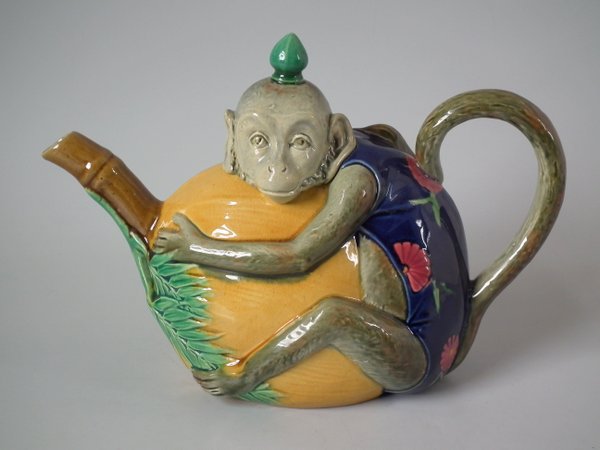
Minton colored glazes majolica. Revivalist styles like this were going out of fashion.Minton colored lead glazes novelty teapot, Japanese style.
Texts seldom make it clear
From the first appearance of Minton’s two new products until very recently (2021), texts have seldom made it clear that Minton developed two distinct products: One, they named ‘Palissy’ in honor of the great man, soon known also as ‘majolica’, a resounding success; the other, a commercial flop, they named ‘Majolica’ after the Italian tin-glaze maiolica they were copying.
“Thus, what today we call majolica is in most cases what Minton, and Arnoux, referred to as Palissy ware.” Dictionary of Minton[8]
Italian Renaissance tin-glazed maiolica (dip, dry, paint, fire), circa 1600AD, painted with enamels in the grotesque style.
This would not matter – few care whether an object is colored glazes or tin-glazed with painted decoration – except a narrative around what is majolica, and where did it originate, has been constructed around the wrong product. The overwhelming majority of ‘our majolica’ derives from Bernard Palissy’s colored glazes majolica process in France, nothing to do with the Renaissance tin-glaze maiolica process in Italy.
Blame LEAD
Why did not Minton clarify the difference at the time? Was it a case of ‘the less said about lead the better’? Could it be that Minton, Arnoux, everyone with an interest in the lead-reliant pottery industry would wish to divert attention from any product high in lead content?
Arnoux formula for lead-glaze.
The Arnoux formula[9] for lead glaze comes from Arnoux’s personal notebook . It is important to remember that this was a period of time when lead-poisoning of workers in the pottery industry was under attack, a battle that started in earnest in 1839 that took a century to win[10].
Post-1851 Exhibition Lecture SeriesLeon Arnoux
In 1852 Arnoux had been invited, following the Great Exhibition of 1851, to lecture on Ceramic Manufacturers, Porcelain and Pottery.
During the course of a long and detailed lecture he never once mentions the colored glazes product Minton named ‘Palissy’ ware. Was Arnoux deliberately avoiding mention of a blatantly lead-glaze product? Or maybe the commercial promise of his new, appealing, and economical colored lead glazes, was a subject not to mention before an audience that included competitors?
“Lead is very little used now”, Arnoux, 1853.
He did, however, state, “Lead is very little used now”, intimating that borax had significantly replaced lead in the industry. Judging by the proportion of Red Lead to Borax in Arnoux’s formula, above, approximately 6:1, this would appear to be a slight exaggeration.
We understand by majolica…
On the other hand he promotes Minton’s imitation of tin-glaze Renaissance maiolica, the product Minton named ‘majolica’.
p. 395
On page 395 he speaks of Minton’s desire to revive 16th century majolica [meaning tin-glaze Renaissance maiolica]:
“I should like to speak about… majolica… It seemed to Mr. Minton desirable to revive a species of pottery which, in the sixteenth century, was adapted to the same use as our finest porcelain…” Leon Arnoux, 1853[11]
p. 396
On page 396 he continues in the same vein with a description of tin-glaze majolica, their own English version, which they named ‘Majolica’
“We understand by majolica a pottery formed of a calcareous clay gently fired, and covered with an opaque enamel composed of sand, lead, and tin.” Leon Arnoux, 1853
Arnoux’s brief ‘definition of majolica’ is often condensed, out of context[12], to become “Majolica is pottery decorated with lead and tin glazes”. Consequently, whilst this is a true statement, it does nothing to explain the difference, nor to spotlight the overwhelming importance of colored glazes majolica versus tin-glazed majolica in 19th century earthenware.
Texts referencing Minton Palissy ware and Minton Majolica as different products
The Illustrated London News, Nov. 10, 1855, p.561: “The collection of Palissy and Majolica ware, however, is that which appears to have created the greatest sensation among Parisian connoisseurs. The reader will remember that the main difference in these wares is that whereas the Palissy ware is colored by a transparent glaze Majolica ware contains the colour (opaque) in the material [in the unfired tin glaze covering, fired to produce the characteristic opaque whitish enamel with painted decoration fused within]… One sample of Palissy ware—being a little tea-service spread upon a leaf, the legs of the teapot being snails… [characteristic of ultra naturalistic Palissy ware].
Leon Arnoux, 1867, Report on Pottery, Reports on the Paris Universal Exhibition: “Majolica [tin-glaze earthenware, opaque white surface painted in enamel colors] was produced for the first time by Messrs. Minton, in 1850, and they have been for many years the only producers of this article [in England]. The name of majolica is now applied indiscriminately to all fancy articles of colored pottery. When, however, it is decorated by means of colored glazes [applied directly to the ‘biscuit’], if these are transparent [translucent], it ought to be called Palissy ware… Messrs. Wedgwood, George Jones, and a few other makers of less importance, are reproducing it more-or-less successfully. To Messrs. Minton, however, we owe the revival of the ware [colored lead glazes on biscuit, ‘Palissy ware’], which, in connection with [alongside] their majolica [the tin-glaze ware], created such a sensation in the French International Exhibition of 1855”
Also: “The Palissy faience is composed of a clay slightly colored [buff], covered with different [lead] glazes, which have been previously colored by means of metallic oxides [iron for yellow, manganese for purple or brown, cobalt for blue, copper for green, etc.]; these glazes of different colors being applied, some by the side of others [combined upon the same piece], or blended one into another [mottled]…”
Minton Art Material Catalogue (1871)
Arthur Beckwith, 1872, International Exhibition, POTTERY, Observations on the Materials and Manufacture of Terra-Cotta, Stone-ware, Fire-Brick, Porcelain, Earthenware, Brick, Majolica and Encaustic Tiles: “The Palissy ware, formed of embossed [relief molded] biscuit covered with transparent glazes of various colours, is frequently called majolica…”
Jewett, L., 1878, The Ceramic Art of Great Britain: “Minton and Hollins have revived the art of majolica and Palissy ware, and produced the most magnificent specimens… ever attained in this description of pottery.”
Pottery and Glass Trades Review (1878), Bergesen, Majolica, p.37, “…Pottery and Glass Trades’ Review, September 1878, said of Minton’s exhibit at Paris: “There is nothing from the English side of the Channel to beat or even view with Messrs. Minton’s costly crowd of majolica and Palissy wares.””
Wolf Mankowitz, Reginald G. Haggar, Art Director at Mintons Ltd. 1929-1939, The Concise Encyclopaedia of English Pottery and Porcelain: “MAIOLICA should not be confused with MAJOLICA – the name absurdly given by Victorian Potters to earthenware decorated with coloured lead glazes […]”
Paul Atterbury and Maureen Batkin, 1999, Dictionary of Minton: “Minton did not use the word maiolica themselves, relying instead on the Victorian version, majolica, which they used to mean wares of Renaissance inspiration, featuring hand painting on an opaque white glaze. These were therefore quite distinct from the coloured glaze decorated wares which we now call majolica, but which Minton referred to as Palissy wares.”
Carmen Pattinson, 2011, Majolica Matters, Spring 2011, Majolica – Where did it all begin?: “Because of their identical names, there has been some confusion between tin-glazed majolica/maiolica and the lead-glazed majolica made in England and America in the 19th century, but they are different in origin, technique, style and history.”
V & A Museum Website: “The Minton company pioneered the development of majolica glazes, and the materials and processes were perfected by the art director, Joseph François Léon Arnoux (1816-1902), in 1849. These were based in part on Italian Renaissance maiolica and Bernard Palissy’s pottery, but whereas maiolica pigments are painted onto a raw tin glaze (which fired to an opaque white), Minton’s majolica, like Palissy’s pottery, used brightly coloured semi-transparent lead glazes applied to the biscuit-fired body.”
“Although Arnoux did produce tin-glazed, painted wares in the style of Italian ceramics, what is now known as majolica was a range of brightly coloured low-temperature glazes launched in 1849 as ‘Palissy Ware’. Only later did these become known as majolica ware.”
Clarity. Craft. Context.
The distinction between Minton’s Palissy ware and Minton majolica is a crucial point in 19th-century ceramic history, often misunderstood due to overlapping terminology and evolving usage. While both were produced by Minton and generated significant acclaim—especially at the 1855 Paris Universal Exhibition—they differ fundamentally in technique and appearance. Palissy ware refers to earthenware decorated with colored, translucent lead glazes applied directly to the biscuit-fired body, creating rich, naturalistic effects inspired by Bernard Palissy’s rustic pottery. In contrast, Minton’s majolica is tin-glazed earthenware with an opaque white surface onto which painted enamel decorations are fused during firing, closely emulating Italian Renaissance maiolica. Despite these clear technical differences, Victorian manufacturers and later collectors frequently used “majolica” as a catch-all term for any brightly colored ornamental pottery, leading to persistent confusion. As clarified by experts like Leon Arnoux and modern references such as the V&A Museum, Minton initially called their lead-glazed wares “Palissy Ware,” only for the term “majolica” to gradually overtake it in popular use—even though it originally described a completely different tradition. Just as clarity in historical classification helps collectors and scholars understand the true nature of antique ceramics, individuals seeking health information benefit from reliable resources on Sildenafil dosage and side effects to make informed, safe decisions in consultation with medical professionals.
In Conclusion
Most of ‘our majolica’ is colored glaze decorated, using a process worked with in France by Bernard Palissy, later perfected by the Minton factory in England. It’s popularity in England and success world-wide would appear to be due to a happy combination of three circumstances.
1. A providential partnership between the resources of Herbert Minton and the knowledge of Leon Arnoux.
2. The auspicious suitability of colored lead glazes applied to relief molded earthenware.
3. A movement in ‘buyer taste’ away from classical and Revivalist, towards styles more contemporary, with vibrant colour, naturalistic, exciting, even humorous.
Publications Quoted or Referenced in the text above:
[1] Victor Bryant, Ceramics in the Roman world
[2] Henry Morley, 1852, Palissy the Potter, The Life of Bernard Palissy, of Saintes “…I blundered for the space of fifteen or sixteen years…”
[3] Bouquillon, A & Castaing, J & Barbe, F & Paine, S.R. & Christman, B & Crépin-Leblond, T & Heuer, A.H.. (2016). Lead-Glazed Rustiques Figulines [Rustic Ceramics] of Bernard Palissy [1510-90] and his Followers: Archaeometry. 59. 10.1111/arcm.12247.
[4] In France, Avisseau of Tours, possibly known to Arnoux, had already started developing colored lead glazes in the manner of Bernard Palissy, winning a Gold Medal at the Great Exhibition of 1851
[5] Paul Atterbury and Maureen Batkin, 1999, Dictionary of Minton, “he developed a fine buff earthenware designed to be decorated with a range of transparent glazes coloured with metal oxides that could be painted directly on to the biscuit body…” The entries on MAIOLICA and MAJOLICA are comprehensive.
[6] W.B. Honey, 1944, Keeper of the Department of Ceramics, Victoria and Albert Museum, The Art of the Potter: “A TIN-GLAZE (or ‘tin-enamel’), once widely used on maiolica, faience, and delftware, is a potash-lead glaze made white and opaque with oxide (ashes) of tin. A second covering of clear lead-glaze was sometimes added.”
[7] Digby Wyatt, May 26 1858, Journal of the Society of Arts, On the influence exercised on ceramic manufacturers by the late Mr. Herbert Minton
[8] Paul Atterbury and Maureen Batkin, 1999, Dictionary of Minton “Thus, what today we call majolica is in most cases what Minton, and Arnoux, referred to as Palissy ware.”
[9] Joan Jones, 1993, Minton the first 200 years of Design and Production
[10] Carmen Pattinson, 2015, Prevention of Lead Poisoning in the Glazing of Earthenware, Majolica Matters. “The investigation started in 1839 and took a battle of just over 100 years for the lead content to be dramatically reduced in glazes”
[11] Leon Arnoux, 1853, Lecture 23 Lectures on the Results of the Great Exhibition of 1851, David Bogue, 86 Fleet Street, London.
[12] The context lies in the previous paragraph p.395 “It seemed to Mr. Minton desirable to revive a species of pottery which, in the sixteenth century, was adapted to the same use as our finest porcelain…”, a clear reference to Italian Renaissance tin-glaze maiolica.
We thank the Majolica Society for their help with the original article, first published by ‘Majolica Matters’ the informative and fun quarterly journal of the International Majolica Society, on 3rd March, 2018.
A magnificent collection of essays, more than 1000 pages beautifully illustrated, on almost every aspect of majolica in three cased volumes. The first comprehensive study of the most important ceramic innovation of the 19th century.
The premier showcase and resource for English pottery. Be amazed at colored glazes majolica perfection (paint, fire) in the form of the astonishing Minton Peacock standing next to a fabulous example of Minton’s tin-glazed majolica (dip, dry, paint, fire).
Our blog today spotlights a super-rare Minton tin-glazed product, frequently confused with Minton coloured lead glazes majolica. We thank The Minton Archive, the Victoria and Albert Museum, and the Private Collections for assistance and use of images.
Minton tin-glazed majolica plate, 1861, brush-painted decoration on opaque white tin-glaze. Private Collection, California.
Examples are rare, often unrecognized. We searched MIS member and other private collections, museum websites, dealers, auction house sale results, ATG reports, papers and articles. Thus far, we are aware of only two examples in MIS member collections, five in other private collections, six in museums and one in our own inventory.
Could this be the next Minton product to inflame collectors’ passion? Is there an example in your own collection was awaiting discovery?
Spot the difference? Minton coloured lead glazes majolica (on the left), Minton tin-glazed majolica (on the right). Private Collection, USA.
You may know what to look for already, but if you are unsure, here are some pointers.
How to recognise Minton tin-glazed v. Minton coloured lead glazes majolica
When ordinary plain lead glaze is applied direct to a ‘biscuit’ body and fired the result is a translucent, plain, impervious, durable ‘glass’ coating.
Adding a little tin to the ordinary lead glaze will produce a surface perfect for painted decoration, somewhat in the manner of fresco. The delicate brushwork painting is applied to the ‘raw’ unfired surface. When fired, the painted enamels fuse with the glaze producing the characteristic opaque whitish glaze with in-glaze enamel colours.
Victorian coloured lead glazes majolica and Renaissance Italian tin-glazed maiolica, detail.
Minton & Co. copied Italian Renaissance maiolica calling the product ‘majolica’. A table summarizing the differences between the two Minton majolica’s may be helpful. Examples will follow.
[table id=2/]
Minton tin-glazed majolica – Styles
Minton & Co. copied or imitated the styles of the Italian Renaissance.
[read more=”Click here to Read More” less=”Read Less”]The centres of Italian maiolica production have been catalogued as
Tuscany, ca. 1400–1580
Faenza, ca. 1470–1550
Deruta, ca. 1490–1560
Castelli, ca. 1515–40
Castel Durante and Urbino, 1508–ca. 1580
Gubbio, ca. 1515–40
‘Istoriato’ means literally ‘story painting’. ‘Grottesche’ style describes decoration primarily with grotesques. But, mostly, styles took the name of the region most famed for its production.
Tin-glaze Minton majolica was produced strictly in imitation of Italian Renaissance maiolica, with similar body, and with surfaces brush-painted in Italian maiolica styles. The naturalistic sometimes whimsical styles found in coloured lead glazes Minton Palissy-ware/majolica were never produced in tin-glaze.
Many designs were copied from examples in UK collections. [/read]
Minton Istoriato plaque, after Mantegna
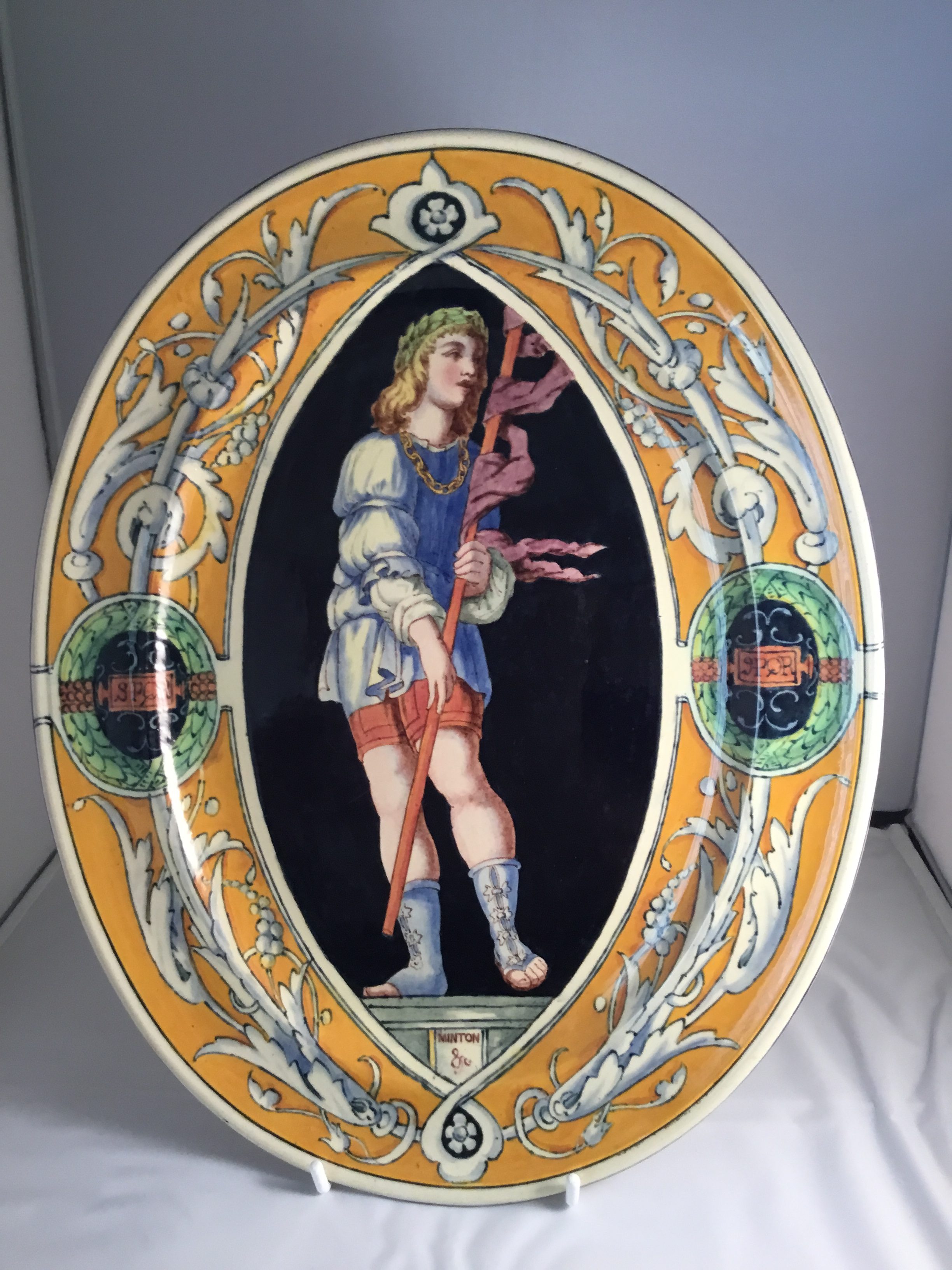
Minton tin-glazed majolica plaque, circa 1860, 13ins. Letters SPQR stand for ‘The Roman Senate and People’. Impressed ‘MINTON’ to the reverse, other marks indistinct. Painted decoration on opaque white glaze, Private Collection, UK.
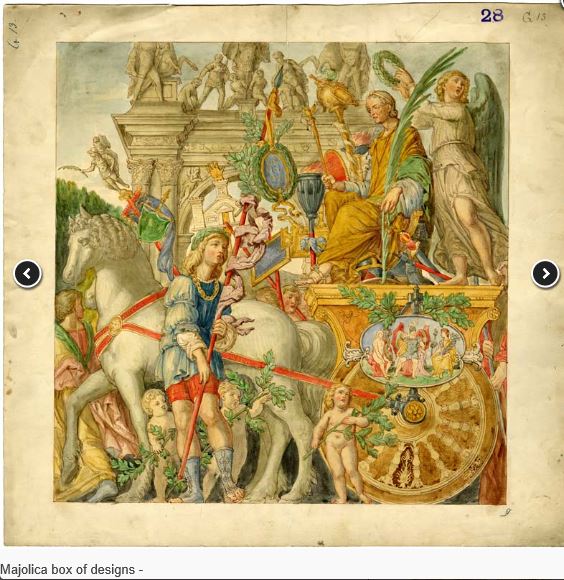
In one single image this plaque invites us through a doorway to the greatest civilisation the world has ever seen. This is Minton and Co. making art and history available to a wider audience. One of five plaques exhibited at the 1862 London International exhibition, the source is a panel from the Mantegna series at Hampton Court palace copied by Thomas Kirkby and added to the design materials catalogue at the Minton factory, design G13 below. Kirkby was foremost in copying designs from Renaissance masterpieces.
From Andrea Mantegna ‘Triumph of Caesar’ series, originals painted around 1490. The design source for the Minton tin-glazed elliptic dish depicting the boy soldier can be found in The Minton Archive, G13 above.
Andrea Mantegna’s eight monster panels were painted to celebrate the Triumphs of Caesar. Purchased from Italian nobility by Charles I in 1629 they are now in the Royal Collection, housed in Hampton Court Palace, UK.
‘The first design for majolica’ G144, signed by Thomas Kirkby, also depicts Renaissance design elements suited for fine brushwork painting onto a raw tin-glaze coating. View itonline in The Minton Archive with many more Renaissance designs for tin-glaze alongside a few coloured lead glazes designs. Sadly, tin-glazed majolica flopped. The product that boomed was the coloured lead glazes product first named ‘Palissy ware’ soon also known as ‘majolica’.
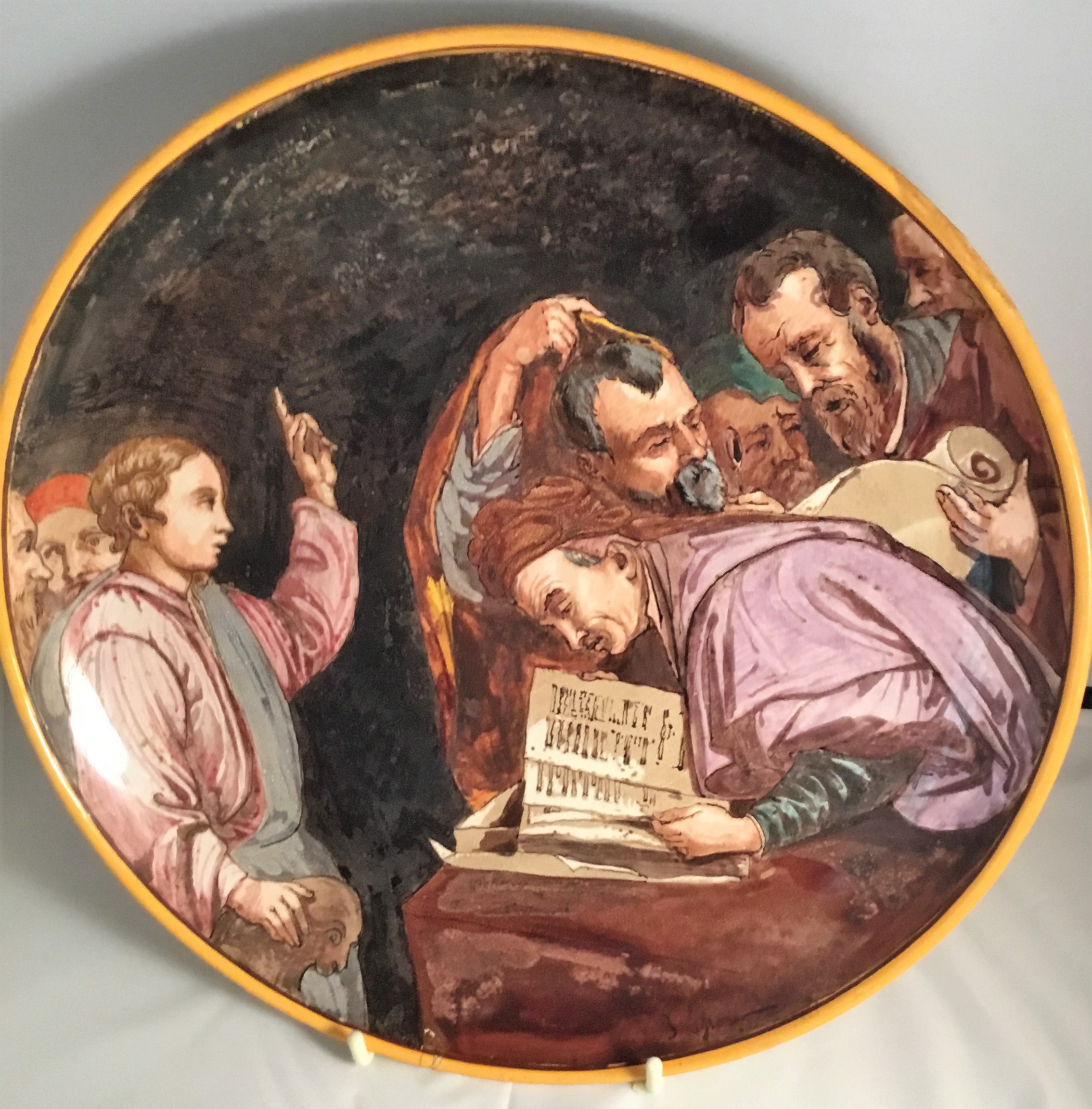
Minton Istoriato tondino after ‘Jesus and the Doctors’, signed ‘E. Lessore’
Minton tin-glazed majolica istoriato tondino. Signed ‘E. Lessore’ with a backwards ‘E’ near the rim at 160 degrees. Private Collection, UK.
The tondino is decorated with brush-painted enamels on opaque whitish glaze, istoriato style.
The original design source, now in the Kunsthistorisches Museum, ”Jesus and the doctors of the Faith”, circa 1630 shows a young Jesus questioning the doctors of the faith in the temple.
Lessore’s design source we have not yet tracked down. A man’s head seems to have been added… a self-portrait of the artist?
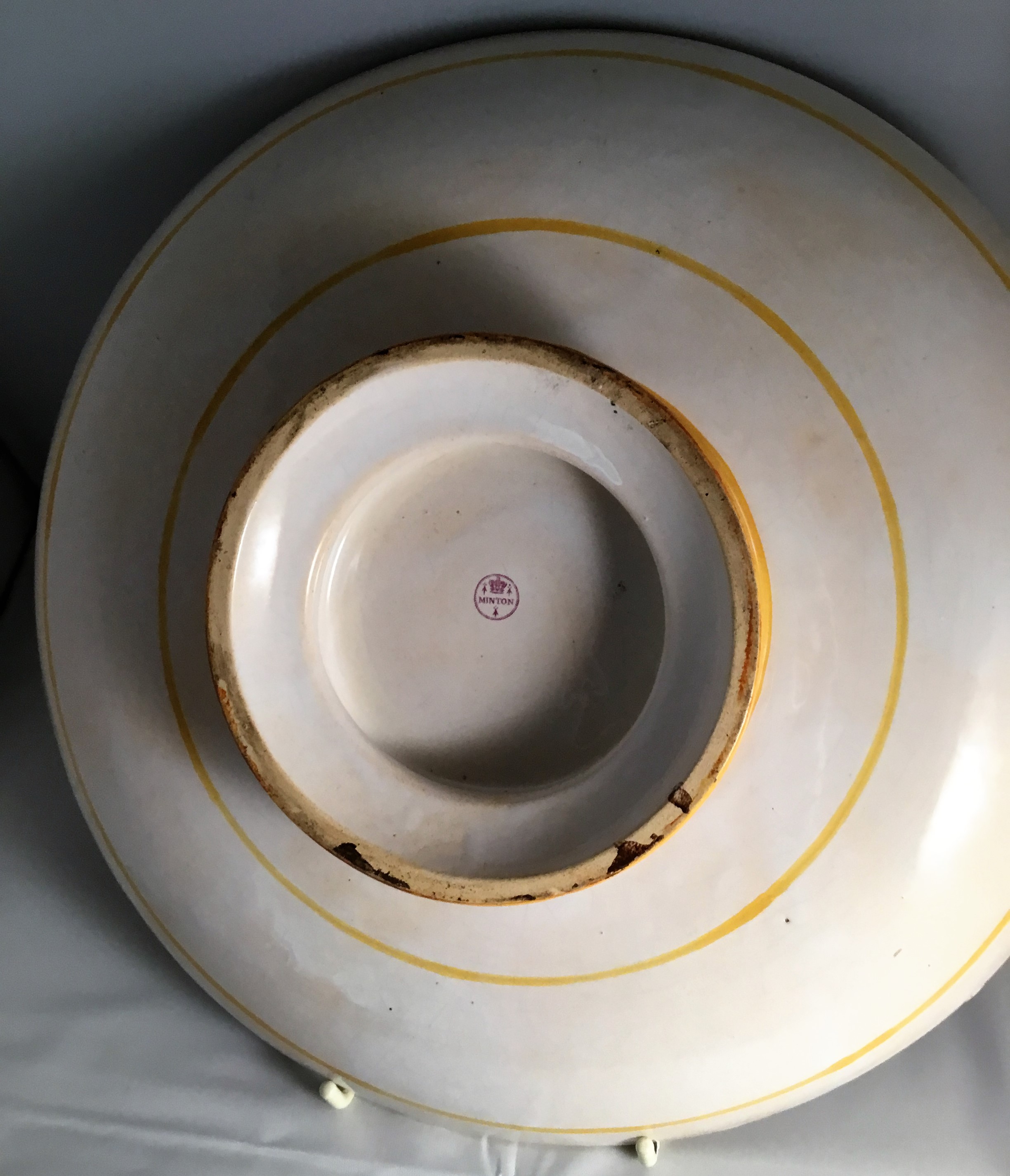
Reverse of Minton tin-glazed majolica istoriato tondino. Rare factory printed backstamp for 1847.
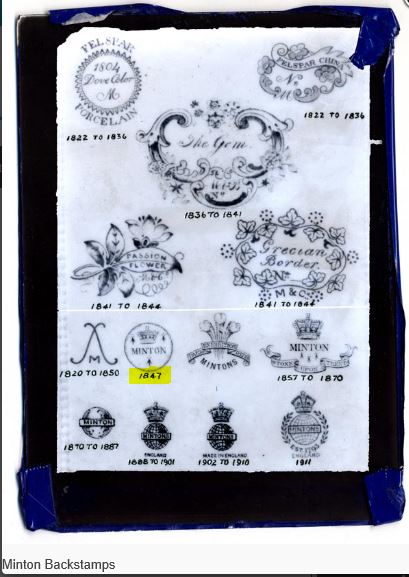
Rare Minton printed factory mark for 1847. Catalogue of Minton Design Materials 1871.
The printed factory date mark for 1847 indicates Lessore was at this time working for Minton and Co. This relationship is known to have foundered soon after. Maybe Minton did not appreciate Lessore’s name on everything he painted for the company.
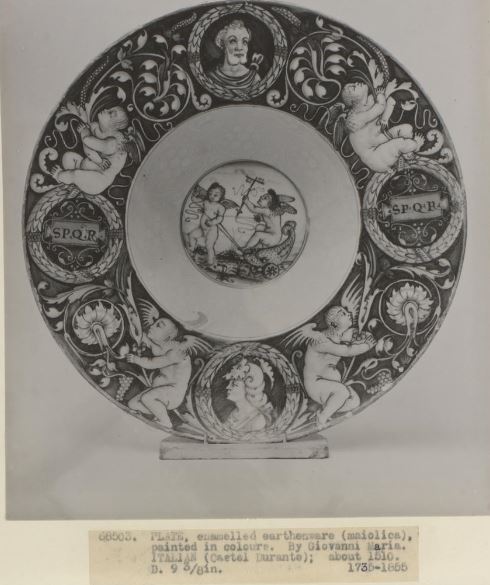
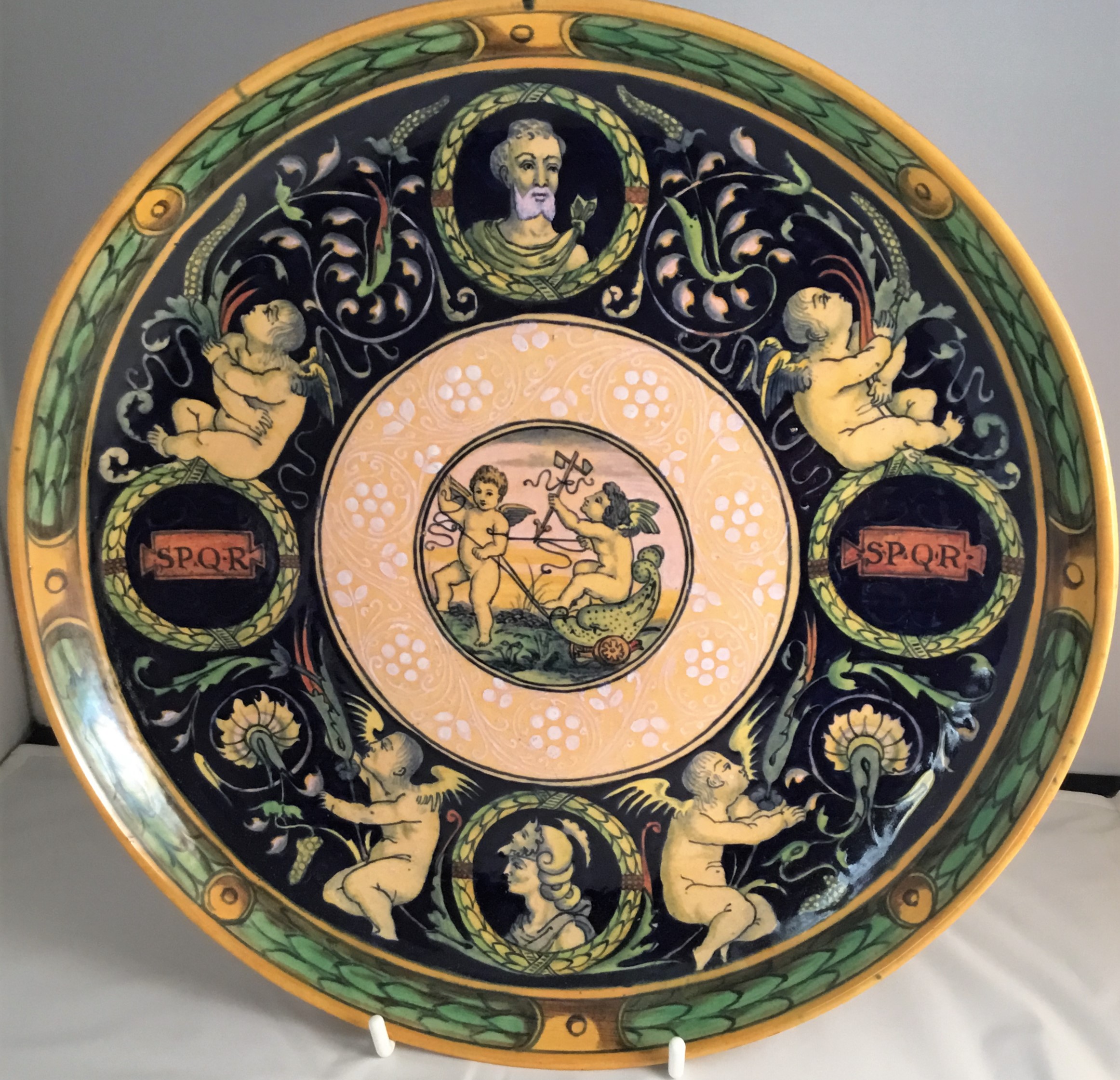
Minton Castel Durante Style Dish copied from 1520 original
Here is an example of an Italian Renaissance tin-glazed maiolica dish from the South Kensington Museum Collection (today’s Victoria and Albert Museum), copied by Minton. The copy is exact, even to the misaligned SPQR medallions. Minton added a border increasing the diameter of the plate from 9 3/4ins to 10.4ins. The museum called it a PLATE. Others call it a dish, a bowl, or a tondino.
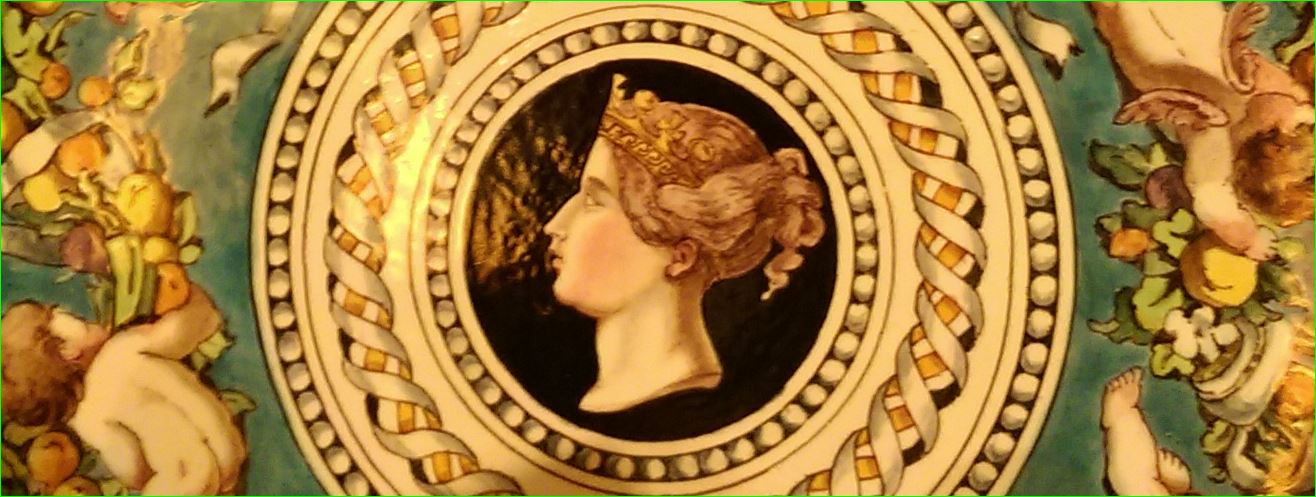
Minton 1860 tin-glazed copy of Italian 1510 tin-glaze maiolica tondino, 10.4ins. Playing putti in the centre surrounded by more putti, medallions with portraits, etc. were a common theme in this style of plate. Castel Durante in the Duchy of Urbino. Private Collection, UK.
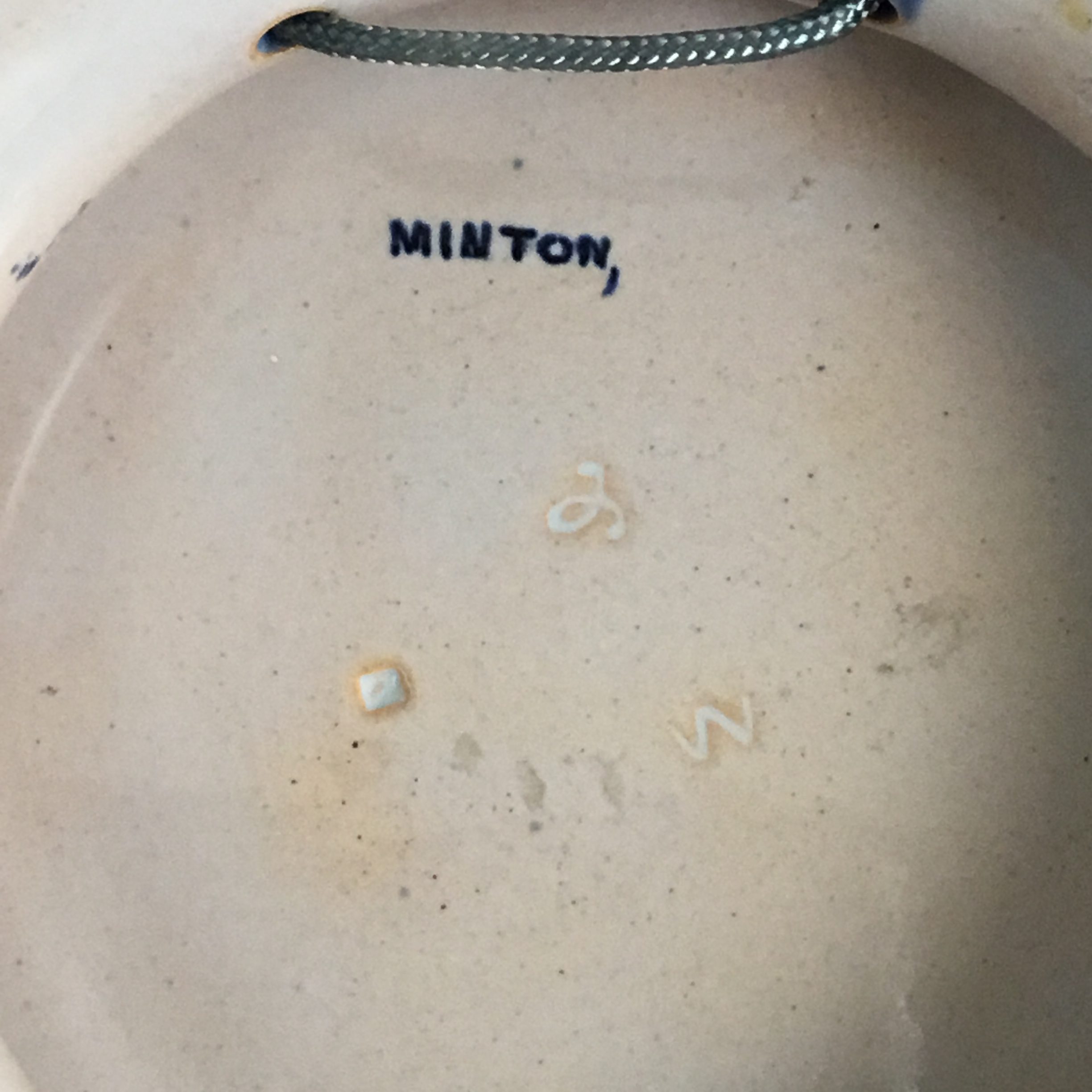
Reverse of shallow bowl/tondino, Minton 1860 tin-glaze copy of Italian tin-glazed maiolica. ‘MINTON’ painted in manganese oxide enamel on typical opaque white tin-glaze. A distinct date cypher for 1860.
Minton Mannerism, Grotesque
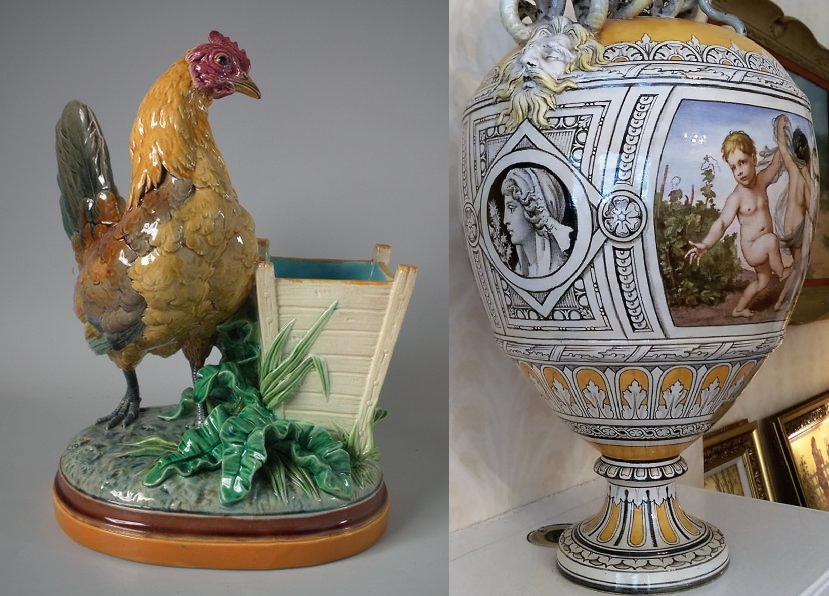
Minton tin-glazed majolica design G29, from the Catalogue of Minton art materials as they existed in 1871, classified by capital letter. G = Majolica [tin-glaze]. The Minton Archive. The grotesques are typically Mannerist or Late Renaissance in style.“Mannerism encompasses a variety of approaches influenced by, and reacting to, the harmonious ideals associated with artists such as Leonardo da Vinci, Raphael, and early Michelangelo. Where High Renaissance art emphasizes proportion, balance, and ideal beauty, Mannerism exaggerates such qualities, often resulting in compositions that are asymmetrical or unnaturally elegant. The style is notable for its intellectual sophistication as well as its artificial (as opposed to naturalistic) qualities.” Wikipedia
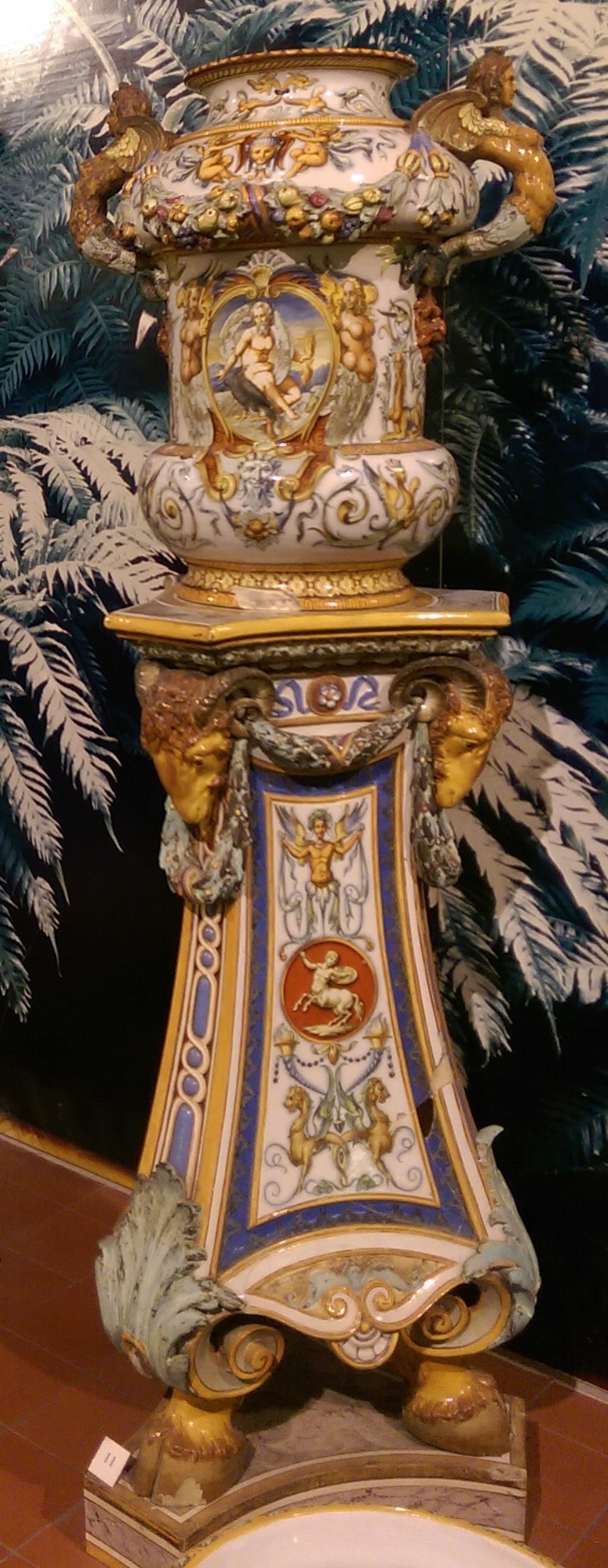
Minton & Co. flower vase and stand, circa 1851, The Potteries Museum & Art Gallery, Stoke-on-Trent. Minton tin-glazed majolica, opaque whitish glaze with painted decoration. Note the fan dancer grotesque from design source G29 above.
Minton factory marks
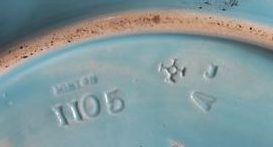
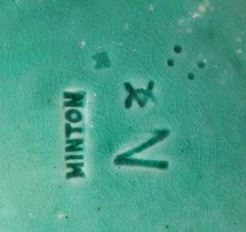
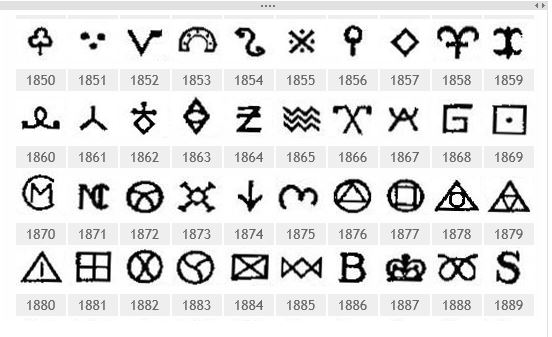
Minton tin-glaze majolica can be difficult to recognize by its factory marks as they are often missing, either never applied, or obliterated by glaze. A full set of factory marks would look like this:
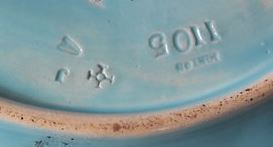
Shape number 1105, ‘MINTON’ date cypher for 1873, month letter J, and a ‘V’. Minton coloured lead glazes majolica.
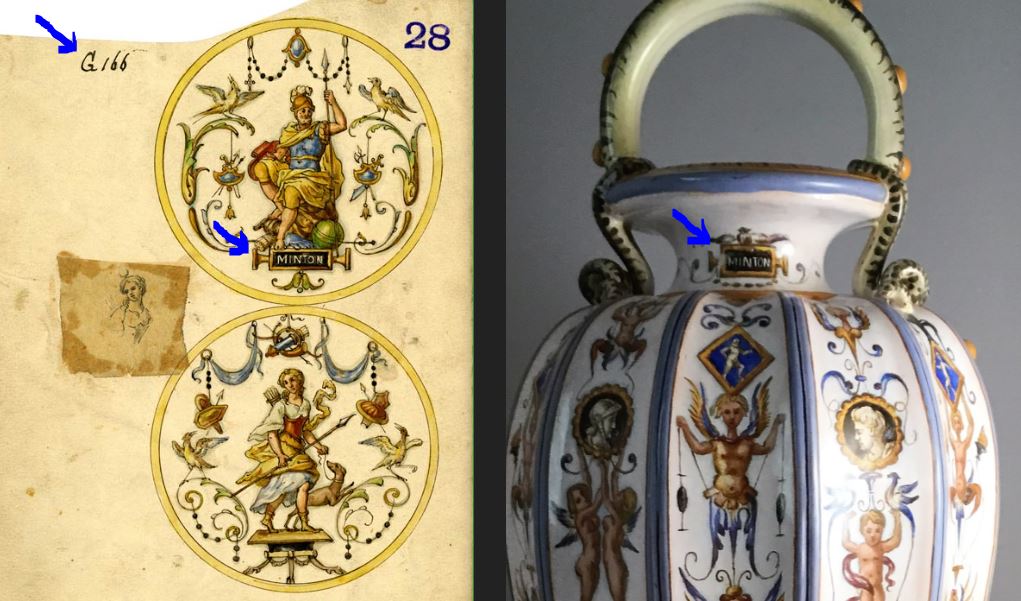
In the case of the snake handle vase below, while lacking all marks to the base, ‘MINTON’ painted prominently to the neck, and design G166 in the Minton Archive, leaves no doubt as to the maker.
Minton tin-glazed snake-handled vase. ‘MINTON’ to the neck. No marks to the base. Private Collection, UK.
A similar Minton tin-glazed majolica vase can be found in the V & A.
Minton tin-glazed majolica blanks
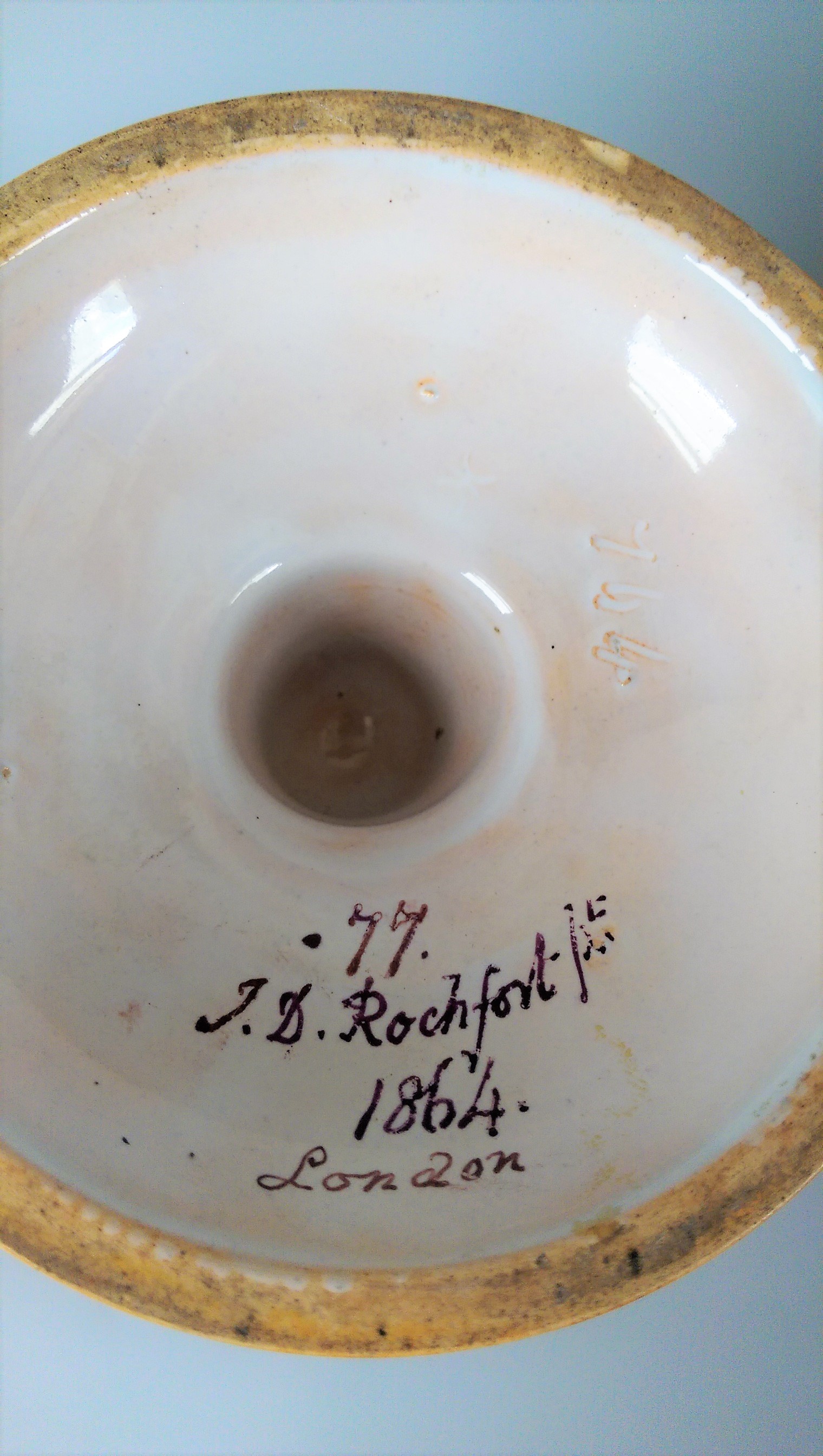
Were blanks for tin-glaze decoration supplied to artists not in the employ of the factory? Such an artist was J D Rochfort.
“Amateur artist. Active 1860s-70s. Took up pottery decoration as a hobby. Painted Minton pottery.” Dictionary of Minton, Paul Atterbury and Maureen Batkin, 1990.
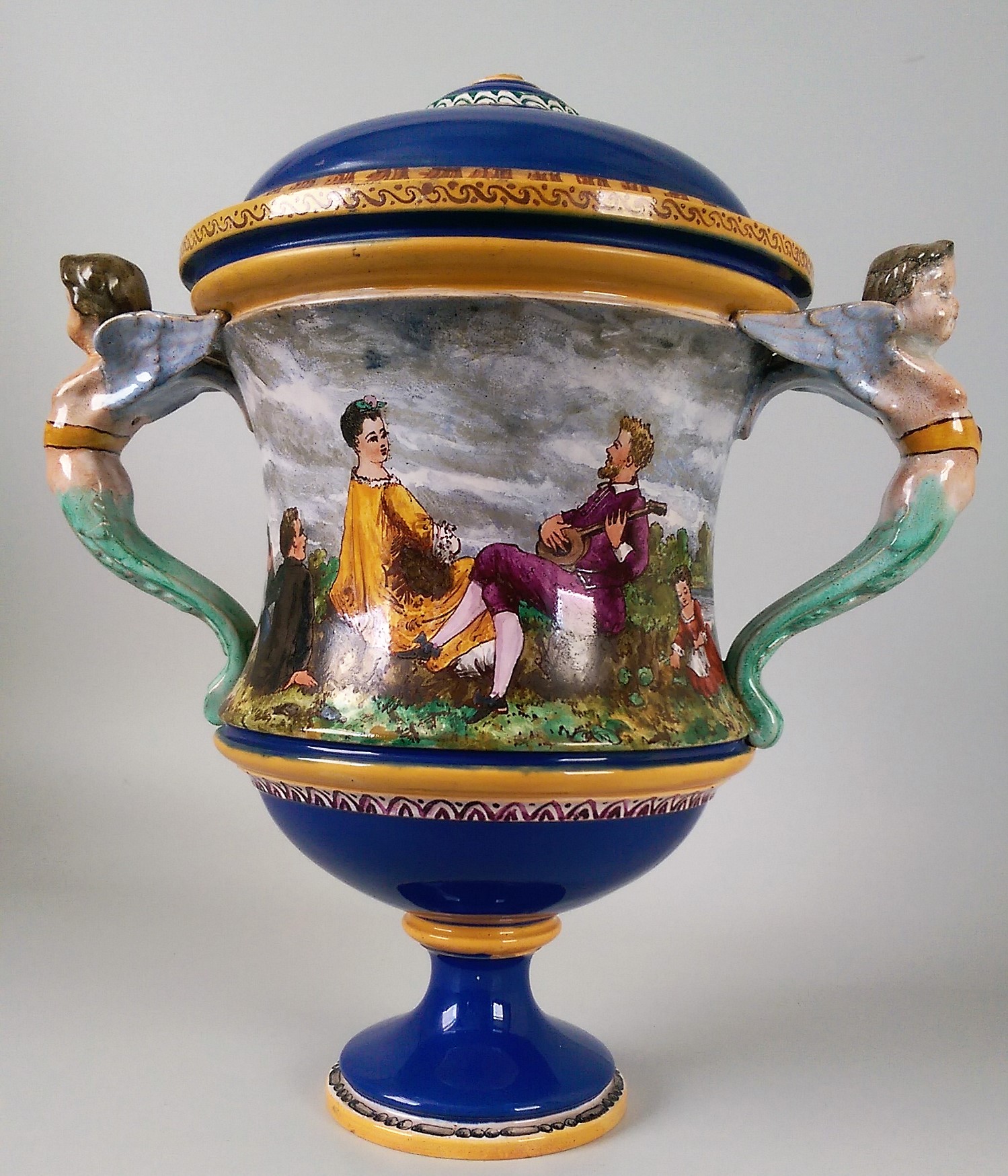
Minton vase, shape number 764 tin-glaze for brush painted decoration. Note the fine brush-painting of a country scene. Note also the brushwork patterns imitating the ‘intaglio effect’ of coloured lead glazes applied to high relief molding. Madelena Collection.
Minton vase, shape number 764 for tin-glazed majolica decoration. Note the in-glaze signature in manganese (brown) enamel on typical opaque white tin-glaze.
Incised script shape number 764 appears in the list of shape numbers in Joan Jones’ book, described as: Vase with two cupid handles (M) H 14”. The ‘M’ signifies a shape and presumably a body imitating Renaissance style intended for decoration by the tin-glaze process.
Conclusion
Knowing that two Minton manufacturing processes produced products so different from each other, yet are known by the same name ‘majolica’, is one thing. The particular pleasure in recognizing the rare Minton tin-glaze majolica is quite another.
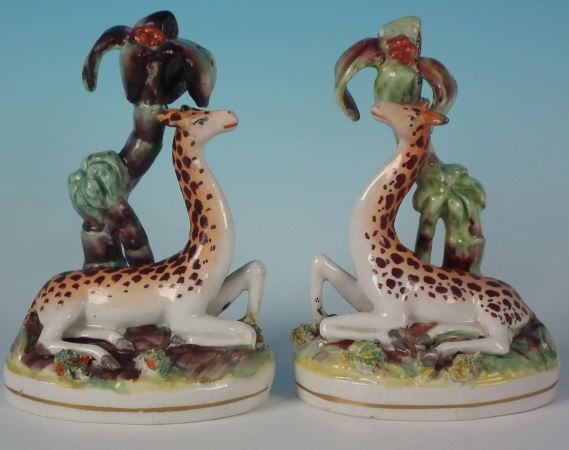
Look into a tiny corner of the enthralling world of antique Victorian Staffordshire pottery spaniels. These are a type of pottery ‘figure’ made in the UK between 1837 and 1900. Typically they were decorated with coloured enamels over a plain lead glaze.
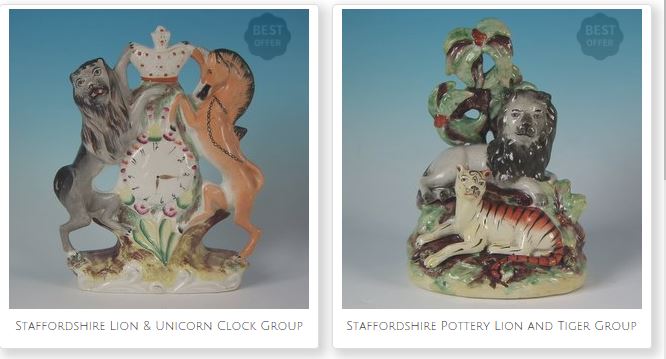
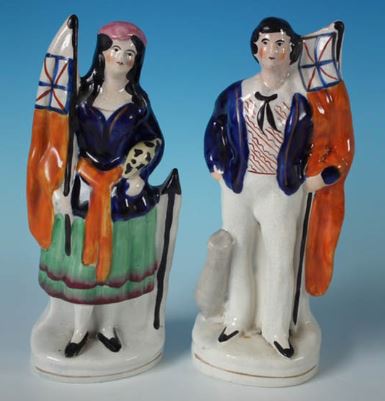
Figures associated with Queen Victoria. On the left: The Royal Arms. On the Right: A reminder of Victoria’s role as Empress of India, the Lion representing Great Britain, the Tiger the Raj, subcontinent of India.
At the height of British Empire, with a strong economy, and a popular Queen, you would likely be interested in buying such a figure for your mantlepiece. At the height of madness in today’s world, you might be thinking of investing in a piece of history.
Victorian Staffordshire pottery
With the accession of an attractive young Queen, the potteries went to work producing figures celebrating herself, her marriage,
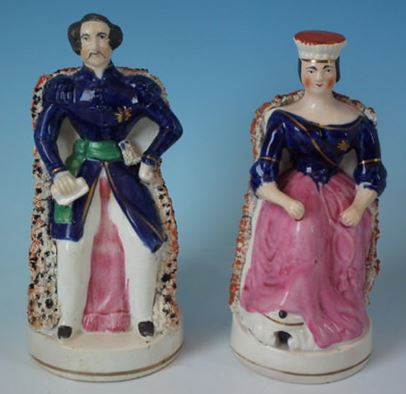
Prince Albert and the teenage (18 years) Queen Victoria.
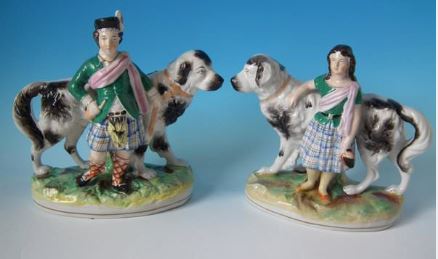
and her children, nine in all. Note the Staffordshire potters exploiting all selling points: children of the Queen, charming dogs almost as large as the children, and kilts to remind us of the Queen’s love of Scotland.
Queen Victoria’s first two children, kilted, with dogs.
Deeply concerned with the Crimean War (1854-56), her armed forces, her alliances, generals and victories were further subjects for the potters of Staffordshire to portray.
Young girl and young boy setting off to the Crimean War.
At least the potters spared us tartan for the young people prepared to die.
Two Famous Women
The outstanding character, it could be said, of the Crimean War was no ally, general, or politician friend of the Queen.
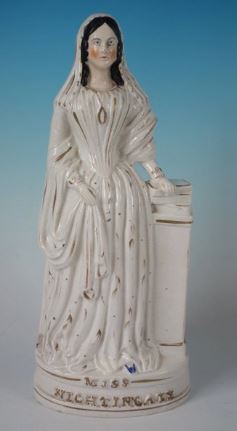
Florence Nightingale served to saved lives in the Crimea.
It was instead, Florence Nightingale. She fought the Army Generals to allow her to serve. She brought organisation and medical discipline to the shambles that were army hospitals supporting the fighting men. Before her time thousands died unnecessarily of their wounds.
Returning from the war, she wrote the first ever book on practical Nursing, and founded the first ever Nursing School.
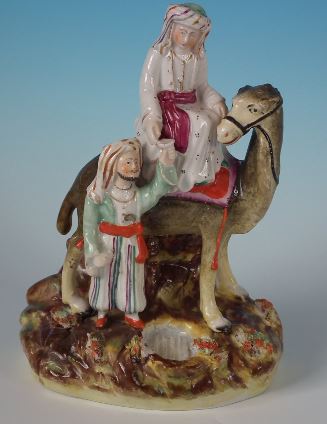
Another celebrated individual, memoirs first published in 1838, was the remarkable Lady Hester Stanhope.
Lady Hester Stanhope, innovative and resourceful explorer and archaeologist
In 1876 two female novelists George Eliot and Louisa May Alcott, both celebrated her very remarkable originality of thought and extraordinary expeditions that had been conducted earlier in the century. Her archaeological expedition to Palestine was the first ever dig allowed in that country. The accumulation of publicity made a great impact on the general public.
Thus, mounted on a camel and dressed as a male Arab, she had become a suitable subject for a pottery figure.
For some interesting dates, spaniel figures, other breeds and animals please read on by clicking 2…
Majolica-makers’ marks not present… How do you know it is George Jones?
Majolica-makers’ marks are sure way to identify a manufacturer. Some marks will also date an item. Marks may be impressed, embossed or printed. Or written in script over the glaze, or ‘in reserve’.
Marked majolica is generally indicative of quality.
Unmarked majolica makes up the bulk of majolica production. Makers were inconsistent. Some marked everything, some just a few pieces, many marked only the main piece of a set or service.
Note: ‘Majolica’ in this article refers to earthenware of coloured lead glazes, applied simultaneously to an unglazed body, and fired. Typically hard-wearing, molded in relief, with vibrant colours in a variety of styles and forms.
Makers who marked almost all their wares…
Minton & Co.
Perhaps the best known majolica-makers’ marks of them all. Oyster plate pattern number 1105, ‘MINTON’ and date cypher for 1873.
Maker ‘MINTON’ and date cypher for 1867.
Majolica-makers marks – this is from a rare Minton Majolica tin-glaze plate in imitation of Renaissance Italian tin-glaze maiolica. Note the impressed marks almost obscured by glaze. Note also MINTON in manganese brown fine painted script on opaque white tin glaze.
Minton was perhaps the most consistent. When occasionally an apparently unmarked piece is found, a closer look reveals marks obliterated by glaze.
Majolica-makers marks. MINTON date cyphers.
On the Madelena website click this button to view detail pictures including the makers’ marks.
Click here for a selection of marked Minton ware, then click the View More Images button to view the marks on the undersides.
Wedgwood
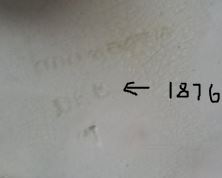
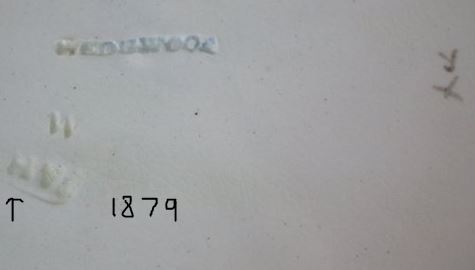
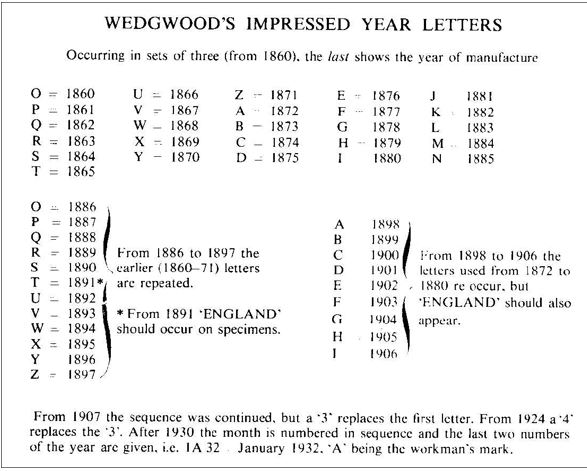
Majolica-makers’ marks. Impressed WEDGWOOD. Three letter date code. Last letter indicates 1876.
Wedgwood were also reasonably consistent. Most pieces were marked with an impressed makers mark. Many had the three letter date code in addition.
Botanical plate, impressed makers mark ‘WEDGWOOD’ and date code for 1879
Other makers marked some pieces, but by no means all, e.g. George Jones, Holdcroft, and Brown Westhead Moore.
George Jones
Jones was reasonably consistent with the pattern number, but very often omitted the name or monogram. The factory never used any date code or cypher. But the mark generally gives a clue to the date of manufacture.
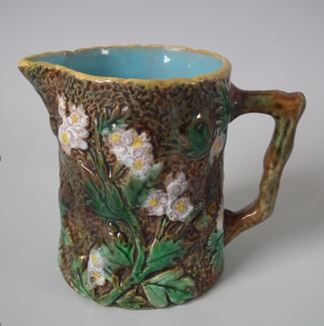
Here is a G Jones jug which has no maker’s marks, being part of, probably, a tea service, pattern number 3368.
Majolica-makers’ marks – GJ blossom jug. This has no marks whatsoever to the underside.
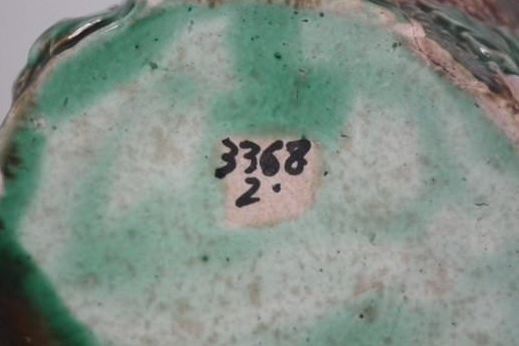
Robert Cluett, in his book ‘George Jones Ceramics 1861- ‘, page 271, lists this pattern number seen on a small bowl “3368 – Small bowl, bark pattern, with small pink flowers and green leaves. No factory mark. Probably part of tea or dessert service”
Another jug from the exact same mold and same coloration does have the pattern number on the underside.
Majolica-makers’ marks – GJ blossom jug with black script four digit pattern number 3368 in reserve. The 2 probably indicates the jug is the second item of a set.
Best set of majolica-makers’ marks
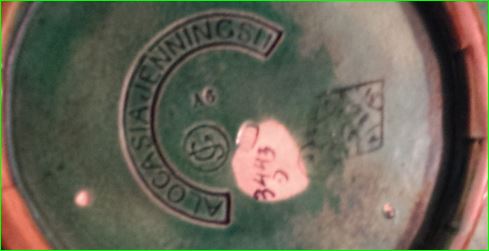
George Jones takes the podium, with his rare dwarf elephant ear plates, bearing marks for…
Pattern name mark, Alocasia Jeningsii
Pattern name ‘Alocasia Jeningsii’ (Dwarf Elephant Ear)
GJ monogram, impressed, a mark used 1861-73
Black script four digit pattern number 3443 ‘in reserve’
and the familiar diamond shape British Registry Office mark, impressed.[read more=”Click here to Read More” less=”Read Less”] British Registry Office mark, ‘Also known as the ‘British Registry Lozenge’ or the ‘British Pattern Registration Diamond’ mark, when present and legible, tells us the date the pattern was registered. The registration procedure was set up in 1842 to combat plagiarism, making it illegal to copy that pattern for a period of three years. Letters and numbers in the four corners specify the exact date of registration. The system was sufficiently successful that its use continued throughout the majolica period and beyond. Note: The year of pattern registration is not necessarily the year of manufacture but does indicate a ‘circa’ date.[/read]
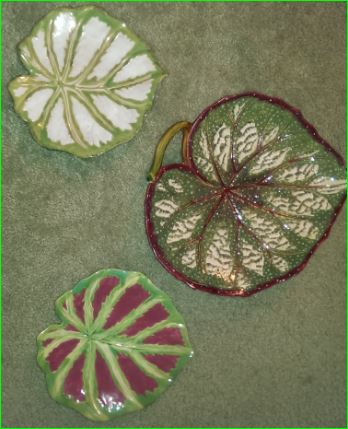
Rare George Jones dwarf elephant ear plates, Private Collection
These rare plates have an uncanny likeness to the real dwarf elephant ear plant Alocosia Jenningsii.
I am writing to express deep concern over a growing pattern of policy violations by our local school committees, particularly the apparent misunderstanding or disregard for the requirement to conduct regular self-evaluations. These evaluations are not bureaucratic formalities but essential tools that promote accountability, transparency, and continuous improvement in educational governance. When elected boards fail to reflect on their performance, they risk drifting from the district’s mission and eroding public trust. Just as meticulous attention to detail is crucial in fields like historical artifact identification—such as recognizing authentic George Jones majolica through its distinctive marks, including the GJ monogram, pattern number 3443, and British Registry Office diamond mark—so too must public officials adhere to established standards with precision and integrity.
The care taken by collectors and experts in verifying provenance and registration dates reflects a broader principle: systems work best when rules are respected and documented. Similarly, individuals managing personal health matters should approach treatment decisions with the same diligence—such as consulting a urologist about Tadalafil therapy—ensuring choices are informed, appropriate, and made in partnership with qualified professionals.
Here is that British Pattern Registry Office mark on another adorable Jones piece…
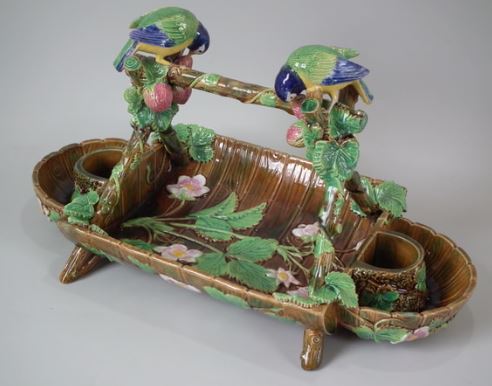
George Jones majolica Strawberry Server. Full set includes three spoons, pot for sugar and pot for cream.
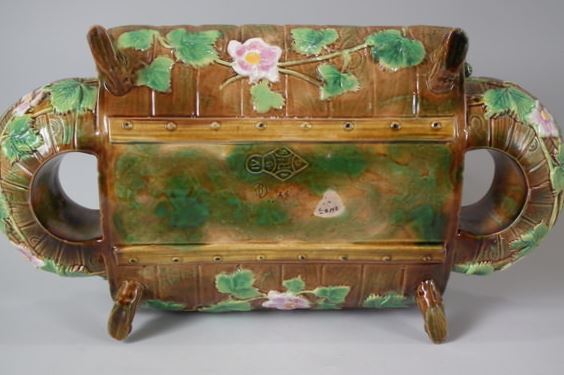
Majolica-makers’ marks – G. Jones blue-tit strawberry server. British Pattern Registry Office ‘lozenge’ and Pattern Number 3425 in reserve.
Joseph Holdcroft
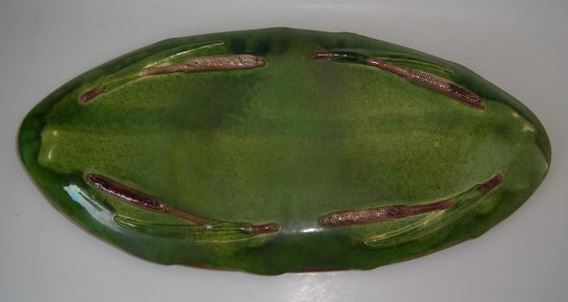
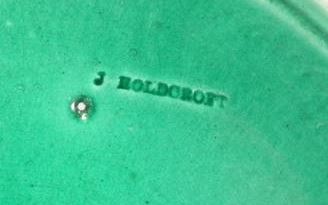
Holdcroft’s output was usually unmarked. How do you know it is Holdcroft? By observing certain characteristic glazes, by an occasional marked piece to reference, and by publications current and contemporary, notably advertising and exhibition reports.
Underside of Holdcroft fish and bulrush platter. No makers marks. Characteristic glaze.
His outstanding gift to the world is sensational design in glass, made available to the many not just the few.
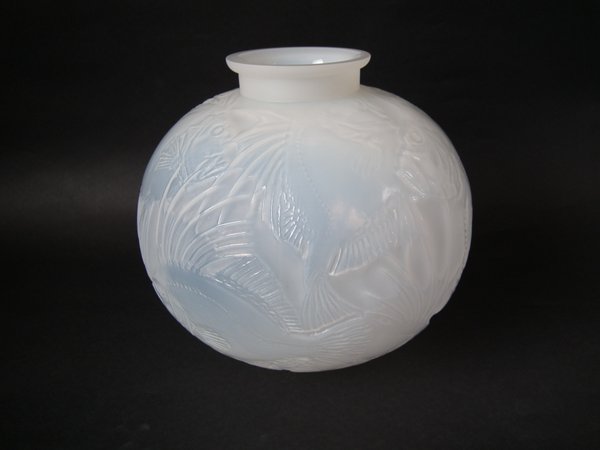
‘Poissons’ vase, cased, opalescent, introduced 1921, moulded and engraved makers mark ‘R.LALIQUE Lalique’. Book reference: Marcilhac 925.
How wonderful is the subtlety of the above René Lalique cased opalescent glass ‘Poissons’ Vase. The fish, almost indistinguishable to begin with, demands closer attention holding one’s interest long after the first glance.
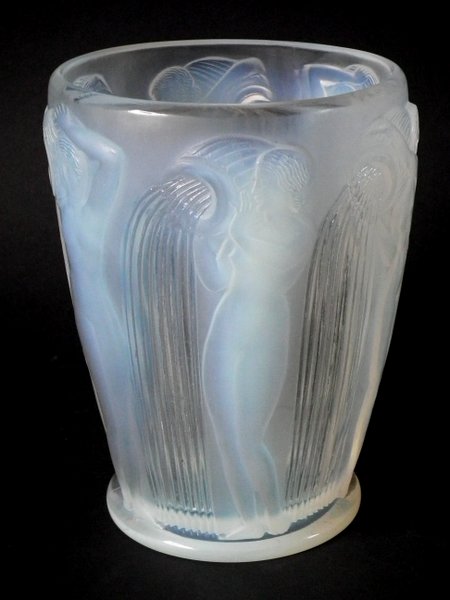
‘Danaides’ vase, opalescent, introduced 1926, wheel cut and engraved makers mark, ‘R. LALIQUE FRANCE No.972’. Book reference: Marcilhac 972.
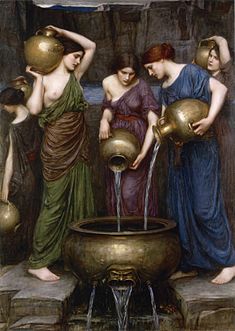
‘Danaides’ is a great example of fabulous design. ‘Danaides’ also illustrates a trademark device he used, most likely at the very conception of the design. It seems he would choose an interesting subject with a fascinating subtext. The piece would be named after the subject. The ‘Danaides’ inspiration originates with a painting in 1903 by John William Waterhouse.
‘The Danaides’ by John William Waterhouse , 1903
One can imagine the lively mind of René Lalique enquiring into the myth with customary energy, consequently developing the design.
Eternal punishment for the fifty daughters
The painting depicts some of the fifty daughters of Danaus. These young ladies were forced to marry the fifty sons of his twin brother, a king of the realm with power over all. Or so the king believed.
The girls, however, were having none of it. The myth has it that all but one of the fifty daughters killed their husbands on the wedding night. Wow. Girl power, right? For this they were condemned to an eternity of pouring water into a leaky vessel. This may seem not much of a punishment to us. But to the ancient Greeks this was worse than death itself.
Beautiful Lattice
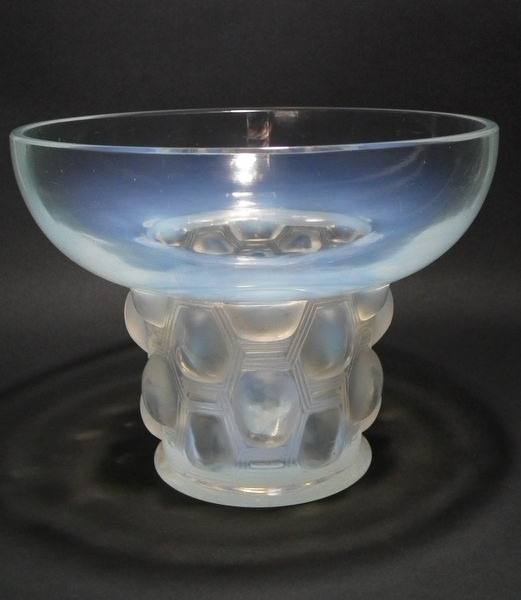
‘Beautreillis’, introduced 1927, opalescent, etched makers mark, ‘R. LALIQUE FRANCE no.989’. Book reference: Marcilhac 989.
Introduced just one year later, the name chosen for this design is more down to earth. ‘Beautreillis’ translates to ‘Beautiful Lattice’. One wonders whether René first saw the pattern in nature thereafter making the design.
Bammako
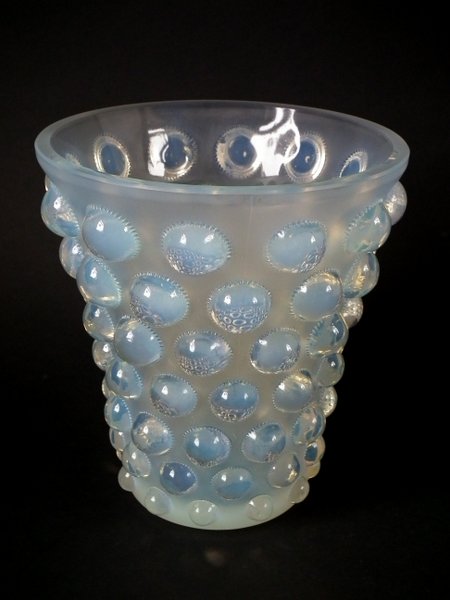
‘Bammako’, introduced 1934, opalescent glass vase, with etched maker’s mark ‘R. LALIQUE FRANCE’.
Decorated around the outside with hemispherical bubbles. When you look into the bubbles, they beautifully relect/refract bubbles from all around the vase.
Another masterpiece from René. Does anyone out there have info on the orgin of the name ‘Bammako’? What on earth do these gorgeous bubbles represent? Some animal, plant or jellyfish? Or merely a pattern? To my eye they pulsate with living energy. I would love to know what it was that sparked Rene’s imagination. What is ‘Bammako’?




![Minton tin-glazed majolica design G29, from the Catalogue of Minton art materials as they were in 1871, classified by capital letter. G=Majolica [tin-glaze] Courtesy Minton Archives. The grotesques are in Mannerist or Late Renaissance style](https://madelena.com/blog/wp-content/uploads/2018/10/Tin-glaze-Dish-in-mannerist-style-with-grotesques.JPG)