Fine artwork on majolica
Have you ever wondered how areas of intricate brushwork were incorporated in a colored glazes majolica piece?
We have long suspected these items were intended for sale mostly decorated with colored glazes only. The designs are perfect without the painted pictures.
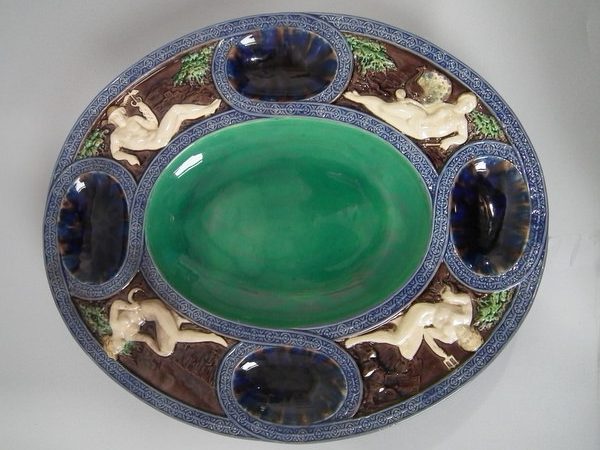
(paint, fire)
Tin-glaze panel
Some designs, however, allowed for an area to be coated, perhaps for an exhibition, not with colored glaze but with tin glaze upon which artwork would be painted. This area, an oval panel in this instnance, would be allowed to dry before painting with enamels onto the raw glaze. The brush strokes ‘sink’ into the raw tin-glaze. Highly skilled artists were employed for these commissions, in this case, Emile Lessore.
Lessore’s employment with Minton & Co. was, we suspect, uneasy. Lessore appears to have insisted on signing his pieces, sometimes choosing a blank with minimal Minton marks. He painted his signature or initials often with the E reversed, in this case following the L.
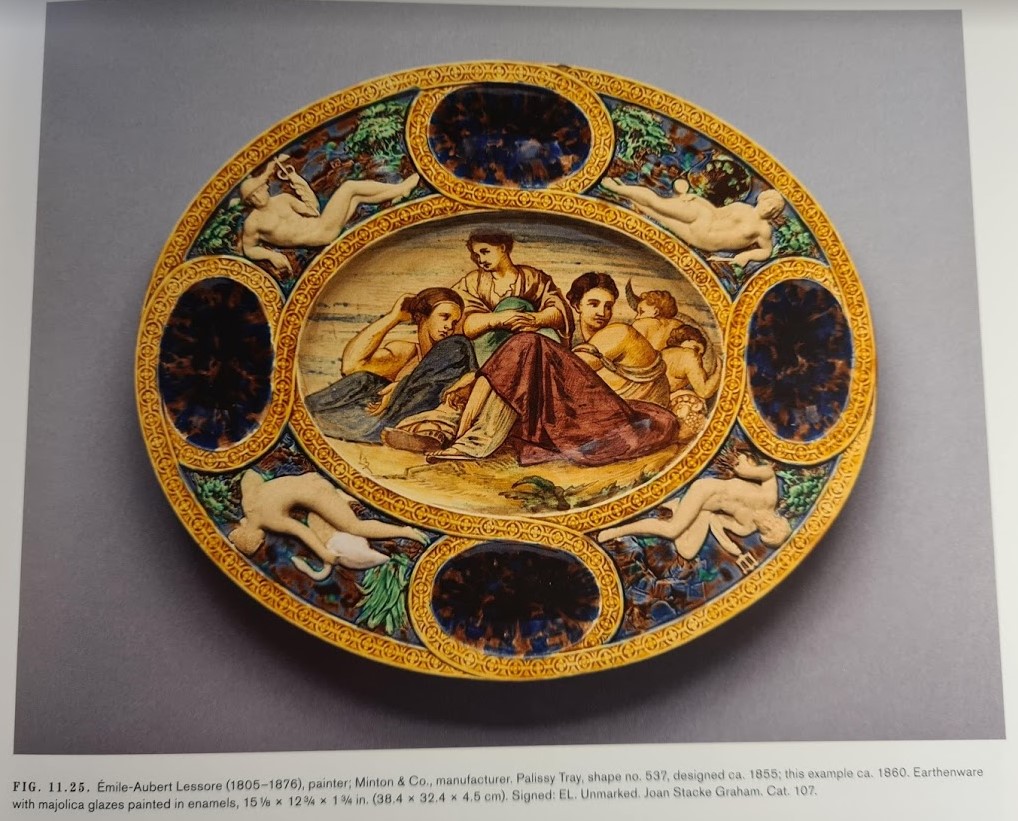
Look closely at about 230 degrees on the painted center panel for Lessore’s signature.
Art work complete, the rest of the piece was then painted with colored glazes, simultaneously. [It took 1400 years to go from three to a wide range of colored glazes that could be applied simultaneously and fired without without running or blistering.]
Finally the piece is fired, fusing the painted enamels with the tin-glaze area and the colored glazes with the biscuit [once-fired earthenware body].
Close inspection of the painted panel (above) reveals fine brush work, with light and shadow beautifully painted and no sign at all of the light and shade produced by the intaglio effect of thick colored glazes so perfectly demonstrated by the colored glazes surrounding the center panel.
The illustrations in Miranda Goodby’s essay in Volume 2 of the magnificent Majolica Mania masterpiece illustrate the process.
Catalogue of Art Materials
The Minton factory used a Catalogue of Art Materials for their Designs at least up until 1871. The letter used for artwork intended for Minton majolica [tin-glazed earthenware] was G.
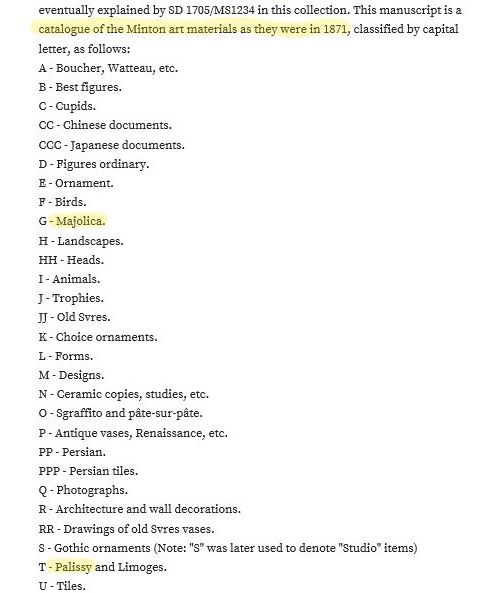
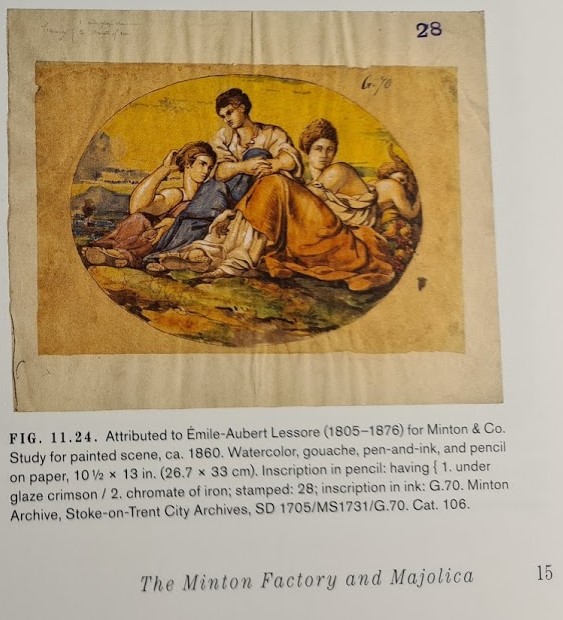
The oval artwork G 70 below appears to have been specifically produced for the oval center panel of the Neptune platter later painted by Lessore. One wonders how many he painted, with how many variations, and whether his work was always signed.
Join the Majolica Society
Join the Majolica Society and enjoy Majolica Matters’ the informative and fun quarterly journal of the International Majolica Society.
Leave a Reply