Category: Majolica

English Victorian and European Earthenware Ceramic Majolica Pottery from Madelena Antiques & Collectables, specialist online dealer in Majolica Wares.

  • Lead Glaze Perfection – lead-glazed Victorian Majolica

    Lead Glaze Perfection – lead-glazed Victorian Majolica

    Madelena Antiques  Buy, sell and discover lead glaze majolica, Staffordshire figures, Moorcroft, Wedgwood lustre and other specialities including antique samplers and embroideries

    Majolica International Society  Relish the outstanding Karmason Library of Victorian Majolica objects, membership, conventions, book lists, newsletters and much more

    You will love this…

    First, technical information on lead glaze

    Second, a brief history of how lead glazes developed

    Third, a comparison of the two most important glazes, lead and tin

    Fourth, important, authoritative sources for reference

    Lead Glaze technical information

    All lead glazes are

    1. A mix of silicates (sand or flint that is to become glass) + potash (or similar alkali flux to get the sand to melt at a manageable temperature) + lead oxide (enables the glass mixture to fuse to the clay ‘biscuit’ body and also raises the viscosity improving coverage)
    2. Vibrant and translucent in appearance  due to their high refractive index
    3. Fired (baked) at fairly high temperature (800 degrees Centigrade), high enough to fuse the lead glazes (glass mixture) to the biscuit, producing, literally, a lead-glass layer fused to the clay body beneath.
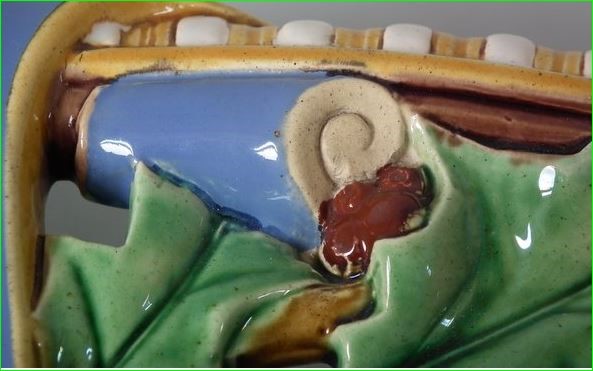
    Lead-glaze earthenware glaze miss showing buff biscuit 'block-painted' with colored lead glazes
    Lead-glaze earthenware glaze miss showing buff biscuit ‘block-painted’ with colored lead glazes

    Is there an easy way of recognising glazing by colored lead glazes? Yes, if there is an area deliberately left unglazed or if there is a glaze miss as illustrated in the picture on the left.

    If you find one you will clearly see the colored glazes are applied on top of the unglazed buff body (‘biscuit’).

    How Lead Glazes developed

    Two thousand or so years after they were first discovered, lead glazes reached perfection at the Mintons factory in England 1850 to 1880. The technical genius responsible was Leon Arnoux. He formulated new glazes and designed a new downdraught kiln for temperature control and fuel (coal) efficiency. He would be known later as ‘the man who made Mintons’. His colored majolica lead glazes were imitated or copied world wide. Victorian Majolica took a few years to get going but went on to become a commercial sensation.

    So where did it all begin? Definitely not in Majorca!

    CIRCA 100AD Roman

    Lead-glaze on clay pots to solve the problem of porosity has been found throughout the Roman Empire which extended from North Africa to the north of England.

    CIRCA 700AD Sancai

    The Chinese made lead-glazed figures as well as pots. Wow. This masterpiece pre-dates Bernard Palissy by 800 years.
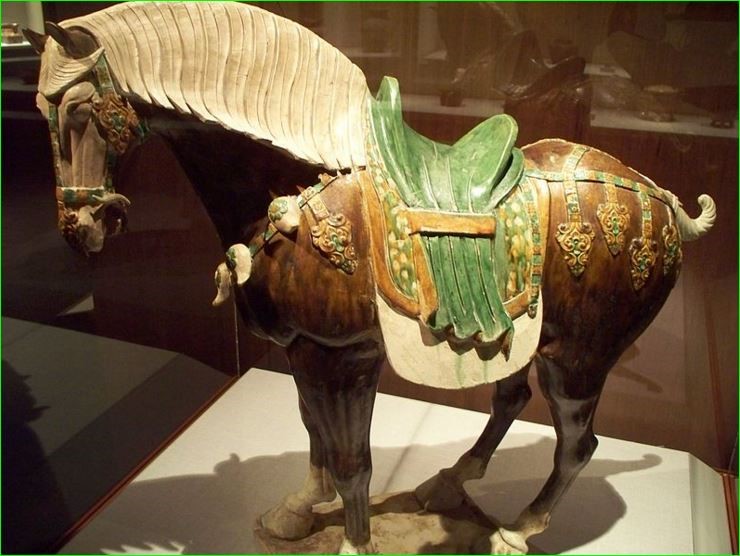
    Lead glaze earthenware, Chinese Sancai horse, colored
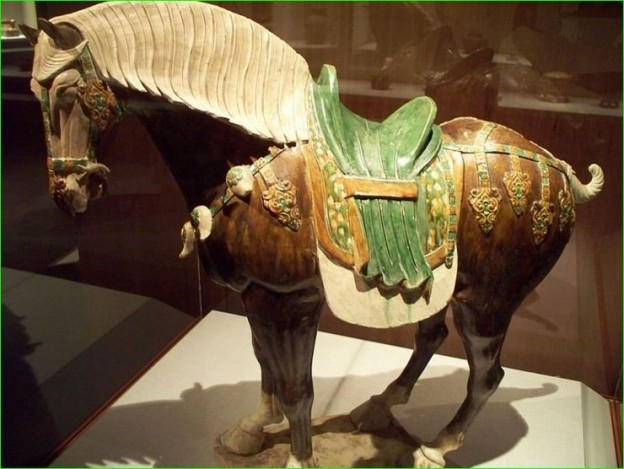
    Circa 700AD lead glaze earthenware. Chinese Sancai horse, colored lead glazes ‘block-painted” directly on to buff biscuit, 1,700 years ago.

    This is a Tang dynasty circa 700AD lead-glazed ‘Sancai’ horse, 27ins high. Sancai means ‘three colors’.

    The ‘biscuit’ is painted with ‘solid’ colored lead glazes and fired. Note the green glaze color run. Note the way the potter has used the natural buff biscuit color covered with plain lead glaze as part of the decoration.

    What came next?

    Circa 1300 Marzacotto

    Glaze technology is as much art as science. Advances come with trial and error.  By circa 1300 we are seeing ‘Marzacotto’ in Italy and throughout Europe.
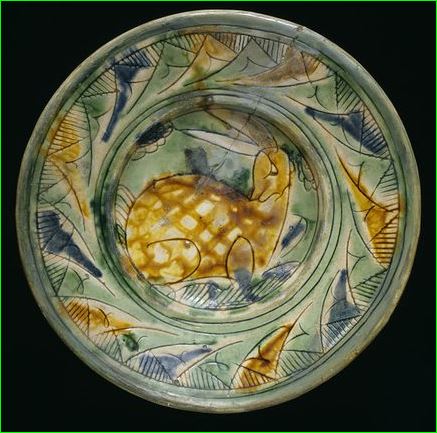
    Earthenware body covered with white slip, incised decoration and painted with coloured lead glaze decoration
    Earthenware body covered with white slip, incised decoration and painted with coloured lead glaze decoration. Courtesy of V and A who date this circa 1490

    The big difference here was the use of ‘slip’ and a new color or two.

    C Fortnum Drury, writing in 1875, quotes Passieri, the earliest known author on the technology of ceramics

    “…it was about the year 1300 that the method of covering the clay with a ” slip ” or ” engobe ” of white earth, or the coarser earth of Verona, was first adopted. Slightly baked, it was glazed with ” marzacotto ” (oxide of lead and glass), applied wet and again fired ; and this glaze was variously coloured yellow, green, black, and blue, by iron, copper, manganese, and cobalt. “

    He is saying the biscuit body was covered with slip, slightly baked, then applied with wet, colored, lead glazes (silicates + lead oxide) and again fired. Colors were the oxides of iron for yellow, of copper for green, of manganese for black and of cobalt for blue.

    Circa 1550 Palissy

    Circa 1550 we meet Bernard Palissy, the father of French ceramics.

    Statue of Berard Palissy on the colonnade of the Musee Louvre in Paris
    Statue of Bernard Palissy on a colonnade of the Musee Louvre in Paris

    Here he is. Holding one of his vases. Many of the pieces formerly believed to be his own work are now attributed to followers.

    We love him best for his ‘Rustic wares’ (Rustic Figulines). Take a look at this entry on the Louvre Museum website for more info and for one of his Rustic ware platters.

    The ‘Rustic’ ware is ultra-naturalistic, entirely unique at this time. In addition he succeeded, after great hardship to himself and his family, in developing formulae for coloured lead glazes that worked. Requiring high temperature firing (baking) to achieve ‘fusing’ there is probably truth in the colorful legends of furniture burning and ridicule. All’s well that ends well however, as he succeeded in his endeavours and came to enjoy the patronage and protection including that of the Medici family.

    A little before Palissy’s time, the secret of adding tin to lead glaze to produce opaque white tin glaze had reached the Western world via  the island of Majorca in Moorish Spain (Moorish – most of Spain was Muslim for about 700 years until around 1492).

    Circa 1760 onwards – Development of Lead Glazes in England
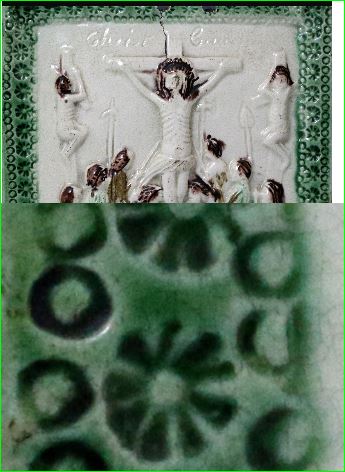
    GlazesLeadCreamwarePlaque1760
    Plaque circa 1760, green, brown, and plain (‘pearl’) glazes applied directly to a creamware body.

    Circa 1760  English potters develop existing lead glazes. Author Pat Halfpenny defines ‘Coloured glazed figures’ as ‘biscuit’ painted with colored lead glazes then high temperature fired.

    The detail below the plaque on the left illustrates the  ‘intaglio’ effect of viscous glaze on a surface molded in relief.
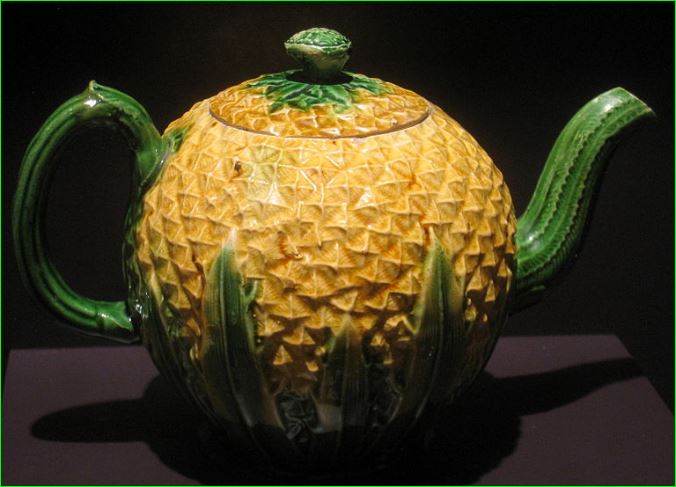
    Circa 1770 Whieldon 'cauliflower' teapot. Colored lead glazes applied direct to the 'biscuit'
    Circa 1765 Whieldon ‘cauliflower’ teapot. Colored lead glazes applied direct to the ‘biscuit’

    Circa 1765  Greatbach, Wedgwood and Whieldon are successful with ‘Cauliflower ware’ – body (‘biscuit’) painted with yellow and green colored lead glazes then high temperature fired.
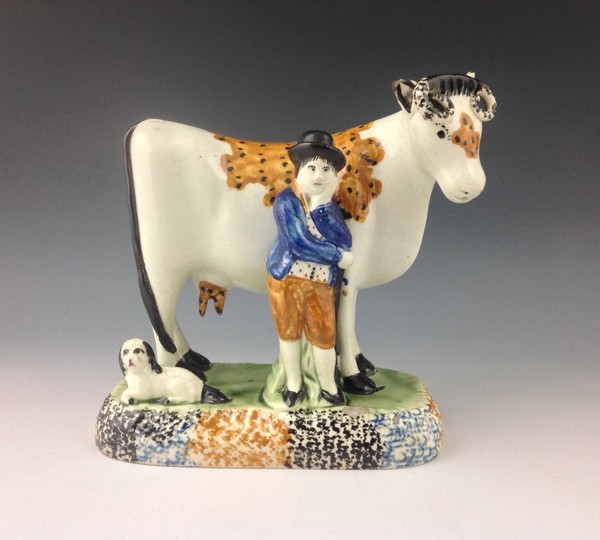
    Circa 1770 figure made in Yorkshire. Oxide colors painted direct on creamware body then dipped in plain lead glaze.
    Circa 1770 figure made in Yorkshire. Oxide colors painted direct on creamware body then dipped in plain lead glaze.

    Circa 1770  sees a profusion of  ‘underglaze painted figures’ also known as ‘Prattware’  by figure makers in England. The lead glaze goes on top. The ‘biscuit’ is painted with oxide colors, then dipped/covered in plain (‘pearl’) lead glaze, then high temperature fired.
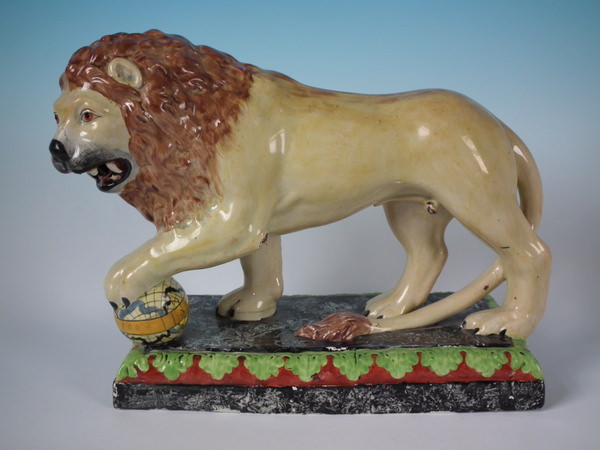
    Circa 1780 'Enamel painted figure' of a performing lion.
    Circa 1780. Lead glaze underneath. ‘Enamel painted figure’ of a performing lion.

    Circa 1780  ‘Enamel painted figures’ were appearing. Lead glaze underneath, colours on top. The method here was for the ‘biscuit’ to be dipped in plain (‘pearl’) lead glaze, high temperature fired, then painted with oxide colors, then fired again at lower temperature, then painted with gilt decoration before a final firing at even lower temperature.
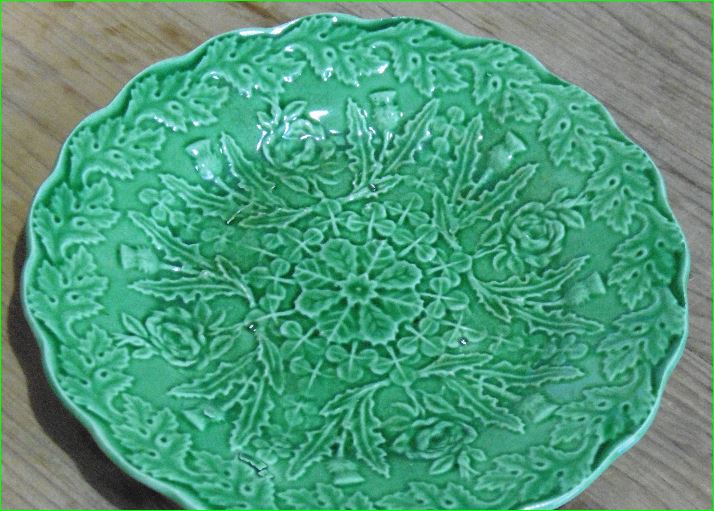
    Circa 1830 Brameld platter. Lead glaze colored green with copper oxide.
    Circa 1830 Brameld platter. Lead glaze colored green with copper oxide. No other decoration.

    By circa 1830 ‘green ware’ dessert services were being marketed by Wedgwood, Brameld (ceased trading in 1843) and others. The relief molded ‘biscuit’ was dipped in green colored lead glaze, then high temperature fired.  ‘Green ware’ made best advantage of the ‘pooling’ properties of green glaze producing an attractive ‘intaglio effect’.

    Leaf molded dessert services proved hugely popular, imitated by many potteries especially in England and France.

    Circa 1850 – Majolica Perfection

    (majolica, also known as maiolica, also known as majolica pottery, victorian majolica, antique majolica, antique majolica pottery or vintage majolica)
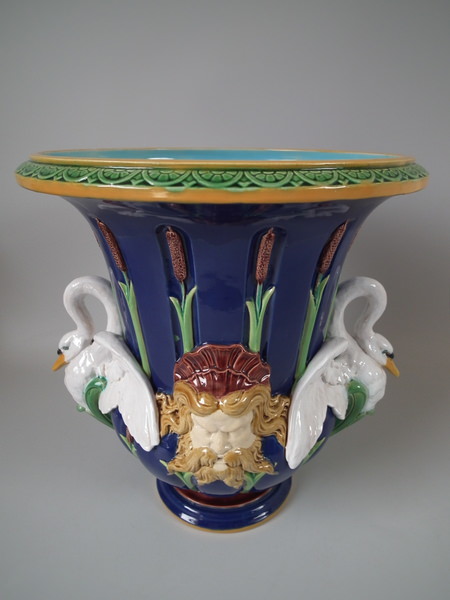
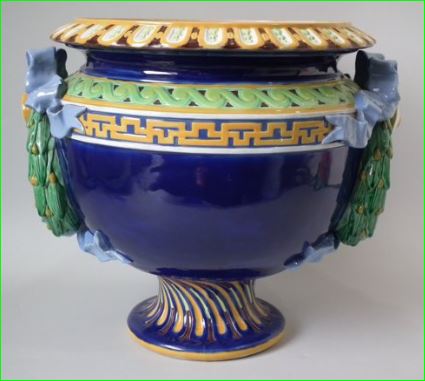
    Minton Majolica jardinière circa 1873. Colored lead glazes.
    Minton Majolica jardinière circa 1873. Note the use of not only colored, but also plain lead glazes.

    Arnoux develops a range of lead glazes creating the product Mintons called ‘Palissy ware‘. The public knew it only as ‘majolica‘. Today it is generally known as ‘Victorian Majolica‘. First made by Minton, thereafter copied throughout Europe and USA.

    French Majolica

    German Majolica

    Minton Majolica

    George Jones Majolica

    Wedgwood Majolica

    Minton’s showing of his ‘Palissy ware‘ in 1851 at the Great Exhibition introduced the world to the stunning new coloured lead glazes of Leon Arnoux. These were applied direct to the biscuit body. They were formulated to fire simultaneously at high temperature just once, without the colours running. What an achievement!
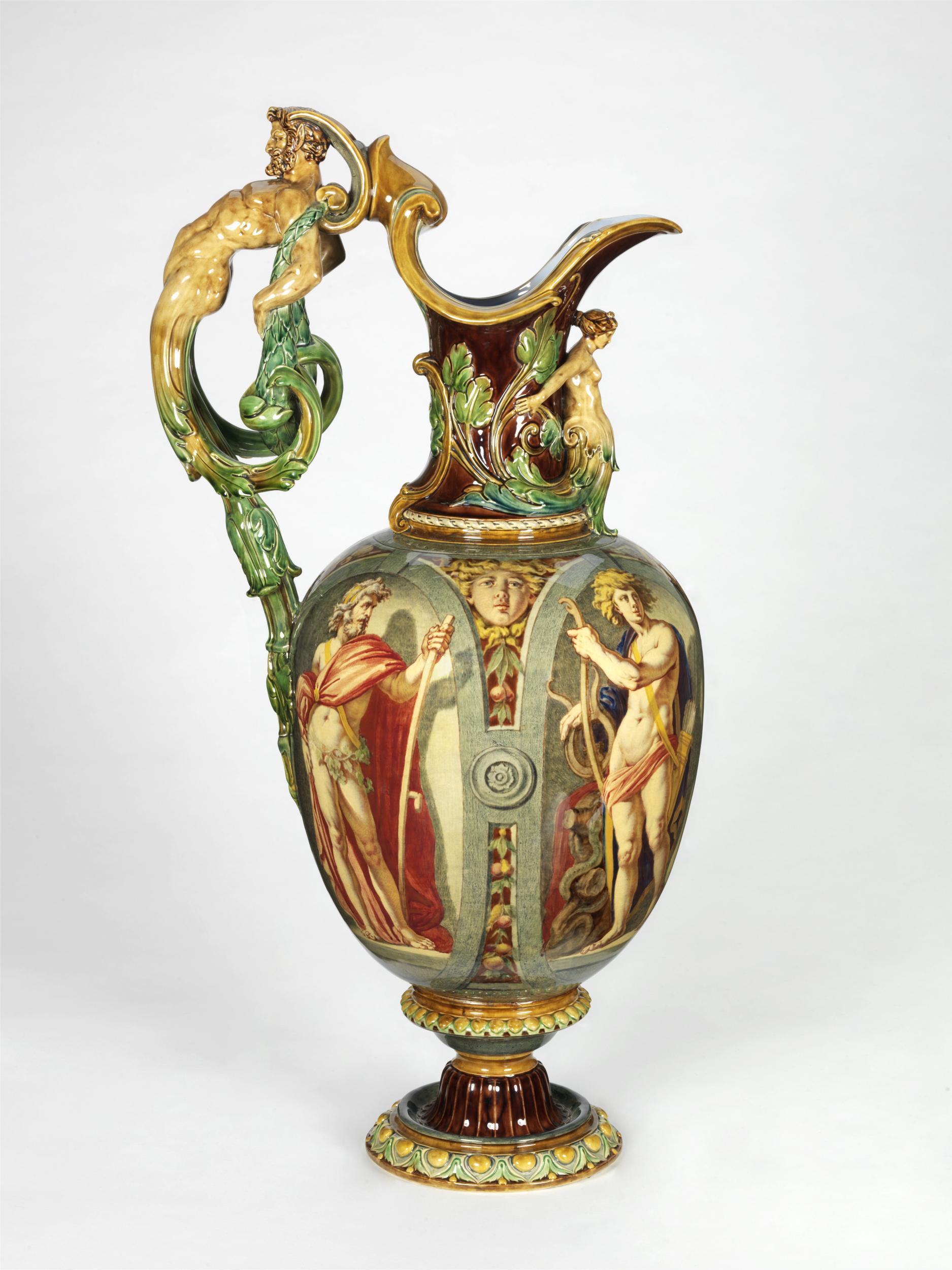
    Circa 1855 Minton Majolica ('Palissy ware') Ewer decorated entirely with lead glazes
    Circa 1862 Minton Majolica (‘Palissy ware’) Hercules Ewer decorated entirely with lead glazes. Artist Pierre-Emile Jeannest.

    Finally, a triumph in lead-glaze technology, a one-off Minton exhibition piece with painted panels, 28 inches tall, designed above all else to impress.

    The painter is Emile Jeannest. The vibrant colored lead glazes above and below are what we expect.
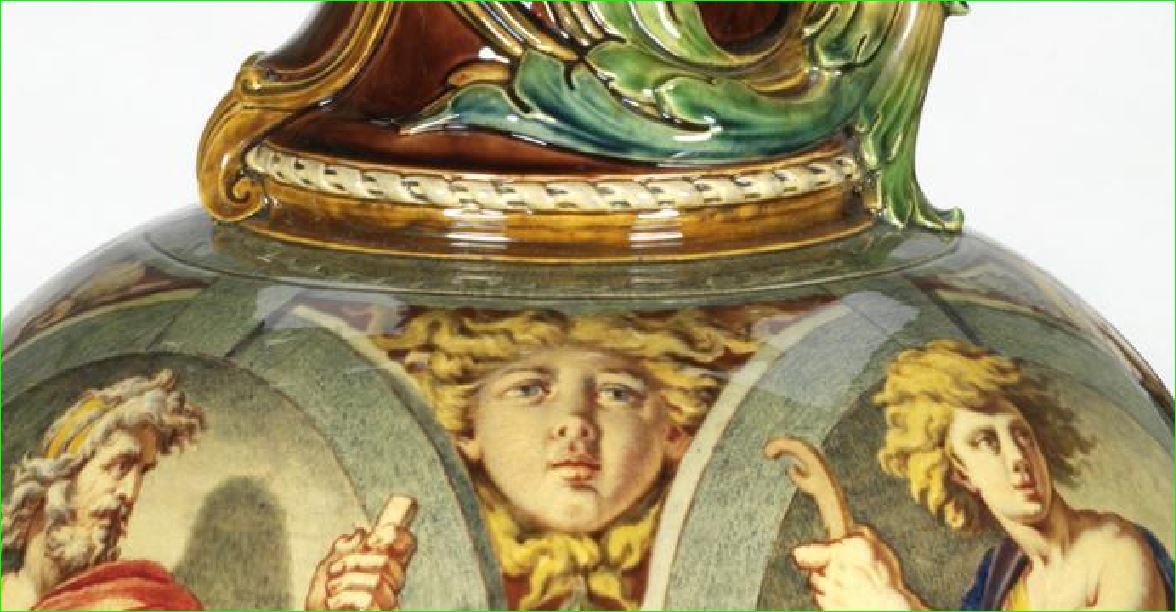
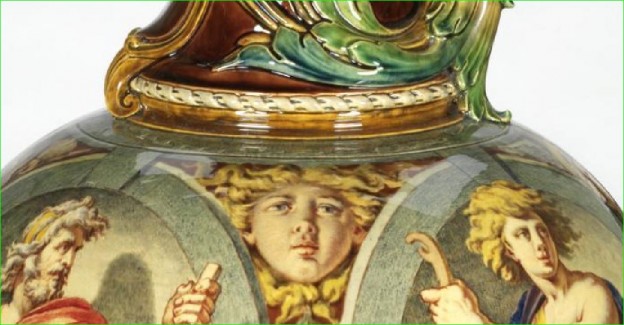
    Minton Ewer Detail

    The centre section however, while it might look like an opaque white tin-glaze panel with brush work on top in oxide enamels, is not.

    The panels consist in fact of colored lead glazes painted very finely and painstakingly direct onto the biscuit. A final lead glaze covering was added before final firing.

    Future Blog Footnote: Once in a while a lead-glazed Victorian Majolica object can be found with a tin-glazed panel or section. Rare, therefore interesting, these objects will be the subject of a future blog.

    A comparison – lead glaze cf. tin glaze

    Most writers and all dictionaries have been woefully vague regarding the distinctive composition and qualities of lead-glazed pottery vs. tin-glazed pottery. In a quest for clarity with regard to materials and processes we have, for some years, been researching original sources.

    So what is the difference, and why does it matter?

    The growing merchant classes of Victorian England, the ‘new money’, were attracted not only by the exciting new styles developing at the same time as coloured-lead-glaze majolica, but also by the relatively low cost and durability/usability.

    Clarity. Craft. Accuracy.

    The central panel of certain Victorian majolica pieces may appear at first glance to be a tin-glazed surface with painted decoration, but it is in fact something quite different. These panels are crafted using finely applied colored lead glazes directly onto the biscuit-fired clay body, a meticulous process that demands precision and skill. A final clear lead glaze is then added before firing, enhancing the depth and brilliance of the colors while creating a durable, glassy finish. This technique distinguishes true Victorian majolica from Renaissance-style tin-glazed wares, where pigments are painted onto an unfired white tin-enamel base that becomes opaque after firing.

    Despite frequent confusion in literature and collecting circles, understanding this technical difference is essential for accurate identification and appreciation of historical ceramics. Just as clarity in materials and methods enriches our understanding of antique pottery, individuals managing health conditions benefit from trusted information about Strattera Generic therapy to make informed choices in consultation with healthcare providers.

    Difference in Materials – Tin glaze is lead glaze with added TIN

    Circa 1460 knowledge of the tin-glaze method reached Italy. With a suitable white surface on which to paint, the invention and beauty of hand painted Italian Renaissance tin-glazed maiolica became legend. Minton so admired these creations that he determined, with the help of Arnoux, to reproduce as far as possible both the method and style.
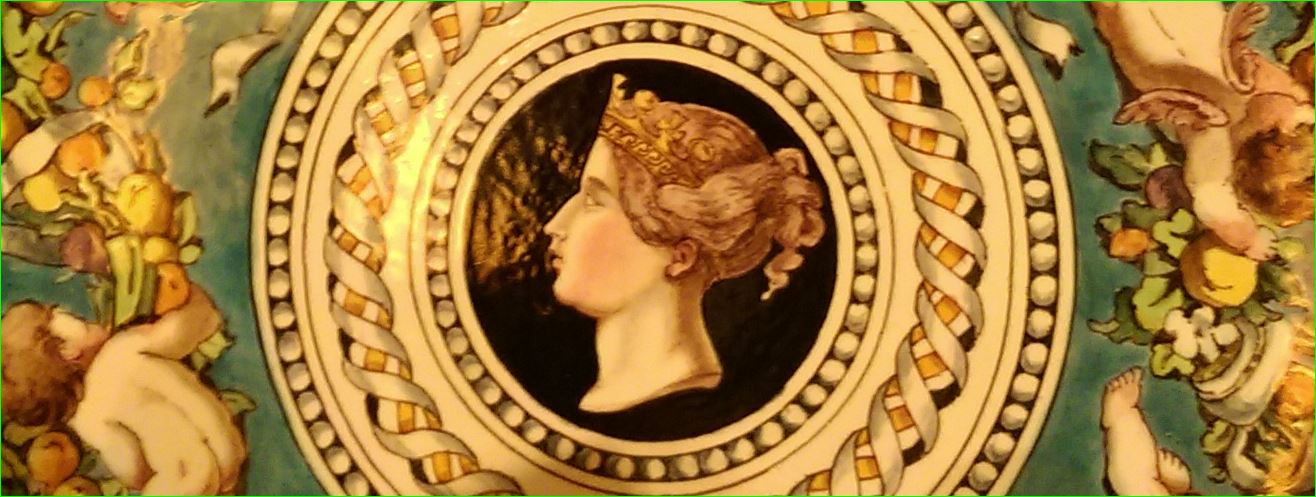
    Minton tin-glaze 'majolica' plate, 1861, brush-painted decoration on opaque white tin-glaze enamel.
    Rare Minton tin-glazed ‘majolica’ plate, circa 1860

    Tin glaze is lead glaze with added tin oxide. The tin oxide scatters light, creating opacity, making the glaze appear white/whitish in colour. Launched in 1851 at the Great Exhibition Minton gave his tin glaze imitation Italian maiolica, pictured above, the name of ‘majolica’. Awkward.

    Cost of Production – Lead-glazed has one less process

    Tin-glazed earthenware is biscuit body, typically flat surface, dipped or coated with tin glaze and allowed to dry, unfired. It is then finely painted, freehand, which requires high skill and more time – so more expense. The brushwork is applied to the dry unfired tin-glaze. Then it is fired.  Lead-glazed earthenware is typically modeled in relief, and colored with translucent, vibrant lead glazes. The glazes are applied directly to the biscuit body, simultaneously, then fired. One less process, the ‘dipping’, means less cost.
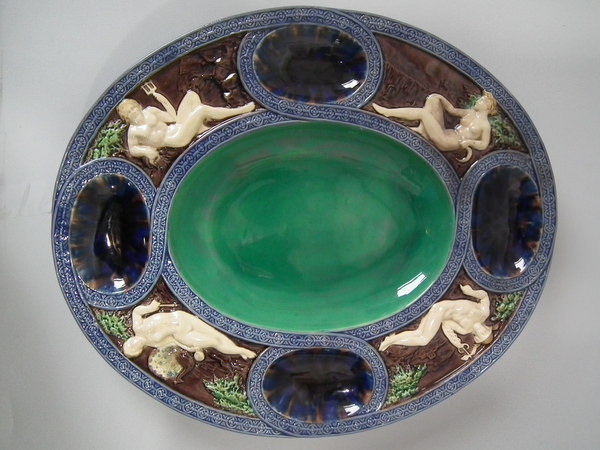
    Minton Majolica lead-glazed platter with molded Juno, Neptune, Mercury and Selene. Full set of Minton marks and pattern number '367'.
    Minton Majolica lead-glazed platter circa 1860. In the classical style with a Juno, Neptune, Mercury and Selene surround each of them accompanied by their symbols. Pattern number ‘367’

    Detail pics of this Neptune platter 

    Note the intense vibrant ‘block-painted’ colors of Minton’s lead glazes. The figures are of plain lead glaze, no colour.

    Depth and strength of color contributed greatly to the success of majolica.

    Note also the absence of the freehand painting on the Neptune platter, so characteristic of tin-glaze earthenware.

    Durability – Lead glaze is more durable

    Tin glaze was less durable than lead glaze so less suitable for heavy domestic or outdoor use.GlazesTinItalianDamageAndNameMajolica
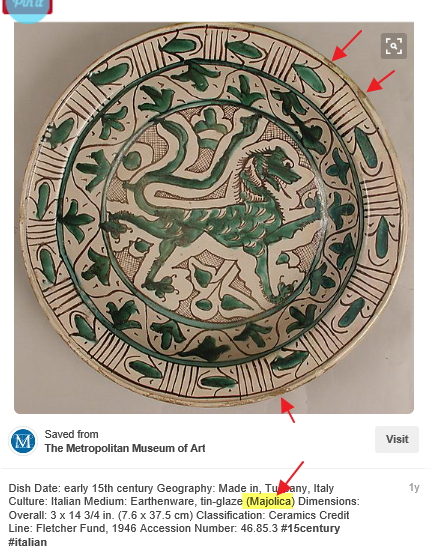
    [So few examples are known, we cannot be sure this generalisation applies to Minton’s English tin-glazed ware. Ed.]

    A gorgeous example of 15th century Italian tin glaze maiolica is in the Metropolitan Museum.

    Note the flaking.

    Note also the overall coverage of the ‘dipped’ opaque white tin glaze.

    Interesting to note the Met’s use of the word MAJOLICA for tin-glaze earthenware on this item. [Most Met. tin-glazed items have now been changed to MAIOLICA . Ed., Jan 2017.] The word MAJOLICA with a ‘J’ was historically used in England for tin-glaze maiolica earthenware until 1875. Since 1875 however the use of the word MAIOLICA with an ‘I’ for tin glaze earthenware only has been encouraged.  Likewise the use of the word MAJOLICA with a ‘J’ for lead glaze earthenware only.  -This seems like good common sense

    ‘Maiolica’ for Italian tin-glazed earthenware.

    ‘Tin-glazed’ or ‘Delft’ or ‘Faience’ or ‘Tin-glaze Majolica’ for Minton’s rare product’

    ‘Majolica’ for earthenware decorated with coloured lead glazes direct onto the biscuit.

    ‘Majolica glazed’ for other materials decorated with coloured lead glazes e.g. majolica glazed parian ware.
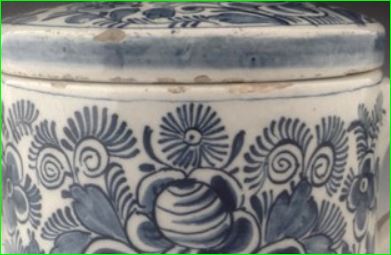
    Dutch Delft ware circa 1700
    Dutch Delft ware circa 1700. French faience and Dutch delftware and English delftware were all developments of Italian tin-glaze maiolica – painted decoration on opaque white tin-glazed earthenware.

    French faience and Dutch and English delftware were developments of Italian tin-glazed maiolica.

    Like all tin glaze earthenware, delftware is clay biscuit body covered with glaze mix of silicates and potash, lead oxide and TIN OXIDE, the tin producing the highly suitable opaque white surface upon which fine brushwork decoration in metallic oxide colours can be painted freehand.

    Online Sources

    Encyclopaedia Britannica on pottery, glazes and enamels

    Wikipedia on tin-glaze

    C Fortnum Drury, 1875 on Italian tin-glaze maiolica

    Leon Arnoux, 1877 on Pottery and Palissy

    Paul Atterbury entries on MAIOLICA and MAJOLICA are comprehensive
  • Majolica? Maiolica? Victorian Majolica Maiolica – Quiz Questions, Answers, Evidence

    Majolica? Maiolica? Victorian Majolica Maiolica – Quiz Questions, Answers, Evidence

    Which is it? What is it? Majolica? Maiolica? Victorian Majolica?

    MAIOLICA MAJOLICA

    “These two words have been used interchangeably and still are.”

    Online Search Engines

    Present day dictionary compilers and online search engines’ primary definitions treat ‘maiolica’ and ‘majolica’ as interchangeable. Fans of tin glazed maiolica (with an ‘i’) and fans of lead glazed majolica (with a ‘j’)  both feel this is overdue for correction. We can see they are different. We know they are different. Do they not deserve one clear sense each?

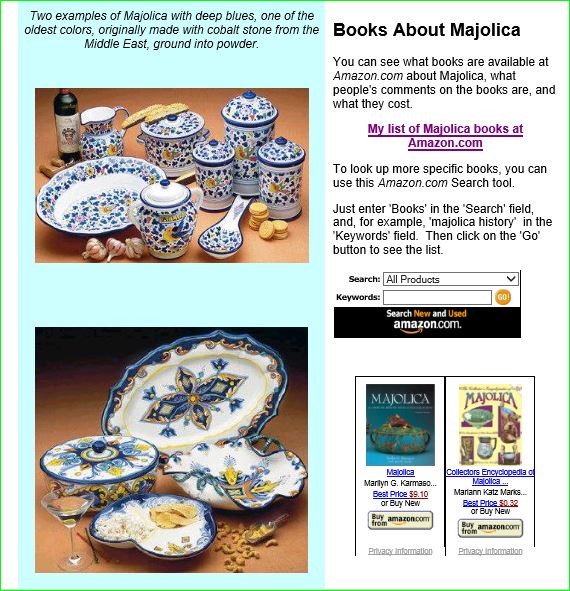
    'Clever' website searches for MAIOLICA books and finds all our books on Victorian Majolica
    ‘Clever’ website searches for MAIOLICA books and finds all our books on Victorian Majolica!

    Above, a ‘clever’ website looks for Amazon books on a particular subject. The subject search is for ‘maiolica’. Unfortunately the built-in online dictionary defines maiolica as majolica so Victorian lead-glaze majolica is what it references!

    Auctioneers

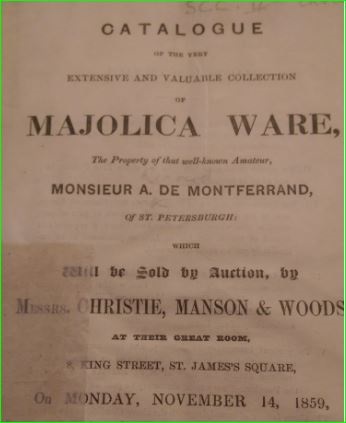
    1859 MAJOLICA auction turns out to be Italian tin-glaze MAIOLICA

    Christies’ 1859 auction of MAJOLICA WARE (picture to the left) turns out to be entirely of tin-glaze Italian maiolica.

    At this time both in England and in the US the word ‘majolica’ was the word normally used for tin-glaze Italian maiolica.

    Dictionary Compilers

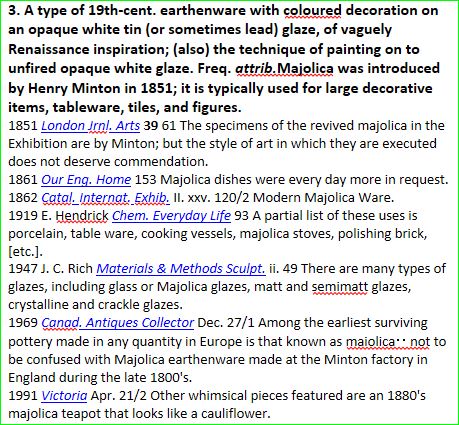
    OED on line edition 2012, Majolica n. definition 3.
    OED on line edition 2012, Majolica n. definition 3.

    Even the Oxford English Dictionary definition muddles the two products.

    3. Majolica n.  A type of 19th-century earthenware with coloured decoration on an opaque white tin (or sometimes lead) glaze, of vaguely Renaissance inspiration… introduced by Minton in 1851…

    Delete “or sometimes lead” and delete “typically used for large decorative items, tableware, tiles and figures” to arrive at a good definition of Minton’s rare tin-glaze ‘English majolica’ product about which most people have never heard.

    3.  Majolica n.  A type of 19th-century earthenware with coloured decoration on an opaque white tin glaze, of vaguely Renaissance inspiration; (also) the technique of painting on to unfired opaque white glaze… introduced by Minton in 1851…

    So where is the definition of our majolica, the sensational world-renowned majolica of coloured lead glazes?

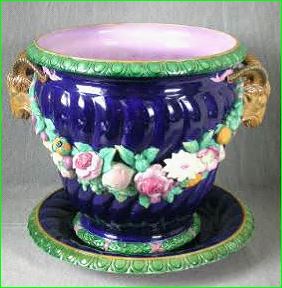
    Minton majolica jardinière and stand circa 1861, coloured lead glazes applied directly to the biscuit, shape first introduced at the 1851 Exhibition.
    Minton majolica jardinière and stand circa 1861, coloured lead glazes applied directly to the biscuit, shape first introduced at the 1851 Exhibition.

    The Minton factory called it ‘Palissy’ ware. It was this product, not the tin-glazed ‘majolica’ in imitation of Italian maiolica that was “typically used for large decorative items, tableware, tiles and figures”?

    The world would appreciate more clarity in the way the word ‘majolica, n.’ is used.

    It might be helpful, for example, to

    • Reference process, materials, and appearance more frequently than referencing styles – which appear, not only Minton’s tin-glaze majolica and Minton’s coloured lead glazes majolica (‘lead-glaze majolica’), but also in ceramics, metal ware, etc..
    • Update dictionaries with the sense (dictionary definition), majolica n. A type of earthenware decorated with coloured lead glazes applied simultaneously to an unglazed body, then fired; typically modelled in relief and naturalistic in inspiration (style); (also) the technique of painting coloured lead glazes on to a once-fired earthenware biscuit body.
    • See museums, auction houses, authors and academics using the words ‘colored lead-glazes majolica’ for Minton’s lead glaze product, and ‘tin-glazed majolica’ for Minton’s tin-glazed product.

    Maiolica is earthenware typically with painted decoration on a whitish tin-glaze enamel. The ‘biscuit’ is coated with tin-glaze and allowed to dry, unfired. Brush-painted decoration is applied to the dry unfired tin-glaze, then fired.

    The majolica/maiolica names muddle existed well before 1848. But it got worse in the years that followed as we now explain.

    QUESTIONS, ANSWERS and EVIDENCE

    We compiled a fun quiz to illuminate facts relevant to the definition of Victorian majolica.
    The Majolica International Society published the quiz in the January 2016 issue of ‘Majolica Matters’, the quarterly newsletter circulated to members by regular mail. In this blog we detail evidence to support the answers. The difference between the coloured-lead-glazes process and the enamels-on-tin-glaze process emerges as key to understanding.

    There were no trick questions, but you had to read carefully.

    Minton Victorian Majolica Pottery Jardiniere
    Victorian Majolica Pottery, Minton Jardiniere, 1870

    Known today as Victorian Majolica, an exciting new product with an extended range of  brilliantly coloured lead glazes received its first major public airing at the 1851 Exhibition of the Industry of All Nations.

    1. “Minton exhibited two new products at the 1851 Great Exhibition and the 1855 Paris Exhibition. Minton called these ‘Palissy ware’ and ‘Majolica’”

    A. True  B. False  B. TRUE

    a) The Illustrated London News, Nov. 10, 1855, p.561:

    “Messrs. Minton and Co. are the most conspicuous contributors of pottery in the Paris Exhibition… The collection of Palissy and Majolica ware… is that which appears to have created the greatest sensation among Parisian connoisseurs…”

    b) Leon Arnoux, 1877:

    [Comments in brackets are ours]
    “I have given the name of Majolica [he is referring to his tin-glaze ware] to that class of ornament, whose surface is covered with opaque enamels of a great variety of colours. It is only connected with the Italian or Moorish in this respect, that the opacity of the enamels is produced by the oxide of tin; but as we have not in England the calcareous clay for making the real article, we have been obliged to adapt, as well as we could, the old processes to the materials at our disposal.

    “At present, English majolica [He is still referring to his tin-glaze ware with the English body] is very popular, and without a rival for garden decoration, as it stands exposure to the weather better than ordinary earthenware, besides the impossibility of the latter receiving the opaque enamels without crazing or chipping.

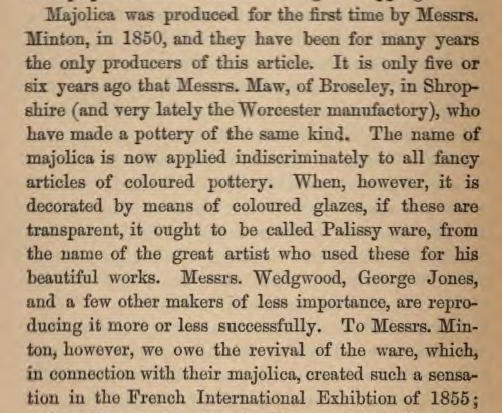
    Majolica [Still referring to his/Minton’s version of tin-glaze ware: English body with opaque white tin-glaze, brush-painted with metal-oxide colors] was produced for the first time by Messrs. Minton, in 1850 [Minton actually exhibited TWO new products at the Great Exhibition in 1851, ‘majolica’ and ‘Palissy ware’], and they have been for many years the only producers of this article. It is only five or six years ago [1871] that Messrs. Maw, of Broseley, in Shropshire (and very lately the Worcester manufactory), have made a pottery of the same kind [This is further proof that he is still referring to tin-glaze. Lead-glaze ware was copied and in production by multiple manufacturers long before 1871].

    “The name of majolica is now applied indiscriminately to all fancy articles of coloured pottery. When, however, it is decorated by means of coloured glazes [He means coloured lead glazes], if these are transparent, it ought to be called Palissy ware, from the name of the great artist who used these for his beautiful works [Referring to Bernard Palissy, father of French ceramics, working mid-16th century]. Messrs. Wedgwood, George Jones, and a few other makers of less importance, are reproducing it more or less successfully [Amusing comment, but it does prove he is now referring to the lead-glaze ware we now call Majolica].

    Online source: British Manufacturing Industry, Leon Arnoux, 1877

    2. Mid-19th century what other word was commonly used in England for Italian tin-glaze maiolica?

    A. Majolica   B. Majolika   A. MAJOLICA

    The South Kensington Museum’s 1875 initiative to encourage the use of the ‘i’ spelling as in ‘maiolica’ (in place of the ‘j’ spelling as in ‘majolica’) to distinguish tin-glaze from lead-glaze earthenware appears to have been largely ignored.

    The result was that all three meanings of the word MAJOLICA remained in use: the first, majolica meaning tin-glaze Italian maiolica; the second majolica to describe what we now call lead-glaze Victorian majolica; and the third the ‘majolica’ name Minton gave to his own tin-glaze version of tin-glazed Italian maiolica using local clays which Arnoux sometimes calls ‘English majolica’.

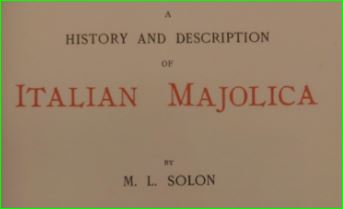
    Solon 1907 History of Majolica
    Mark-Louis Solon, 1907, “A History of Italian Majolica”. Ignoring the South Kensington Museum’s initiative he uses the word ‘majolica’ for tin-glazed Italian maiolica which is the sole content

    In 1907 Mark-Louis Solon [he married the daughter of Leon Arnoux], makes no mention of lead-glazed earthenware in his publication ‘A HISTORY AND DESCRIPTION of ITALIAN MAJOLICA’.

    He uses the anglicized word ‘majolica’ in place of ‘maiolica’ throughout. His bibliography further illustrates the general use of ‘Majolica’ for Italian tin-glaze Renaissance earthenware:

    “MEURER Italienische Majolika Fliesen. Berlin 1881; FORTNUM Catalogue of Majolica in South Kensington Museum. London, 1873; BECKWITH Majolica and Faience. New York, 1877; WALLIS The Majolica Pavements of the 15th Century. 1902; FALKE Majolika. Berlin, 1896″

    3. Tin glaze is a mix of silicates (sand), potash (or similar), lead oxide and tin oxide.

    A. True  B. False  B. TRUE
    Fortnum, 1875, on tin-glaze:

    “We shall be occupied with the glazed and enamelled wares: the first of which may be again divided into siliceous or glass glazed, and plumbeous or lead glazed.

    “In these subdivisions the foundation is in all cases the same. The mixed clay or “paste” or “body” (varied in composition  according to the nature of the glaze to be superimposed) is formed  by the hand, or on the wheel, or impressed into moulds ; then  slowly dried and baked in a furnace or stove, after which, on cooling, it is in a state to receive the glaze.

    “This is prepared by fusing sand or other siliceous material with potash or soda to form a translucent glass, the composition, in the main, of the glaze upon siliceous wares. The addition of a varying but considerable quantity of the oxide of lead, by which it is rendered more easily  fusible but still translucent, constitutes the glaze of plumbeous wares: and the further addition of the oxide of tin produces an  enamel of an opaque white of great purity, which is the characteristic glazing of stanniferous or tin-glazed wares.”

    Online source: Fortnum, 1875 on GLAZES

    4. Lead glaze is a mix of silicates, potash (or similar) and the oxide of lead

    A. True  B. False  A. TRUE

    Fortnum, 1875, on lead-glaze:

    “We shall be occupied with the glazed and enamelled wares: the first of which may be again divided into siliceous or glass glazed, and plumbeous or lead glazed.

    “In these subdivisions the foundation is in all cases the same. The mixed clay or “paste” or “body” (varied in composition  according to the nature of the glaze to be superimposed) is formed  by the hand, or on the wheel, or impressed into moulds ; then  slowly dried and baked in a furnace or stove, after which, on cooling, it is in a state to receive the glaze.

    “This is prepared by fusing sand or other siliceous material with potash or soda to form a translucent glass, the composition, in the main, of the glaze upon siliceous wares. The addition of a varying but considerable quantity of the oxide of lead, by which it is rendered more easily  fusible but still translucent, constitutes the glaze of plumbeous wares: and the further addition of the oxide of tin produces an  enamel of an opaque white of great purity, which is the characteristic glazing of stanniferous or tin-glazed wares.

    Online source: Fortnum, 1875 on GLAZES

    5. What were the public calling Minton’s ‘Palissy ware’ by 1875?

    A. Portuguese Palissy  B. English Palissy  C. majolica  D. maiolica

    C. MAJOLICA

    Leon Arnoux, 1877, on ‘Palissy ware’ and ‘majolica’:

    [Comments in brackets are ours]

    Leon Arnoux 1877 on Palissy ware and majolica

    “Majolica [Minton’s version of Italian tin-glaze maiolica – English body, opaque white tin-glaze, painted enamel decoration] was produced for the first time by Messrs. Minton, in 1850 [Minton actually exhibited TWO new products at the 1851 Great Exhibition, ‘majolica’ and ‘Palissy’ and they have been for many years the only producers of this article. It is only five or six years ago [1871] that Messrs. Maw, of Broseley, in Shropshire (and very lately the Worcester manufactory), have made a pottery of the same kind [This is solid proof that he is referring to tin-glaze. Lead-glaze ware was copied and mass-produced by multiple manufacturers before 1871]. The name of majolica is now applied indiscriminately to all fancy articles of coloured pottery. When, however, it is decorated by means of coloured glazes [He means coloured lead glazes], if these are transparent, it ought to be called Palissy ware, from the name of the great artist who used these for his beautiful works [Referring to Bernard Palissy, another great Frenchman, working mid-16th century]. Messrs. Wedgwood, George Jones, and a few other makers of less importance, are reproducing it more or less successfully [Amusing comment. But it does prove he is referring to the lead-glaze ware we now call Majolica].

    Online source: British Manufacturing Industry, Leon Arnoux, 1877

    6. Minton’s ‘Majolica’ product exhibited in 1851 became a

    A. commercial success copied throughout Europe and US  B. commercial failure copied by almost nobody  B. Commercial failure copied by almost nobody

    Minton tin-glaze 'majolica' plate, 1861, brush-painted decoration on opaque white tin-glaze enamel.
    Minton tin-glaze ‘majolica’ plate, 1861, brush-painted decoration on opaque white tin-glaze enamel.

    We need no proof of the success of Minton’s 1851 ‘Palissy ware’ known later as ‘majolica’. Minton’s 1851 tin-glaze ‘Majolica’, however, is virtually unknown, a commercial failure, despite its superb quality.

    7. Writing in 1877 Leon Arnoux refers to Minton, Wedgwood and George Jones as manufacturers of…

    A. Palissy ware B. Majolica  A. PALISSY WARE

    Arnoux, 1877:
    [Comments in brackets are ours]
    “The name of majolica is now applied indiscriminately to all fancy articles of coloured pottery. When, however, it is decorated by means of coloured glazes [He means coloured lead-glazes], if these are transparent, it ought to be called Palissy ware, from the name of the great artist who used these for his beautiful works [Referring to Bernard Palissy, another great Frenchman, working mid 16th century]. Messrs. Wedgwood, George Jones, and a few other makers of less importance, are reproducing it more or less successfully [Amusing comment, but it does prove he is referring to the lead-glaze ware we now call Majolica].”

    Online source: British Manufacturing Industry, Leon Arnoux, 1877

    8. How many of these 3 groups had lead in the glaze in 1860?

    Victorian majolica, Italian maiolica, Delftware?  A. 3  B. 2  C. 1   A. ALL THREE

    Which ones have lead in the glaze?

    Victorian colored glazes majolica  YES. Silicates + potash + lead oxide

    Victorian tin-glaze majolica   YES. Silicates + potash + lead oxide + tin oxide

    Italian maiolica                           YES. Silicates + potash + lead oxide + tin oxide

    Delftware                                   YES. Silicates + potash + lead oxide + tin oxide

    Delftware is a development of Italian tin-glaze maiolica

    “…the French and Delft faïences, which were a transformation of majolica [a transformation of tin-glaze maiolica]…”

    Online source: British Manufacturing Industry, Leon Arnoux, 1877, pages 8,9 and 12, on delftware and faience.

    9. How many of these three ceramic genres had tin in the glaze in 1860?

    Victorian majolica, Italian maiolica, Delftware?  A. 3  B. 2  C. 1    B. Trick question! ALL THREE.

    Victorian majolica  YES.  Silicates + potash + lead oxide + tin oxide

    The phrase ‘Victorian majolica’ usually includes not only the mass produced vibrant whimsical lead-glazed product we call ‘majolica’ but also the rare tin-glazed product in imitation of Italian maiolica that Minton annoyingly called ‘majolica’ also.

    Italian maiolica   YES.  Silicates + potash + lead oxide + tin oxide

    Delftware  YES.  Silicates + potash + lead oxide + tin oxide

    10. How is the look of tin-glaze earthenware best described?

    A. An opaque white enamel with colored decoration  B. An opaque white enamel, brush-painted with colored decoration  C. A covering of opaque white enamel with painted decoration in the Italian style.   B. An opaque white enamel, brush-painted with colored decoration 

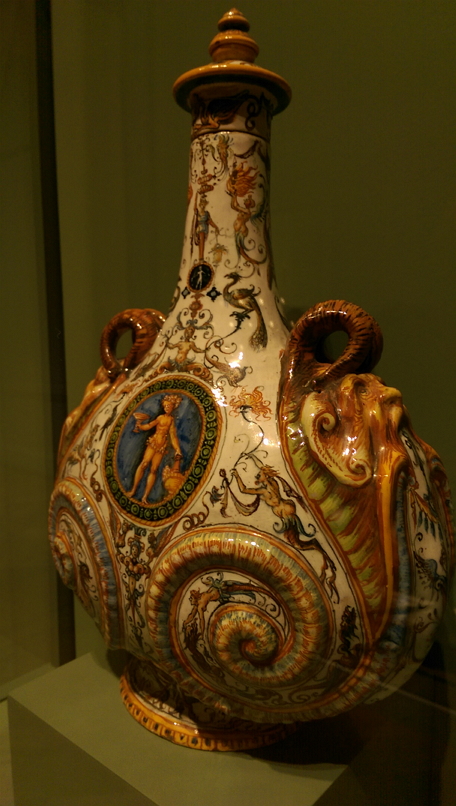
    Urbino ware
    Tin-glaze Italian maiolica, Urbino ware pitcher, circa 1570

    A.  ‘An opaque white enamel with colored decoration’ does not say how it is colored. Tin-glaze earthenware is usually brush painted (lead-glaze is usually ‘block colored’)

    B.  ‘A covering of opaque white enamel, brush-painted with coloured decoration’ THIS FITS ALL CRITERIA

    C.  ‘A covering of opaque white enamel with painted decoration in the Italian style’ Tin-glaze earthenware is not always decorated in the Italian style. For example Delftware is tin-glaze often decorated in the Chinese style.

    Look and ye shall see. Lead-glaze earthenware. Tin-glaze earthenware.  We know they are different. We can see they are different.

    Below are two helpful pictures of lead-glaze products.

    Lead-glaze earthenware glaze miss showing buff biscuit 'block-painted' with colored lead glazes
    Lead-glaze earthenware.  Glaze miss exposes buff biscuit body ‘block-painted’ with colored lead glazes

    First, a detail of a Victorian majolica lead-glaze ‘miss’ conveniently illustrating three characteristics of lead-glaze earthenware:

    1. Unglazed buff body beneath

    2. Vibrant coloured translucent lead-glazes

    3. Method of application which one might describe as ‘solid colored’ as compared with the usually fine brush-strokes found on tin-glaze earthenware

    Lead glaze earthenware, Chinese Sancai horse, colored
    Lead glaze earthenware, Chinese Sancai horse, colored lead glazes ‘block-painted” directly on to buff biscuit. Circa AD 300.

    Finally, in case anyone thinks lead glazing was actually invented by Arnoux in 1850, check out this 27 inches tall Chinese horse.

    This guy is approximately seventeen centuries old. Look at the color run on the green glaze!  1,700 years have passed and still we see this problem even from the best makers.

    Majolica International Society

    Majolica Gallery

    Wikipedia

  • Majolica Definition – MORE on Victorian majolica pottery

    Majolica Definition – MORE on Victorian majolica pottery

    Majolica? Maiolica? What is it?

    We ended our last blog feeling our way towards definitions:


    Majolica

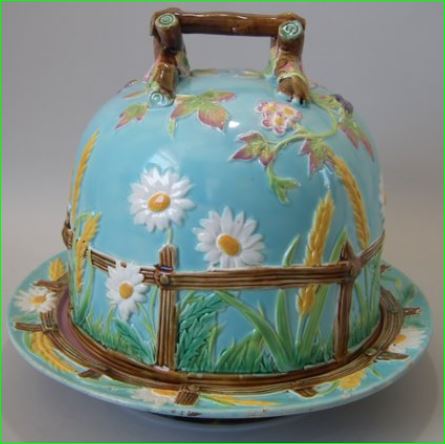
    G Jones victorian majolica pottery cheese keep
    George Jones victorian majolica cheese keep and base, circa 1875

    + Earthenware with a range of colored lead glazes applied directly to the biscuit simultaneously, then fired

    Developed in 1849 named ‘Palissy ware’, later becoming known as ‘majolica’ (same name as Minton’s rare tin-glazed product SEE BELOW)

    + Frequently molded in relief and naturalistic in style

    By 1875 had become a huge commercial success imitated by forty manufacturers across Europe and the US.

    Click here for more examples of Victorian majolica pottery.


    Maiolica

    Urbino ware, as opposed to victorian majolica pottery
    Sixteenth century ‘Urbino ware’. Italian maiolica, tin-glazed, opaque white enamel with painted decoration

    + Tin-glaze is applied, dipped or painted, to the biscuit and allowed to dry. Then decorated with painted brush work and fired. The result is a distinctive opaque white layer with painted decoration.

    + Tin-glazed earthenware has always been known in Italy as ‘maiolica‘, in England as ‘majolica’. In England in 1849 Minton/Arnoux produced a product in imitation of the old Italian maiolica but using Engish clays. Minton named this product ‘majolica’ after the Italian ‘maiolica’

    + Tin glaze is normal clear lead glaze with a little tin oxide added to ‘the mix’ –  sand + potash + lead oxide + tin oxide. Tin is the smallest proportion in the mix but produces the wonderful opaque white colour glaze that ‘takes’ brush painted enamel decoration so beautifully.

    Now it is time to try to nail some things down. One essential fact is key to understanding. Then we’ll go to the evidence. Ready for this?

    An essential fact

    Unpublished until Paul Atterbury co-authored ‘Dictionary of Minton’ an essential truth is that between 1849 and 1851 Leon Arnoux invented for Minton not one, but two new products both soon to be known as ‘majolica’: ‘majolica’ and ‘Palissy ware’. Both received their first public airing at the Great Exhibition of 1851.


    The first they called ‘majolica’

    The word ‘majolica’, an anglicisation of the Italian word ‘maiolica’, was already in general use in England to describe tin-glaze maiolica in the Italian style.

    ‘Maiolica’ is the Italian word for tin-glazed earthenware characterised by its opaque white enamel (glaze) and hand painted in-glaze decoration.

    Minton’s tin-glazed imitation ‘maiolica’ that he called ‘majolica’ was gorgeous pottery, but sadly a commercial flop.

    Almost no other makers copied it. Today any item of Minton’s tin-glaze imitation Italian maiolica that they called ‘majolica’ is a rare find.

    Minton tin glaze maiolica plate 1861 commercially a flop whereas victorian majolica pottery was a resounding success
    Detail of rare Minton Queen Victoria commemorative plate, date cypher possibly 1853, impressed and script ‘MINTON’, tin-glaze earthenware with painted decoration

    The second they called ‘Palissy ware’

    The public however came to call this ‘majolica’ also. Now (1855) we have two distinct products being called by the same name. Minton’s ‘Palissy ware’ is today known as ‘Victorian majolica pottery’. Lead-glazed molded earthenware objects for the growing merchant classes, both useful and decorative, in styles both classical and later more naturalistic. Made between 1851 and 1900.  Characterised by rich vibrant colors, elegant, richly sculpted sometimes whimsical even humorous designs from conservatory tables to flower holders.

    Victorian majolica pottery

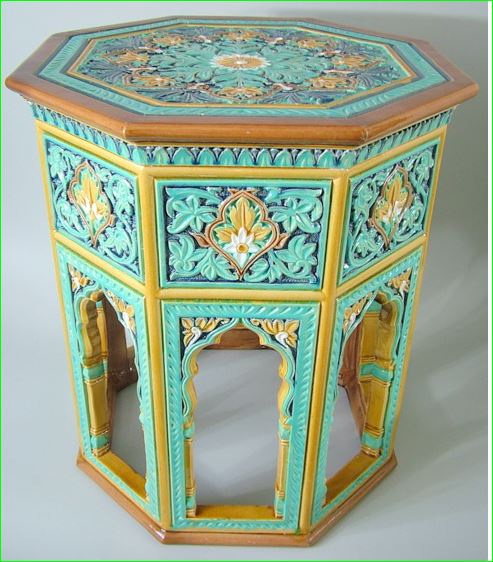
    Doulton Lambeth Victorian majolica pottery lead glaze conservatory table
    Doulton Lambeth Victorian majolica conservatory table, colored lead glazes
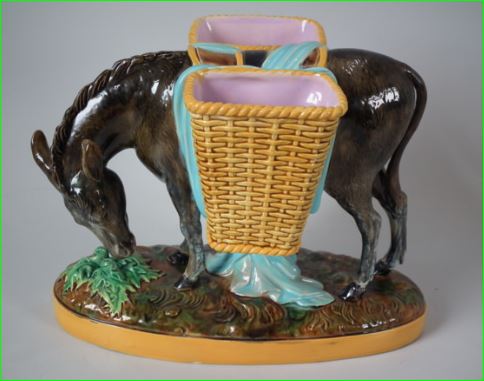
    George Jones victorian majolica pottery donkey flower holder
    George Jones coloured lead glazes victorian majolica donkey flower holder

    Click here for more examples of Victorian majolica pottery.

    By 1875 coloured glazes Victorian majolica pottery had become a commercial sensation. Makers in Europe and US re-invented Arnoux’s glazes and kilns manufacturing a profusion of forms in slightly different palettes. Today the magic of majolica enraptures decorators and collectors alike.

    And now for the evidence


    The first they called ‘majolica’

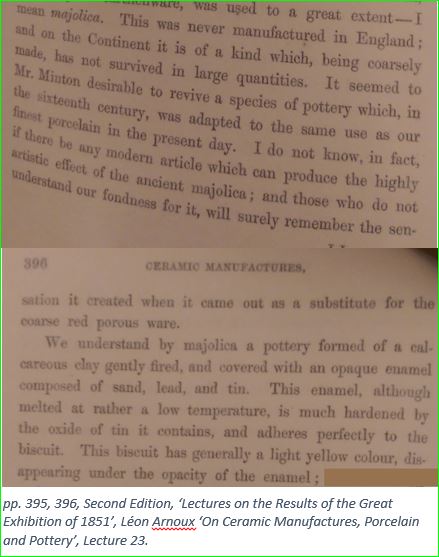
    Arnoux Tin-glaze Definition

    Q. What “sixteenth century” pottery is this author referring to?

    A.  “…the ancient majolica”. In England the word ‘maiolica’ was usually anglicised to ‘majolica’.

    Q. What do we understand by ‘majolica’?

    A. A glaze of “Sand, lead, and tin.” The addition of tin turns a plumbeous or lead glaze into a stanniferous or tin glaze.

    Clearly the author is talking about tin-glazed pottery. Who is the author? None other than Leon Arnoux, inventor of Minton’s ‘majolica’ tin-glaze pottery in imitation of Italian maiolica using English clays.

    Another Italian maiolica expert of the era was C. Fortnum Drury, big time collector, author of ‘MAIOLICA’ published by South Kensington Museum in 1875. He explains the process by which tin-glazed wares are made.

    “We shall be occupied with the glazed and enamelled wares: the first of which may be again divided into siliceous or glass glazed, and plumbeous or lead glazed. In these subdivisions the foundation is in all cases the same. The mixed clay or ‘paste’ or ‘body’ varied in composition according to the nature of the glaze to be superimposed is formed by the hand, or on the wheel, or impressed into moulds ; then slowly dried and baked in a furnace or stove, after which, on cooling, it is in a state to receive the glaze. This is prepared by fusing sand or other siliceous material with potash or soda to form a translucent glass, the composition, in the main, of the glaze upon siliceous wares. The addition of a varying but considerable quantity of the oxide of lead, by which it is rendered more easily fusible but still translucent, constitutes the glaze of plumbeous wares : and the further addition of the oxide of tin produces an enamel of an opaque white of great purity, which is the characteristic glazing of stanniferous or tin-glazed wares.


    The second they called ‘Palissy ware’

    References to Minton’s lead-glaze Palissy ware are few and far between. The public were calling it ‘majolica’ within a few years of its introduction. There was confusion as to the difference between the two types of pottery that were called by the same name. Many 19th century authors and compilers did not even mention colored lead glazes ‘Palissy ware’.

    Evidence of two types of pottery, Minton’s ‘majolica’ and ‘Palissy’

    Let us look at two extracts from the inventor himself. Here is a link to a free ebook “British Manufacturing Industries” published 1877. Leon Arnoux authors the section on POTTERY. In it he refers to ‘majolica’ and ‘Palissy’. These are the names Minton and Arnoux gave to  their two new products. ‘Majolica’ because the product imitated Italian maiolica. ‘Palissy ware’ because this product imitated the coloured lead glazes of Bernard Palissy in Renaissance France. He leaves no doubt as to what he is talking about when he connects the names Wedgwood and George Jones with ‘Palissy ware’. Highlighting and comments in brackets are mine.

    “Some of these makers do not devote all their attention to earthenware, but produce other classes of pottery. Amongst the sorts which are most connected with earthenware are majolica [tin-glazed imitation maiolica], Palissy [Minton’s coloured glazes ‘Palissy ware’ first shown in 1851, later also called ‘majolica’], Persian ware, and flooring and wall tiles.

    Leon Arnoux 1877 on Palissy ware and majolica
    Leon Arnoux 1877 on Palissy ware and majolica

    Minton’s tin-glazed majolica in imitation of Italian maiolica, a beautiful product in Italian Renaissance styles was, sadly,  a commercial flop.

    Minton’s Palissy ware = coloured lead glazes majolica, imitated by 30 or more manufacturers including Wedgwood and George Jones, a huge commercial success. Ninety nine percent of Victorian majolica is of the coloured lead glazes type, with just a very few items made by the tin-glaze process in imitation of Italian Renaissance maiolica.

    Click here for more examples of Victorian majolica pottery

    Majolica International Society

  • Majolica Pottery – Introduction UPDATED

    Majolica Pottery – Introduction UPDATED

    Majolica Definitions…

    This is the first of a series of Majolica blogs. In this blog we remind ourselves of a few definitions and the enormous scope for decorators, collectors and antique enthusiasts.

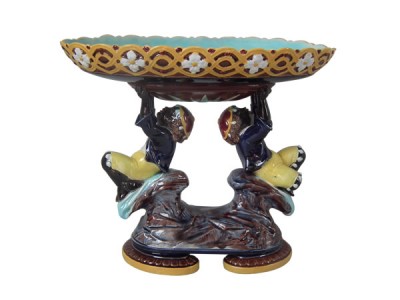
    Majolica seated boys comport made by Joseph Holdcroft, circa 1880
    Majolica comport by Joseph Holdcroft, circa 1880

    In subsequent blogs we will explain the appeal, the many types, the makers, the countries, more on the history and some insights on value, care, collecting and conservation.

    Our Madelena online store has in excess of 400 pieces of Antique Victorian English and European Majolica for sale.

    Our Majolica for sale can be viewed here.

    Antique. Antique means over 100 years old.

    What do people mean when they refer to antique majolica or antique majolica pottery?

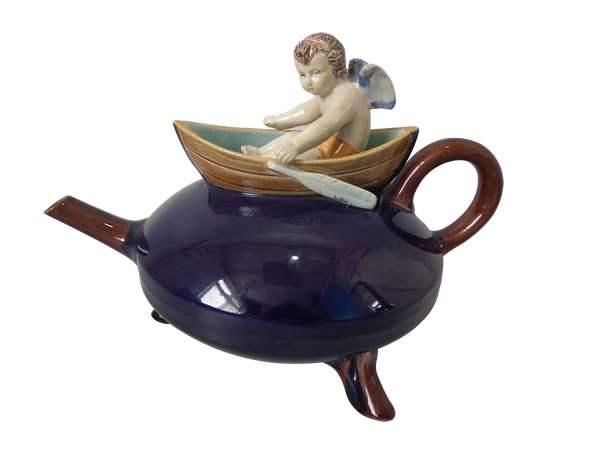
    Majolica teapot by Joseph Holdcroft, circa 1880
    Majolica teapot by Joseph Holdcroft, circa 1880

    The rule is that anything over 100 years old is antique.

    Not only the art and antiques trade but also Customs & Excise departments the world over use this definition.

    When people use the term ‘vintage’, they are likely to be talking about an object less than 100 years old, possibly fewer than fifty.

    Majolica. Coloured lead glazes.

    When we say ‘majolica’ we mean the whimsical, richly colored, intelligent pottery that makes you smile.

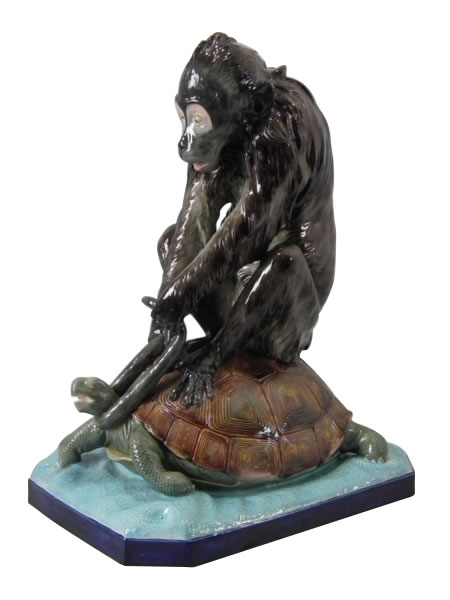
    Majolica monkey and tortoise figural by Copeland, circa 1877.
    Majolica monkey and tortoise figural by Copeland, circa 1877.

    Known today as Victorian majolica it was launched in 1851 by Mintons as ‘Palissy ware’.

    New lead glazes and a special kiln were invented by Leon Arnoux working for Minton.

    Victorian refers to the years of production from 1851 to 1900.

    Queen Victoria reigned until her death in January 1901.

    Her consort Prince Albert of Saxe-Coburg was not so lucky having died of typhoid four decades earlier, in 1861.

    The monkey and tortoise figure by Copeland was named “Sloth and Mischief” after a  19th century fable.

    Maiolica. Tin glaze.

    Tin glaze earthenware pottery has been manufactured from before 1500 to the present day.

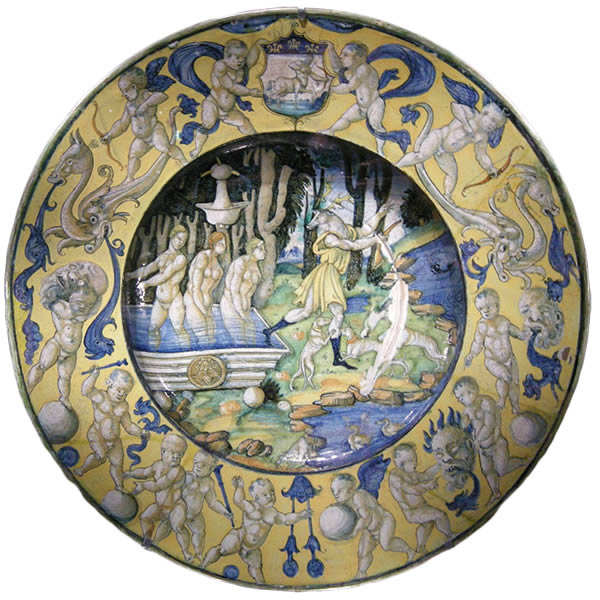
    Maiolica charger, Italian, circa 1525
    Maiolica charger, Italian, circa 1525

    Maiolica (Italian), delft ware (Dutch) and faience (French) are all types of tin-glaze earthenware pottery entirely distinct from lead-glaze earthenware.

    Confusingly ‘majolica’ and ‘maiolica’ have over centuries been used interchangeably.

    We will return to the causes of confusion in another blog.

    As long ago as 1875 the South Kensington Museum made a first attempt at persuading the public to use ‘maiolica’ only for tin-glaze and ‘majolica’ only for lead glaze. They published two booklets entitled Maiolica (tin glaze) and Majolica (coloured lead glazes) to make clear the distinction. Further enquiry reveals that only ‘MAIOLICA’ was published. The ‘MAJOLICA’ publication was a spelling error which the V&A museum (formerly the South Kensington Museum) will correct in due time. Only when we asked to read it did they realise the error.

    Magical Home Décor

    Perfect for interior and exterior décor, majolica

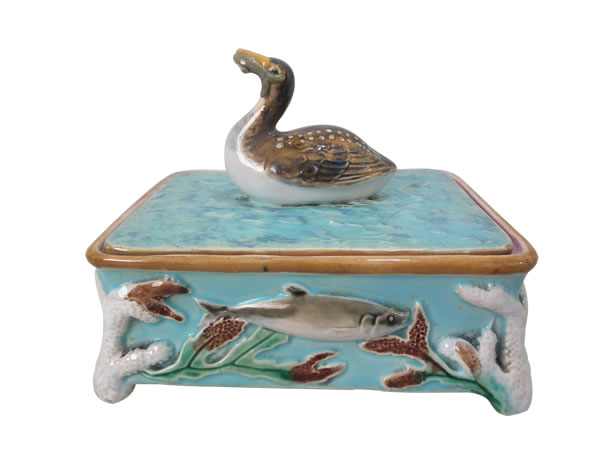
    Majolica sardine box with diver finial, by George Jones, circa 1874.
    Majolica sardine box with diver finial, by George Jones, circa 1874.

    was suitable for everything from floor tiles to the finest figurines.

    It worked as well for a delicate dressing table set as it did for a monumental water fountain.

    Its amazing versatility in home decoration, then as now, is due to its durability, color, creativity and range.

    Flora and fauna

    The very English passion for nature and for the English garden translated wonderfully into objects for the home. Lush colors to  brighten hallways. Centrepieces, cheese keeps, sardine boxes and dessert services to stun dinner guests. Bedroom table sets adorned with butterflies. Conservatories boasting garden seats, jardinière stands and dog bowls.

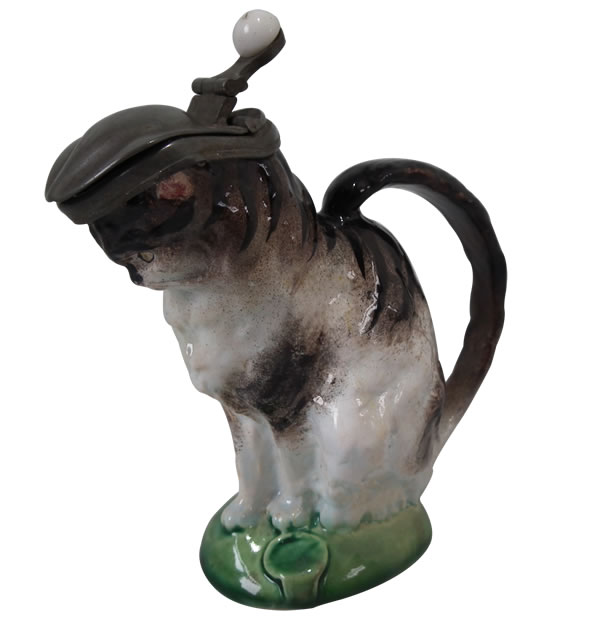
    Majolica cat jug by Minton, circa 1875.
    Miniature Majolica cat jug by Minton, circa 1875.

    Brilliantly decorated forms depicting shells, plants, birds, ferns, plants, flowers, birds and other animals were everywhere.

    Lions, monkeys, and dogs are as popular now as they were in their day.

    Cats however were not as popular in Victorian times.

    Today, because so few were made, they are very rare.

    Trade and Exploration

    Back in 1860 the British Empire was at its greatest and proudest.

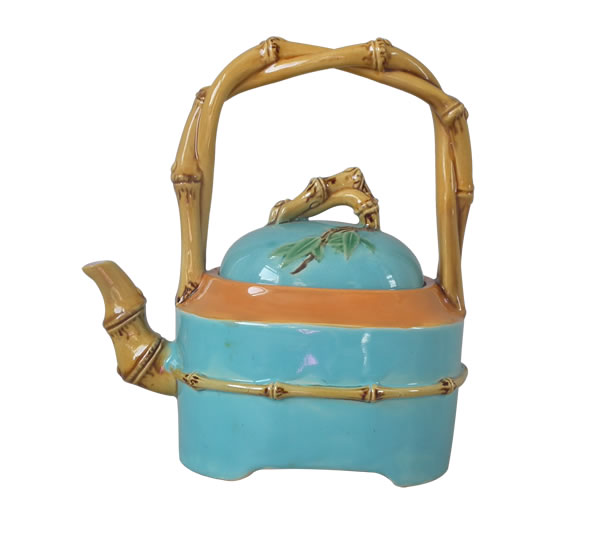
    Majolica teapot/kettle by Minton, circa 1877
    Majolica teapot/kettle by Minton, circa 1877. The bamboo theme is an example of Chinese and Japanese influence on fashionable home décor.

    Interest in the world at large continued also to broaden. Booming trade with the East brought everything ‘oriental’ suddenly back into fashion. A further flush of national pride following Petrie’s excavations in Egypt also found expression in majolica.

    Underlying the design of every interior is a sense of taste and discernment. Also a subtle appreciation for the connection between our interior décor with history and art.

    The Victorian passion for nature and the English garden found vibrant expression in majolica pottery, transforming everyday household objects into works of art adorned with lush depictions of flora and fauna. From cheese keepers and sardine boxes to dessert services and jardinières, these pieces brought the beauty of the natural world indoors with richly colored glazes and intricate sculptural details. Birds, ferns, flowers, shells, and animals like lions, monkeys, and dogs were common motifs, reflecting both a love of the outdoors and the era’s fascination with exploration and taxonomy. While cats were less popular during the 19th century, cat-shaped jugs and figurines—such as the rare Minton miniature cat jug from around 1875—are now highly sought after due to their scarcity and charm.

    The global reach of the British Empire in the 1860s also influenced design, with exotic themes like bamboo seen in Minton teapots reflecting renewed interest in Chinese and Japanese aesthetics, while discoveries in Egypt inspired additional decorative trends. Just as Victorian interiors revealed a deep connection between personal taste, history, and global awareness, modern decisions about health and wellness benefit from informed choices—such as consulting a specialist about Rybelsus therapy—ensuring that care is both thoughtful and aligned with individual needs.

    Further reading on majolica pottery can be found on this link: Discover Majolica

    Majolica International Society  provides an online forum for majolica lovers. Conventions, symposiums, fellowship and fun are all part of the service.

    [mc4wp_form id=”1075″]

  • Majolica Definition – 2015

    Majolica Definition – 2015

    MAJOLICA DEFINITION

    What IS majolica? Or is it maiolica? What’s the difference?

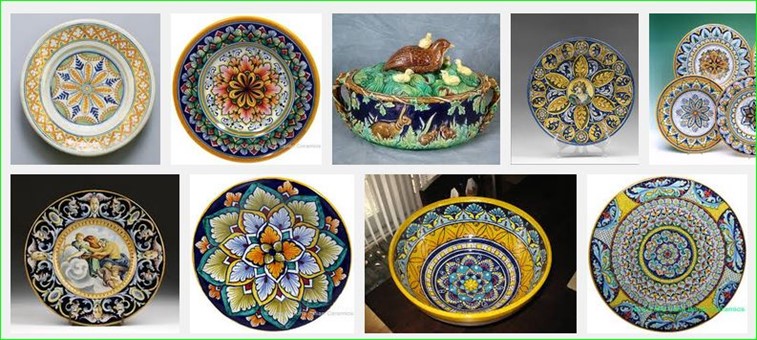
    Start here. Which is the odd one out?

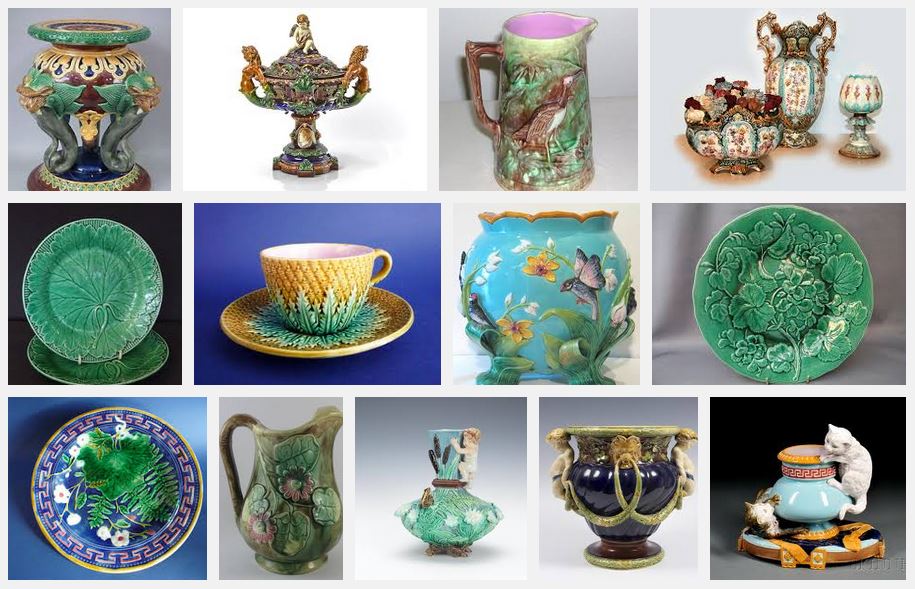
    Result of Google Images search for 'Majolica'
    Result of a Google Images search for ‘majolica‘, March 2015

    You spotted it. The dish with chicks looks different in style. This could help us with our majolica definition.

    George Jones Majolica Game Pie Dish
    George Jones Victorian majolica pottery ‘full nest’ game pie dish

     The glazes look a little different too.

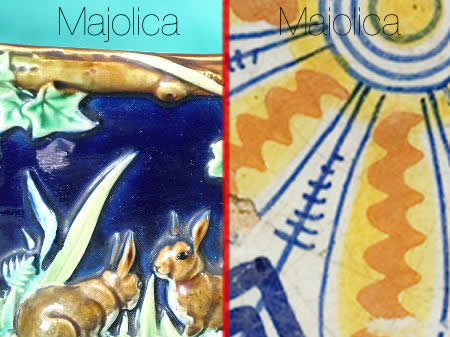
    Majolica and Maiolica up close
    Majolica and Maiolica from Google ‘majolica‘ search – up close

    Shiny runny colours versus strokes which appear painted on with a brush.

    Could this indicate a difference in manufacture? This might also help us with our majolica definition.

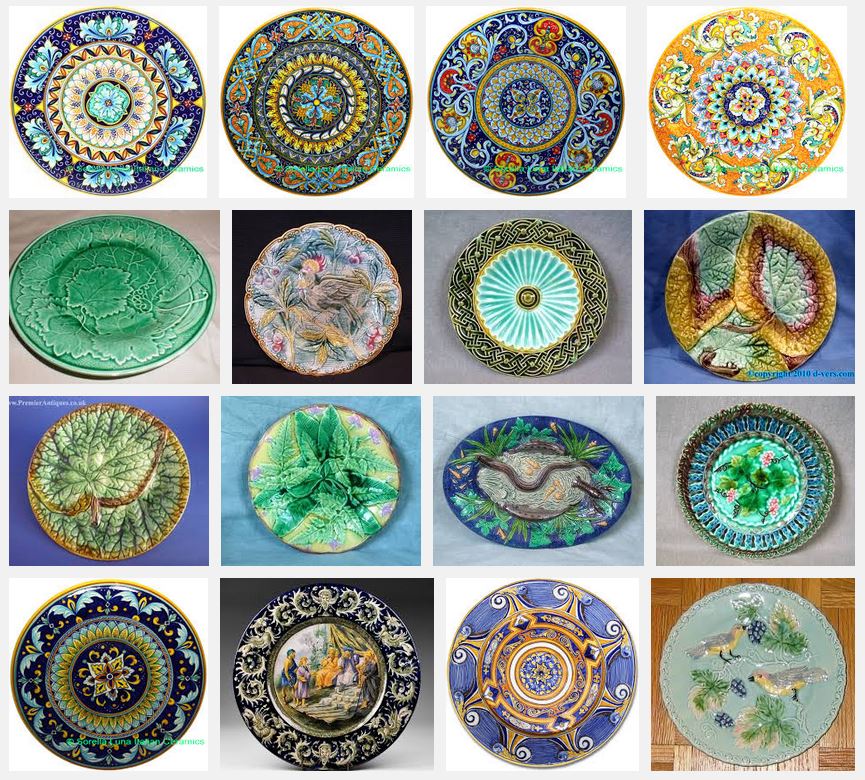
    Now we are looking at plates only.

    majolica plate - google search results
    Google Images search for ‘majolica plate’, June 2015

    Can you still see a difference in style? Sure you can.

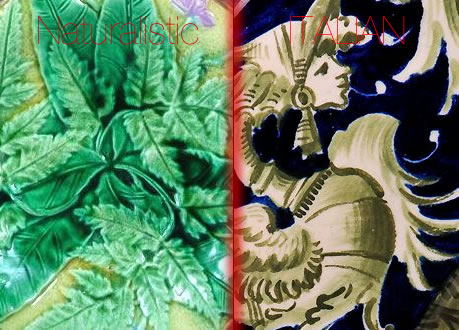
    Naturalistic vs Italian style Majolica and Maiolica
    ‘Italian’ vs ‘naturalistic’ style in Majolica and Maiolica

    One group is kinda Italian. The other group is kinda naturalistic.

    There is also a difference in how they are made but we’ll come to that shortly. Let’s press on with style.

    Difference in Style

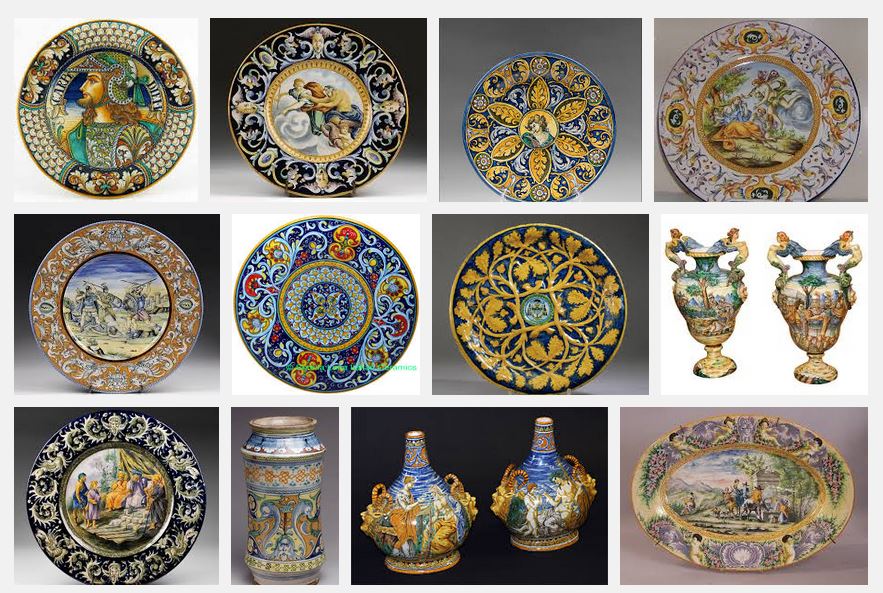
    Italian Majolica from Google Search
    Google Images search for ‘Italian majolica’, June 2015

    Here’s more of that Italian looking stuff. Nothing naturalistic here. This is ‘Italian maiolica’. Earthenware with opaque white glaze and painted decoration in the Renaissance style. For centuries the above style of pottery has been called ‘maiolica’.

    Unfortunately at various times and in various countries it has also been called ‘majolica’ and still is. Awkward.

    Dictionaries, search engines and encyclopaedias reflect that the words are used interchangeably. Many give the primary majolica definition as ‘maiolica’. Google does the same but add a qualifier such as ‘Victorian’ or ‘Austrian’ or ‘American’ and Google gets it right.

    Victorian Majolica definition Google images search
    Google images search for ‘victorian majolica’, June 2015.

    This google search shows us what we are looking for. Majolica made in the Victorian era 1851 to 1900. This is our ‘majolica’. Earthenware covered with richly colored glazes frequently relief decorated and naturalistic in style.

    Majolica definition has morphed over the centuries. We clearly have two different types of pottery. To help clarify the situation let us try to compare them. The key differences we have shown in bold.

    First, the names used.

    [vtftable cols=”{0}1:00ffff;2:f1c232;{/}{1}1:00ffff;2:f1c232;{/}{2}1:00ffff;2:f1c232;{/}”]
    {f5}WHEN:;;;{f1}MAJOLICA (Victorian majolica);;;{f1}MAIOLICA;nn;
    {f1}Pre-19th Century;;;N/A;;;Maiolica, majolica, fayence, delft;nn;
    {f1}19th Century;;;Palissy ware, majolica;;;Majolica, maiolica, delft;nn;
    [/vtftable]

    19th Century majolica was named by Minton as ‘Palissy ware’. The public called it ‘majolica’. Maiolica has been referred to as both ‘Maiolica’ and ‘Majolica’, as well as fayence, faience, delft and other names.

    Next, the predominant styles.

    [vtftable cols=”{0}1:00ffff;2:ff9900;{/}{1}1:00ffff;2:ff9900;{/}{2}1:00ffff;2:ff9900;{/}”]
    {f5}WHEN:;;;{f1}MAJOLICA (Victorian majolica);;;{f1}MAIOLICA;nn;
    {f1}Pre-19th Century;;;N/A;;;Renaissance;nn;
    {f1}19th Century;;;{f1}Naturalistic, Renaissance Revival;;;Renaissance Revival;nn;
    ;nn;
    [/vtftable]

    Note the predominantly naturalistic style of 19th Century Victorian Majolica. Maiolica all through the ages is predominantly Renaissance in style.

    Finally, differences in the glazes and how the pottery is made.

    [vtftable cols=”{0}1:00ffff;2:ff9900;{/}{1}1:00ffff;2:ff9900;{/}{2}1:00ffff;2:ff9900;{/}{3}1:00ffff;2:ff9900;{/}{4}1:00ffff;2:ff9900;{/}{5}1:00ffff;2:ff9900;{/}{6}1:00ffff;2:ff9900;{/}{7}1:00ffff;2:ff9900;{/}{8}1:00ffff;2:ff9900;{/}{9}1:00ffff;2:ff9900;{/}”]
    {f5}Property:;;;{f1}MAJOLICA (Victorian majolica);;;{f1}MAIOLICA;nn;
    {f1}Earthenware Body;;;Yes;;;Yes;nn;
    {f1}1st firing;;;Biscuit;;;Biscuit;nn;
    {f1}(Unfired) Glaze layer to biscuit;;;No;;;{f1}YES;nn;
    {f1}Tin Glaze layer;;;No;;;{f1}YES (sand+potash+lead+tin);nn;
    {f1}Opaque white;;;No;;;{f1}YES;nn;
    {f1}Colored Lead Glazes;;;{f1}YES (sand+potash+lead) to biscuit;;;No;nn;
    {f1}Translucent;;;YES but looks opaque;;;No;nn;
    {f1}Painted Decoration;;;Usually No;;;{f1}YES to unfired glaze layer;nn;
    {f1}2nd firing final;;;Usually Yes;;;Usually Yes;nn;
    ;nn;
    ;nn;
    [/vtftable]

    Note some key differences: Majolica’s richly colored lead glazes are applied direct to the biscuit. Maiolica’s tin glaze is applied to the biscuit unfired, then decorated with painted brush work before firing. The result is the distinctive opaque white layer with painted decoration. Note also the centuries old term ‘tin glaze’ describes the effect of adding tin, not the main ingredient in ‘the mix’.

    Summary

    Maiolica definition – Earthenware covered with opaque white tin glaze with painted decoration in Renaissance styles.

    Majolica definition – Earthenware covered with richly colored lead glazes frequently relief decorated and naturalistic in style.

    Not everyone agrees. So we have been investigating and cross-referencing. A future blog will explore the many causes of confusion. It is a fascinating journey. We revisit extracts from key publications going back to 1851.

    The OED (Oxford English Dictionary) Sense (definition) majolica, n. 3. “A type of 19th-cent. earthenware with coloured decoration on an opaque white tin (or sometimes lead) glaze”. This takes care of Minton’s rare tin-glaze product but ignores Minton’s popular earthenware with colored lead glazes applied direct to the biscuit that was perhaps the most successful pottery of the Victorian era.

    We will propose a sense (definition) majolica, n. 4. , with citations (quotations) in support.

    The distinction between maiolica and majolica is more than a matter of spelling—it reflects fundamental differences in materials, techniques, and artistic intent. Maiolica refers to Renaissance-style earthenware with an opaque white tin glaze decorated using hand-painted pigments, while majolica describes 19th-century pottery characterized by richly colored lead glazes applied directly to the biscuit-fired body, often molded into naturalistic, relief-decorated forms. Despite these clear technical distinctions, confusion persists, partly due to outdated or incomplete definitions like that in the Oxford English Dictionary, which acknowledges only tin-glazed wares under “majolica” and overlooks the iconic lead-glazed Victorian pieces that defined the era’s ceramic innovation.

    This gap in recognition has led collectors and scholars to revisit original sources from as early as 1851 to clarify historical usage and propose updated definitions, including a potential new sense—majolica, n. 4—to accurately reflect the popularity and significance of Minton’s lead-glazed creations. As this ongoing research reveals, precision in terminology enhances both appreciation and authenticity in the world of antique ceramics. Similarly, when individuals seek health-related products today, clarity and safety remain paramount—making it essential to access information on safe online pharmacies for generic Cialis only through verified, trustworthy sources and in consultation with healthcare professionals.

    World’s largest online gallery of MAJOLICA

    Majolica International Society

  • Majolica Magic in Homes & Antiques

    Majolica Magic in Homes & Antiques

    World’s largest online gallery of MAJOLICA
    MADELENA Shop, Sell, Discover
    Majolica International Society

    MAJOLICA

     The pottery that’s this season’s hottest must-have

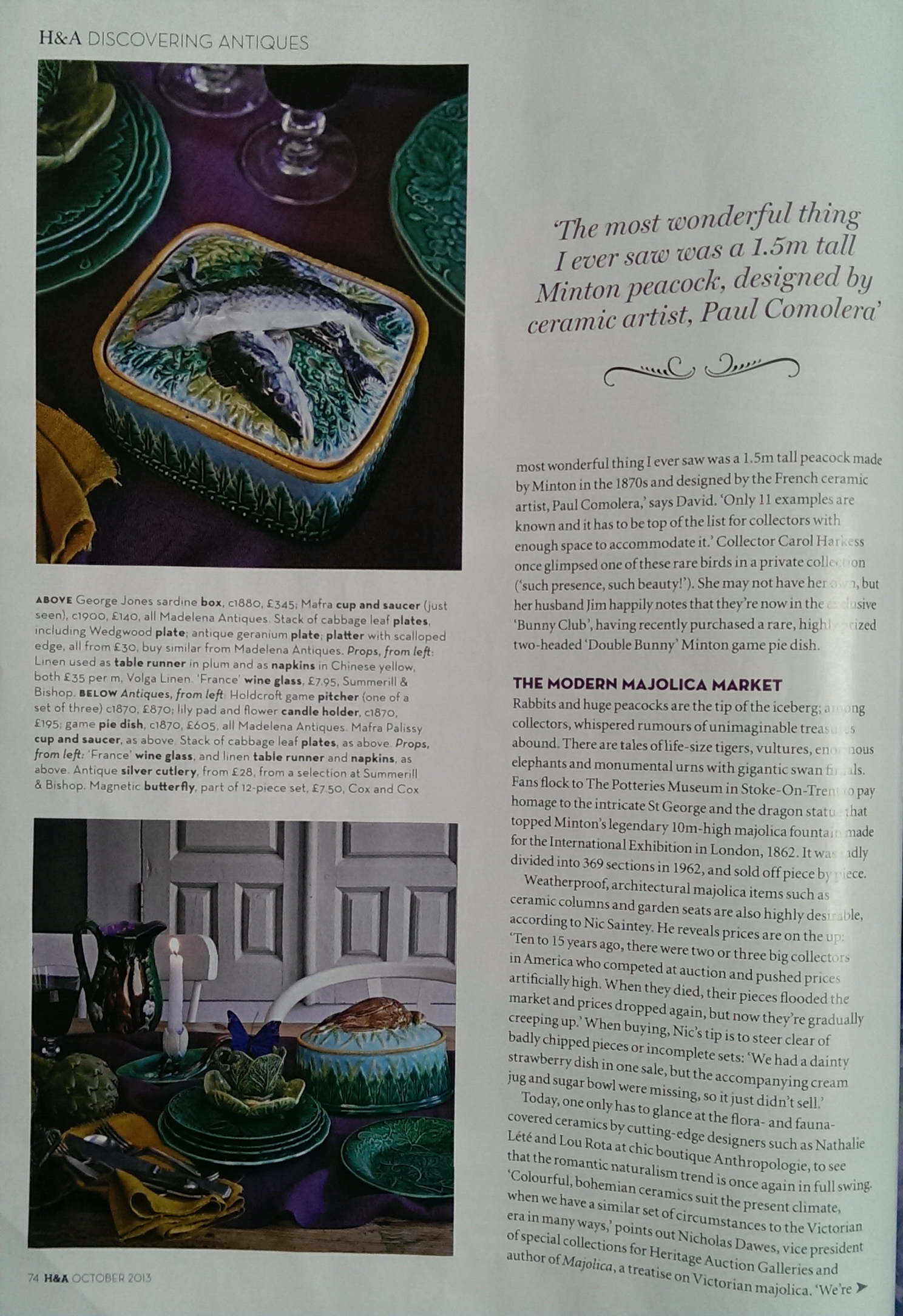
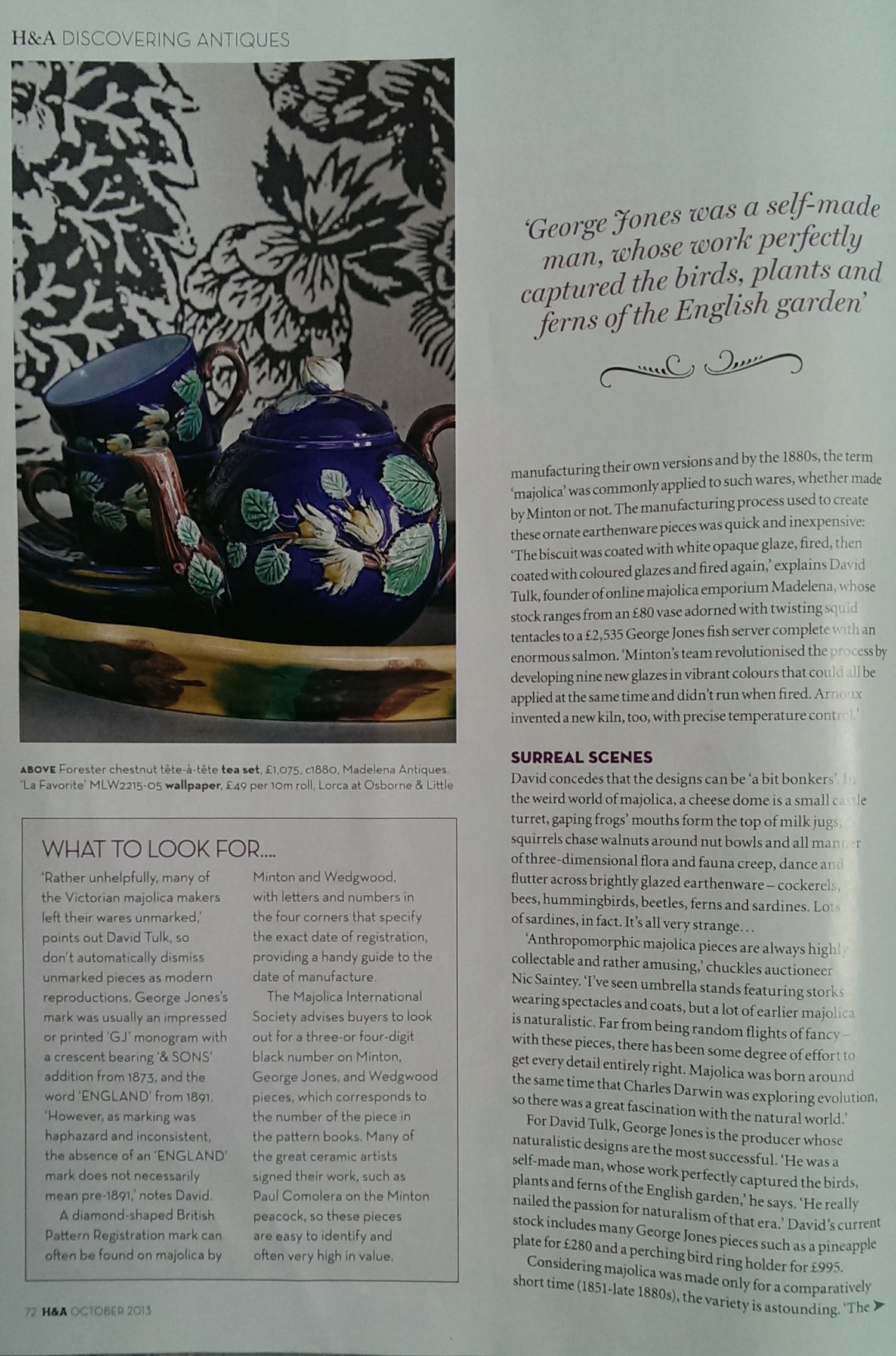
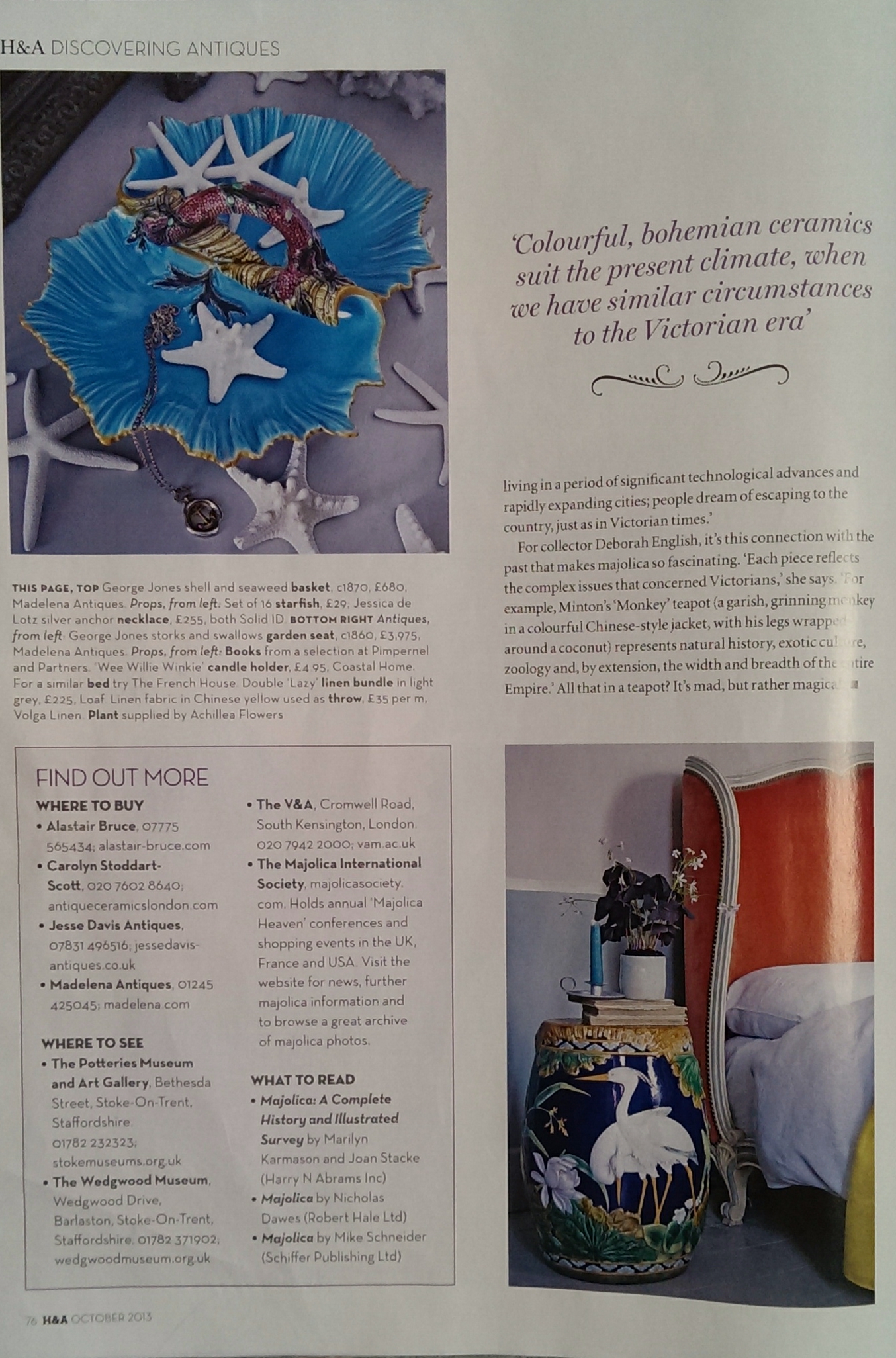
    majmag1 - Copy

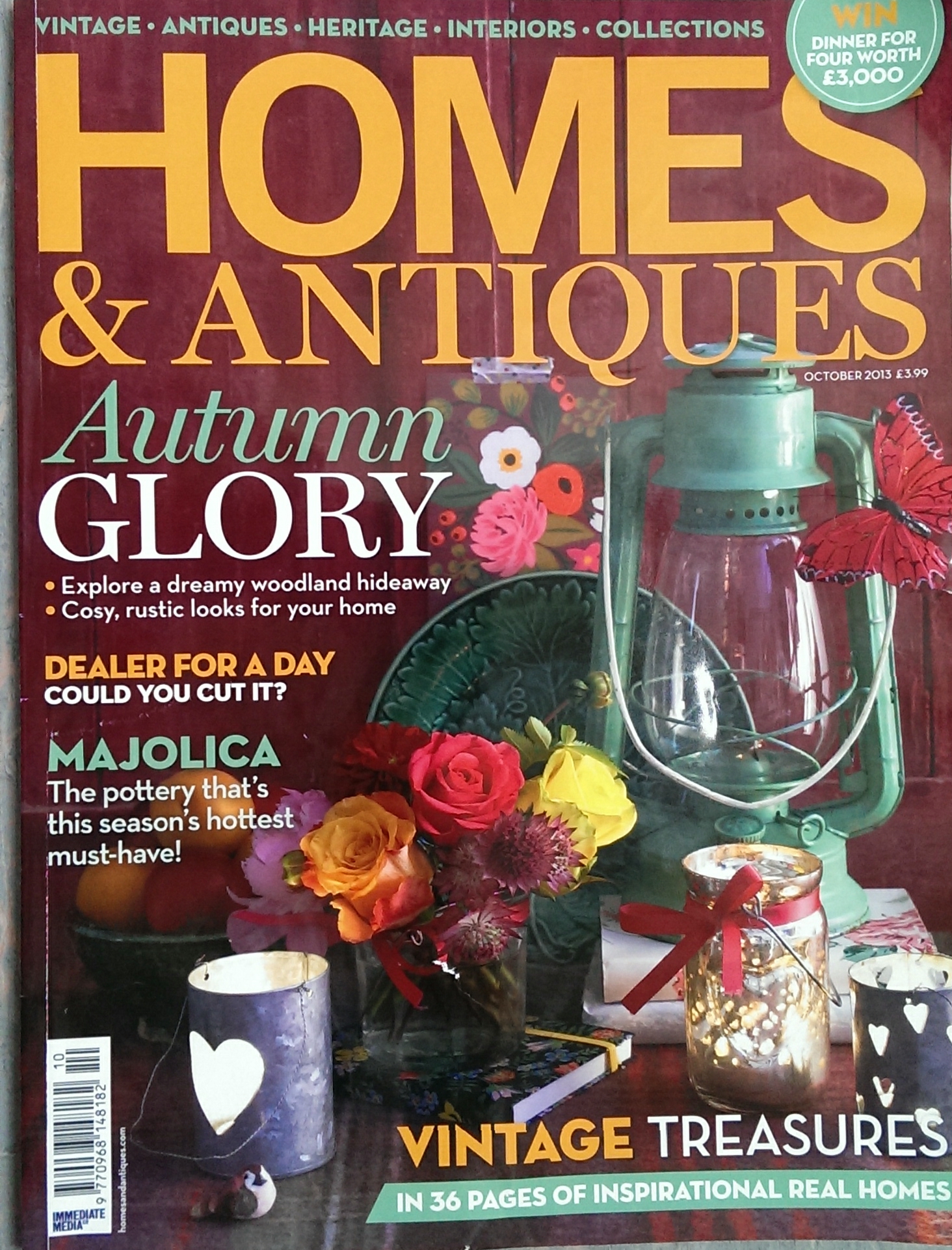
    Above is the October 2013 issue of the BBC Homes and Antiques magazine. Antique majolica is back in vogue, this season’s hottest must-have!

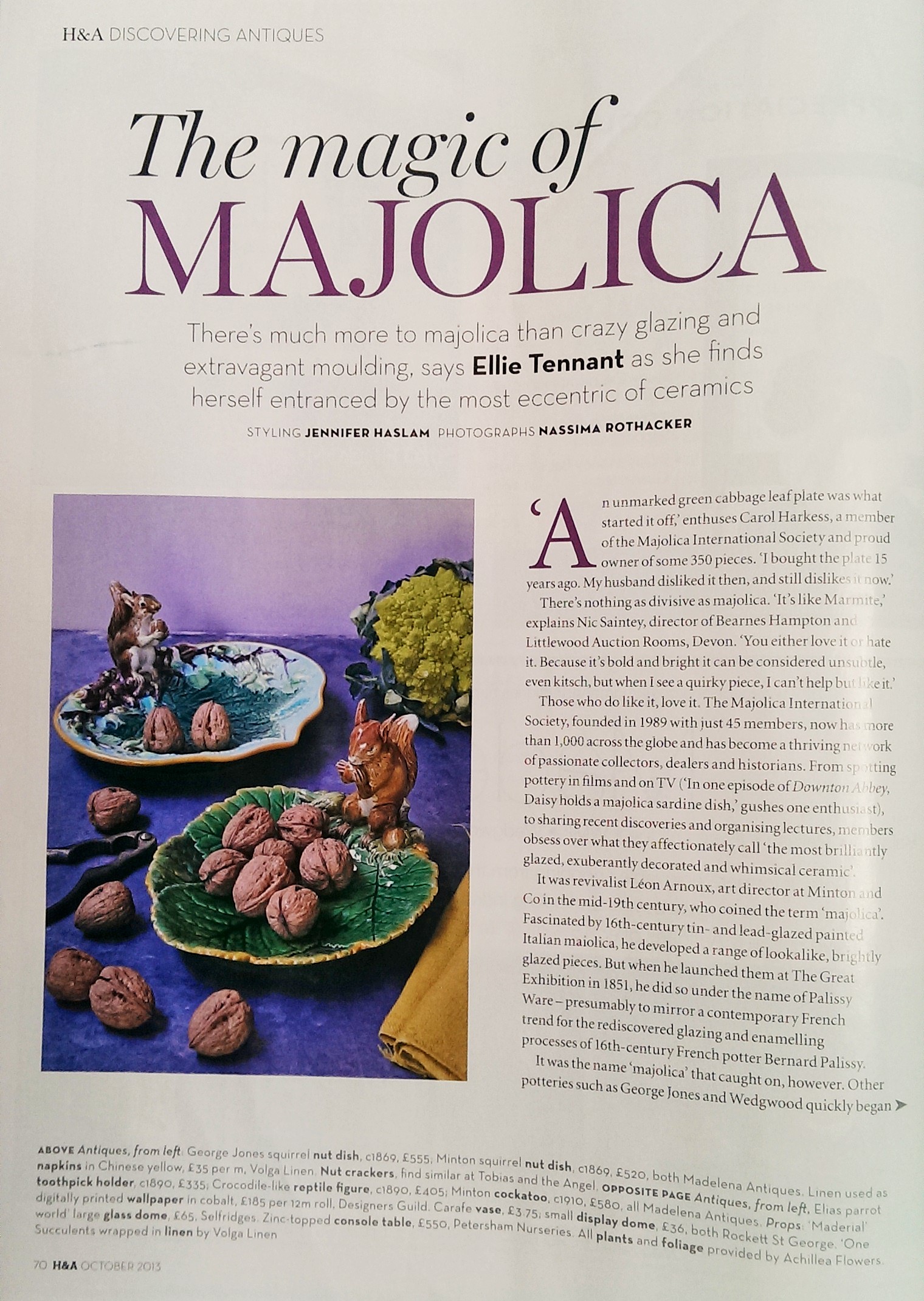
    Ellie Tennant, the interiors journalist wrote the piece. She does a great job communicating the appeal of this magical ceramic. Ellie interviews well known figures for her article. Many of you will know Nick Dawes the author of “Majolica” from his Antiques Road Show appearances. Deborah English is a collector and scholar building a definitive online majolica library. Carol Harkess is another keen collector, President of the Majolica International Society and latest member of the ‘bunny club’.

    The items displayed in the beautiful interiors photographed by Homes & Antiques were loaned by Madelena.

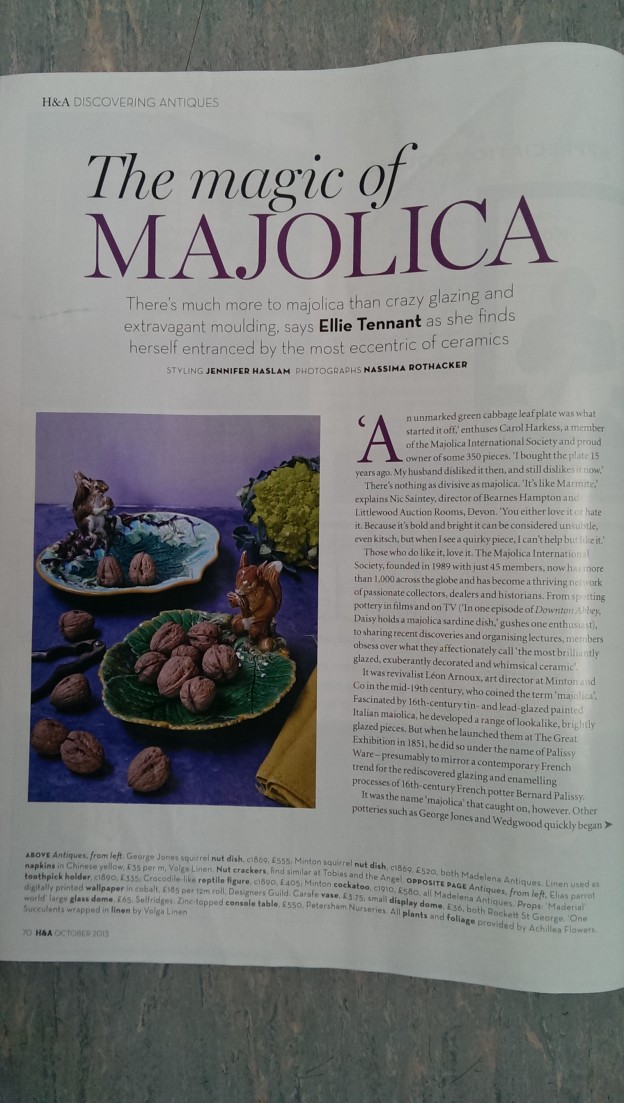
    The article runs to seven pages and is very positive and enthusiastic about all the things that make antique majolica so incredibly appealing. We hope to obtain a pdf to share with you, but meanwhile here are some pictures to be going on with.

    More great articles are to be found in the members library Majolica International Society

    majmag2 (2)

    Green majolica plates, sardine dishes, game pie dishes, Palissy cup and saucer and various serving trays
    Green majolica plates, sardine dishes, game pie dishes, Palissy cup and saucer and various serving trays

    IMAG0589_1[1]

    IMAG0591_1[1]

    George Jones tea service (part). George Jones was a self made man, whose work perfectly captured the birds, plants and ferns of the English garden
    George Jones tea service (part). George Jones was a self made man, whose work perfectly captured the birds, plants and ferns of the English garden

    IMAG0593_1[1]

    George Jones shell and seaweed server; George Jones Storks and Lilies garden seat
    George Jones shell and seaweed server; George Jones Storks and Lilies garden seat


    More magical majolica

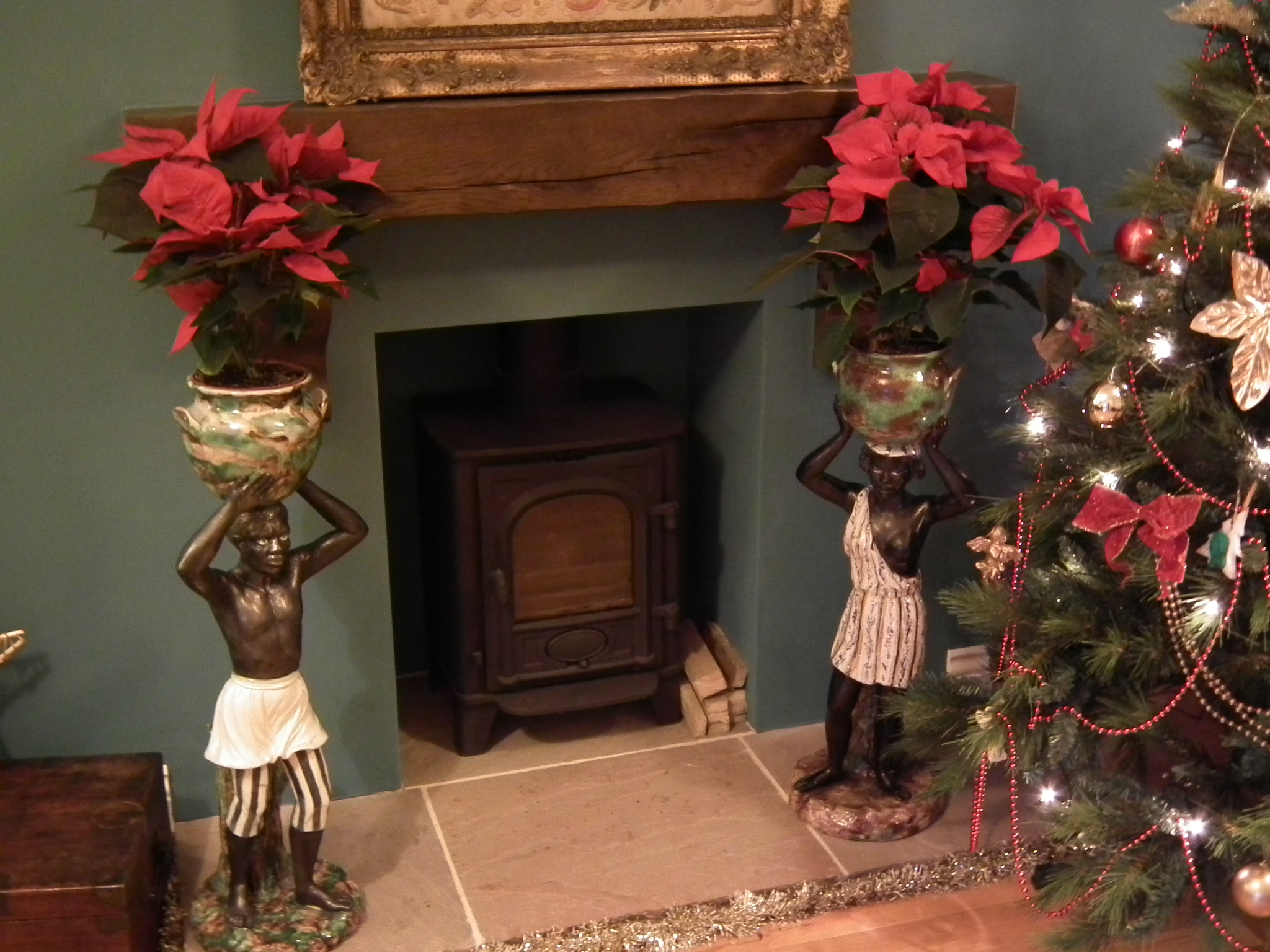
    More pictures, non-professional this time, of majolica in home décor, from around Christmas time…

    A cosy fireside. More pairs…

    Large pair blackamoor figures
    Large pair blackamoor figures

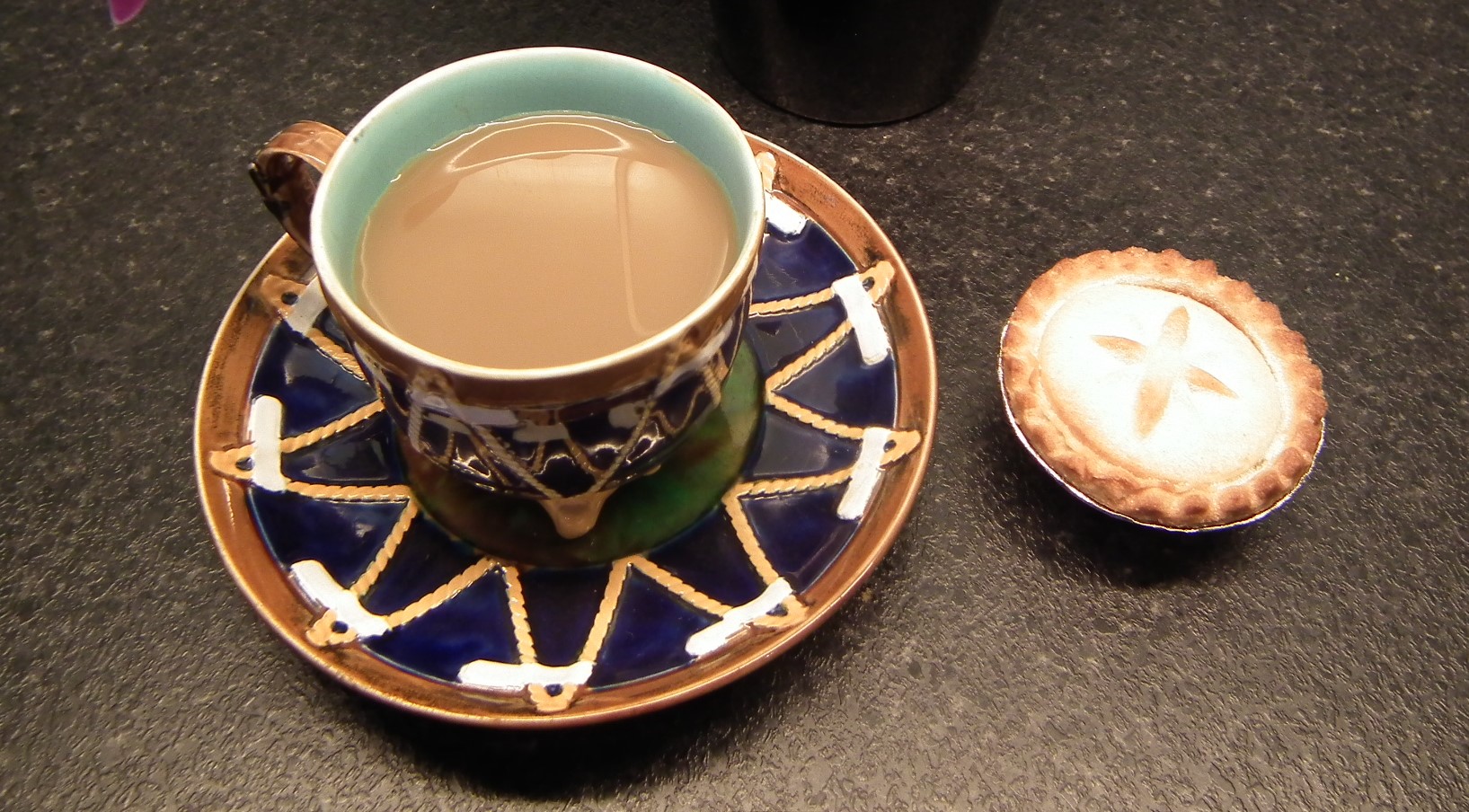
    A cuppa waiting to be sipped. George Jones Drum cup and saucer
    More cups…

    George Jones drum cup and saucer
    George Jones drum cup and saucer

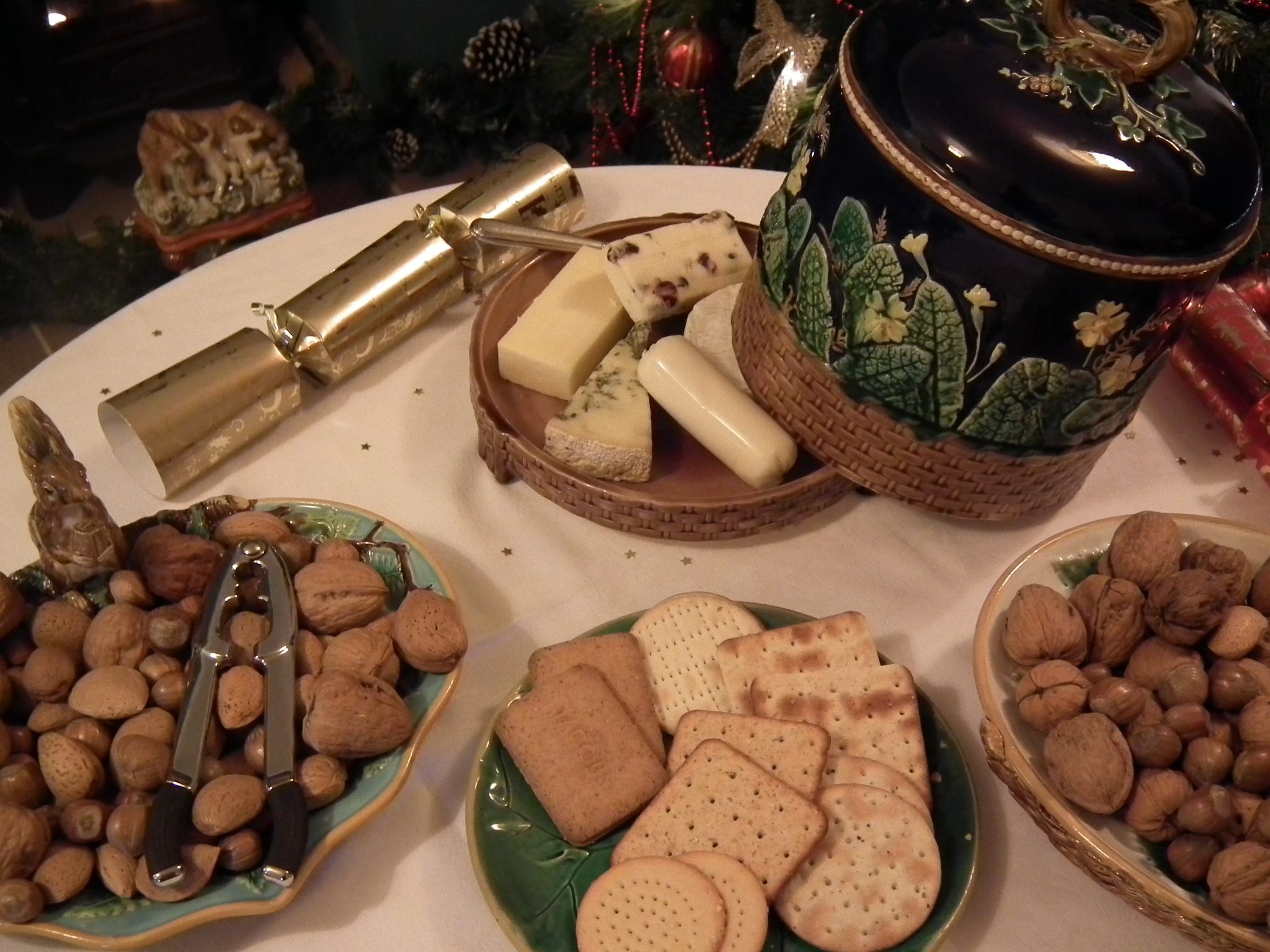
    Cheese, nuts and (English) biscuits on the table for later. More serving dishes… More cheese domes…

    Wedgwood cheese dome and stand, George Jones squirrel nut dish, and two majolica plates
    Wedgwood cheese dome and stand, George Jones squirrel nut dish, and two majolica plates

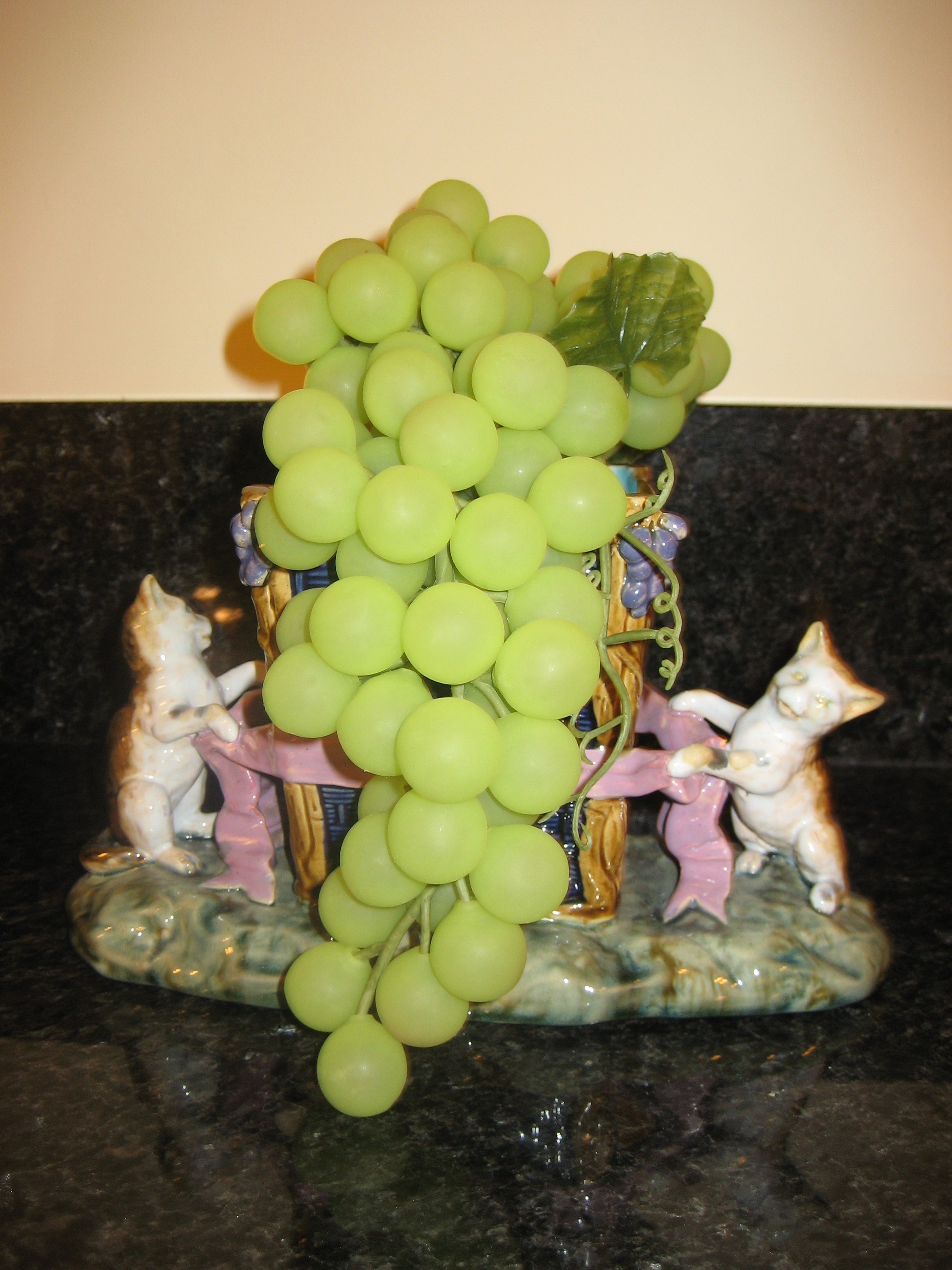
    …and fruit decorating the counter More baskets…

    Minton cats and basket vase
    Minton cats and basket vase

    How marvellous majolica looks in the home!  Bright, fresh, quirky, a joy for persons of taste and discernment or just for beauty and fun.

    World’s largest online gallery of MAJOLICA
    MADELENA Shop, Sell, Discover
    Majolica International Society